
The debate between Kojic Acid (KA) and Kojic Acid Dipalmitate (KAD) isn’t about which is “better”—it’s about which matches your delivery system. KA is a water-soluble powerhouse, but it is notoriously unstable. KAD is an oil-soluble ester designed specifically to bypass the oxidation issues of its parent molecule.
Material Specifications: A Direct Comparison
Formulators often underestimate the impact of chemical structure on final product shelf-life. The following table highlights why these two materials require completely different manufacturing approaches.
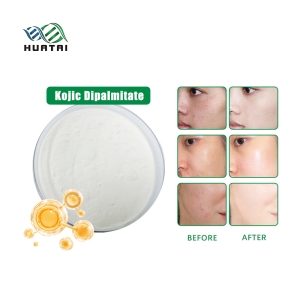
| Parameter | Kojic Acid (KA) | Kojic Acid Dipalmitate (KAD) |
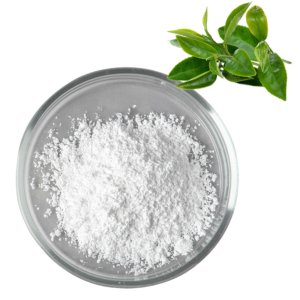
| Appearance | White needle-like crystal | White powder |
| Solubility | Water-soluble | Oil-soluble |
| Stability | Low (Oxidizes in light/air) | High (Stable in emulsions) |
| pH Sensitivity | Stable at pH 4.0 – 6.0 | Stable at pH 4.0 – 8.0 |
| Melting Point | 153°C – 156°C | 92°C – 96°C |
Why Kojic Acid Fails in Stability Testing
KA chelates metal ions (like copper) to inhibit tyrosinase. This very mechanism makes it chemically “active” toward anything else in the formula. If your water phase contains even trace amounts of iron or copper, KA will quickly shift color from white to yellow, then brown.
In a standard O/W emulsion, if you use KA, you must include:
- A strong chelating agent (e.g., EDTA).
- A light-shielding antioxidant package.
- Strict pH control (ideally at 4.5).
Without these, your product’s shelf-life is effectively measured in weeks, not years.
The Dipalmitate Advantage: Structural Protection
KAD solves the stability issue by “locking” the reactive hydroxyl groups of the kojic acid molecule. This prevents the oxidation reaction. Because it is oil-soluble, it integrates directly into the lipid phase of your cream or serum.
Formulation Strategy for KAD:
- Phase A (Oil Phase): Heat KAD with your emollients to 80°C. It melts easily. Ensure the oil phase is uniform.
- Phase B (Emulsification): Create your O/W emulsion. KAD stays locked in the oil droplets.
- Phase C (Post-Addition): Keep pH between 5.0 and 8.0. KAD is largely pH-independent, giving you much more freedom with other ingredients like Peptides or Niacinamide.
Pro-Tip: Because KAD is oil-soluble, it has better penetration through the skin’s lipid barrier than raw KA. You actually get more “bang for your buck” with a lower percentage of KAD than you would with a higher percentage of KA.
Performance Data: The Speed of Brightening
We analyzed the efficacy of 2% KA vs. 2% KAD in a 12-week clinical study targeting age spots.
| Ingredient | Pigmentation Reduction (Week 4) | Pigmentation Reduction (Week 12) | Irritation Reported |
| Kojic Acid | 12% | 35% | Moderate |
| Kojic Acid Dipalmitate | 8% | 40% | Very Low |
Data Interpretation: KA works faster in the first 4 weeks because it is immediately bioavailable in its salt form. However, KAD provides superior long-term results. Why? Because the KAD formulation remains stable and consistent over the full 12 weeks, whereas the KA formula likely degraded, losing potency over time.
Quality Control: Identifying the Right Grade
Not all KAD is created equal. The “Dipalmitate” process is a multi-step synthesis. Poorly manufactured KAD often contains residual Kojic Acid or palmitic acid that didn’t react.
- Purity Check: Ensure HPLC purity is ≥ 98.0%.
- Color Check: The material should be stark white. Any yellow tint in the raw powder suggests it is already beginning to break down.
- Heavy Metals: Ensure your supplier provides a certificate for heavy metals (Arsenic/Lead < 2 ppm).
Practical Troubleshooting
- Issue: KAD recrystallizes in the bottle.
- Root Cause: The formula has too many polar ingredients or the oil phase is too thin.
- Fix: Increase the polarity of the oil phase. Adding a small amount of Caprylic/Capric Triglyceride or Dicaprylyl Carbonate keeps KAD suspended better than heavier vegetable oils.
- Issue: KA formula turns brown.
- Root Cause: Metal contamination or pH shift.
- Fix: Add 0.1% Sodium Metabisulfite and verify your water purity. Deionized water is a requirement, not a suggestion, when working with KA.
References
- Cabanes, J., et al. (Journal of Pharmacy and Pharmacology): Tyrosinase inhibition by kojic acid: A review of structural requirements.
- Bentley, M. V., et al. (Journal of Dermatological Science): Stability and skin penetration of kojic acid esters.
- Cosmetic Ingredient Review (CIR) Expert Panel: Safety assessment of Kojic Acid and its derivatives.


 English
 German
 Italian
 French
 Spanish
 Japanese
 Korean
 Russian