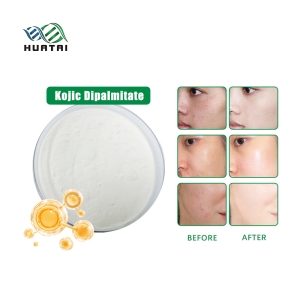
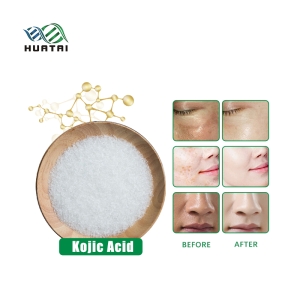
Il dibattito tra Acido Cogico (KA) e Dicopalmitato di Acido Cogico (KAD) non riguarda quale sia "migliore", ma quale si adatti al tuo sistema di rilascio. Il KA è un potente solubile in acqua, ma è notoriamente instabile. Il KAD è un estere solubile in olio progettato specificamente per aggirare i problemi di ossidazione della sua molecola madre.
Specifiche dei Materiali: Un Confronto Diretto
I formulatori spesso sottovalutano l'impatto della struttura chimica sulla durata di conservazione del prodotto finale. La seguente tabella evidenzia perché questi due materiali richiedono approcci di produzione completamente diversi.
| Parametro | Acido Cogico (KA) | Kojic Acid Dipalmitate (KAD) |
| Aspetto | Cristallo bianco simile ad un ago | Polvere bianca |
| Solubilità | Solubile in acqua | Oil-soluble |
| Stabilità | Basso (si ossida alla luce/aria) | Alto (stabile nelle emulsioni) |
| Sensibilità al pH | Stabile a pH 4,0 – 6,0 | Stabile a pH 4,0 – 8,0 |
| Punto di fusione | 153°C – 156°C | 92°C – 96°C |
Perché l'Acido Cogico Fallisce nei Test di Stabilità
Il KA chela gli ioni metallici (come il rame) per inibire la tirosinasi. Questo stesso meccanismo lo rende chimicamente "attivo" verso qualsiasi altra cosa nella formula. Se la tua fase acquosa contiene anche tracce di ferro o rame, il KA passerà rapidamente dal bianco al giallo, poi al marrone.
In un'emulsione O/A standard, se si utilizza il KA, è necessario includere:
- Un forte agente chelante (ad es. EDTA).
- Un pacchetto antiossidante schermante dalla luce.
- Controllo rigoroso del pH (idealmente a 4,5).
Senza questi, la durata di conservazione del tuo prodotto è effettivamente misurata in settimane, non in anni.
Il Vantaggio del Dicopalmitato: Protezione Strutturale
Il KAD risolve il problema della stabilità "bloccando" i gruppi idrossilici reattivi della molecola di acido cogico. Ciò impedisce la reazione di ossidazione. Poiché è solubile in olio, si integra direttamente nella fase lipidica della tua crema o siero.
Strategia di Formulazione per KAD:
- Fase A (Fase Oleosa): Scaldare il KAD con i tuoi emollienti a 80°C. Si scioglie facilmente. Assicurarsi che la fase oleosa sia uniforme.
- Fase B (Emulsificazione): Creare la tua emulsione O/A. Il KAD rimane bloccato nelle goccioline d'olio.
- Fase C (Post-Aggiunta): Mantenere il pH tra 5,0 e 8,0. Il KAD è in gran parte indipendente dal pH, dandoti molta più libertà con altri ingredienti come Peptidi o Niacinamide.
Pro-Tip: Poiché il KAD è solubile in olio, ha una migliore penetrazione attraverso la barriera lipidica della pelle rispetto al KA grezzo. Ottieni effettivamente più "valore" con una percentuale inferiore di KAD rispetto a una percentuale più alta di KA.
Dati sulle Prestazioni: La Velocità di Schiarimento
Abbiamo analizzato l'efficacia del 21% di KA vs. 21% di KAD in uno studio clinico di 12 settimane mirato alle macchie senili.
| Ingrediente | Riduzione della Pigmentazione (Settimana 4) | Riduzione della Pigmentazione (Settimana 12) | Irritazione Segnalata |
| Acido cogico | 12% | 35% | Moderare |
| Dipalmitato dell'acido cogico | 8% | 40% | Molto basso |
Interpretazione dei Dati: Il KA agisce più velocemente nelle prime 4 settimane perché è immediatamente biodisponibile nella sua forma salina. Tuttavia, il KAD fornisce risultati superiori a lungo termine. Perché? Perché la formulazione KAD rimane stabile e coerente per tutte le 12 settimane, mentre la formula KA probabilmente si è degradata, perdendo potenza nel tempo.
Controllo Qualità: Identificare il Grado Giusto
Non tutto il KAD è creato uguale. Il processo "Dicopalmitato" è una sintesi in più fasi. Il KAD prodotto in modo scadente contiene spesso Acido Cogico residuo o acido palmitico che non ha reagito.
- Controllo Purezza: Assicurarsi che la purezza HPLC sia ≥ 98%.
- Controllo del Colore: Il materiale deve essere bianco brillante. Qualsiasi sfumatura gialla nella polvere grezza suggerisce che sta già iniziando a degradarsi.
- Metalli pesanti: Assicurarsi che il fornitore fornisca un certificato per metalli pesanti (Arsenico/Piombo < 2 ppm).
Practical Troubleshooting
- Issue: Il KAD ricristallizza nella bottiglia.
- Root Cause: La formula ha troppi ingredienti polari o la fase oleosa è troppo liquida.
- Fix: Aumentare la polarità della fase oleosa. L'aggiunta di una piccola quantità di Trigliceride Caprilico/Caprico o Carbonato di Dicaprylyl mantiene il KAD sospeso meglio degli oli vegetali più pesanti.
- Issue: La formula KA diventa marrone.
- Root Cause: Contaminazione metallica o spostamento del pH.
- Fix: Aggiungere 0,1% di Metabisolfito di Sodio e verificare la purezza dell'acqua. L'acqua deionizzata è un requisito, non un suggerimento, quando si lavora con il KA.
Riferimenti
- Cabanes, J., et al. (Journal of Pharmacy and Pharmacology): Inibizione della tirosinasi da parte dell'acido cogico: una revisione dei requisiti strutturali.
- Bentley, M. V., et al. (Journal of Dermatological Science): Stabilità e penetrazione cutanea degli esteri dell'acido cogico.
- Cosmetic Ingredient Review (CIR) Expert Panel: Valutazione della sicurezza dell'Acido Cogico e dei suoi derivati.


 English
 German
 Italian
 French
 Spanish
 Japanese
 Korean
 Russian