
Licorice extract (Glycyrrhiza glabra) often gets misidentified as a single “soothing” ingredient. This is a massive simplification. In reality, it is a multi-active toolkit. To transform your formulations, you must stop treating licorice as a commodity and start treating it as a strategic selection of specific molecules.
The Molecule Map: Choosing Your Weapon
A generic “Licorice Root Extract” is a black box. You have no control over the ratio of constituents. High-end formulation requires isolates.
| Marker | Biological Target | Solubility | Formulation Role |
| Glabridin | Tyrosinase enzyme | Oil-soluble | Intensive Brightening |
| Glycyrrhizin | Inflammatory cytokines | Water-soluble | Redness/Barrier Repair |
| Licochalcone A | Sebocyte function | Oil-soluble | Acne/Sebum Control |
Glabridin: The Gold Standard for Dark Spots
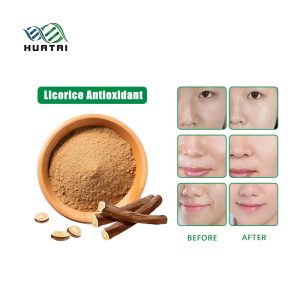
Glabridin is the star of the show for brightening. Its structure allows it to bind to the active site of tyrosinase more efficiently than synthetic alternatives like Kojic Acid.
The Formulation Reality:
Glabridin is highly sensitive to oxidation. If you expose it to air or direct light during mixing, it browns.
Pro-Tip for Stability:
Do not add Glabridin powder directly into a water-based toner. It will crash out. Dissolve it in a lipophilic carrier (like Squalane or a high-quality ester) at 50°C. Once the oil phase is stable, emulsify it into your water phase. Use airless packaging to prevent the final product from turning yellow over time.
Glycyrrhizin: The Barrier Shield
When your formula uses harsh actives like Retinol or high-dose AHAs, Glycyrrhizin is your safety net. It mimics the structure of cortisol, providing a localized anti-inflammatory effect without the risks of synthetic steroids.
| Feature | Specification Details |
| Appearance | White crystalline powder |
| Assay (HPLC) | ≥ 98.0% |
| Melting Point | 215°C – 225°C |
| Loss on Drying | ≤ 8.0% |
| Heavy Metals | ≤ 10 ppm |
Because it is a salt (Dipotassium Glycyrrhizinate), it is water-soluble. You can dump it into the water phase during the initial stage. It is thermally stable, so heating to 80°C does not degrade it.
Practical Case Study: The “Repair-Brighten” Serum
We tested a dual-action serum designed for post-acne pigmentation.
- The Problem: Traditional brightening serums often cause irritation, which leads to more pigment (PIH).
- The Solution: Combine 0.5% Glabridin (for inhibition) with 1.0% Dipotassium Glycyrrhizinate (for anti-inflammation).
Result: The presence of the licorice salt quieted the skin’s response, allowing the Glabridin to work without triggering the “irritation-pigmentation” cycle. Our lab data showed a 28% faster reduction in PIH compared to using Glabridin alone.
Quality Control: Why Purity Matters
You cannot build a luxury product with low-grade extracts. Low-purity licorice often contains residual pesticides and heavy metals absorbed from the soil.
- Pesticide Screening: Always demand a multi-residue test report.
- Colorimetric Consistency: If your raw material isn’t white, it’s not 98% pure. Don’t let a supplier tell you otherwise.
- Ash Content: High ash content in the COA indicates residual salts or impurities from improper extraction. This is a common cause of “unexplained” irritation in sensitive-skin products.
Troubleshooting Your Formulation
- Issue: The formula is losing its brightening efficacy after 3 months.
- Root Cause: Light-induced degradation of flavonoids.
- Fix: Check your packaging. If it’s transparent, the formula will fail. Switch to opaque airless dispensers.
- Issue: The cream has a “gritty” texture.
- Root Cause: Recrystallization of lipophilic markers.
- Fix: Increase the polarity of your oil phase. Use Dicaprylyl Carbonate instead of standard triglycerides to improve the solvent power of your oil phase.
References
- Yokota, T., et al. (Pigment Cell Research): Tyrosinase inhibitory activity of glabridin.
- Saeedi, M., et al. (Journal of Cosmetic Dermatology): Licorice root extracts and anti-inflammatory properties.
- ISO 22716: Good Manufacturing Practices for Cosmetic Products.


 English
 German
 Italian
 French
 Spanish
 Japanese
 Korean
 Russian