
¿Cómo puede el extracto de regaliz (Glycyrrhiza glabra) transformar las formulaciones modernas para el cuidado de la piel?
Extracto de regaliz (Glycyrrhiza glabra) a menudo se identifica erróneamente como un único ingrediente "calmante". Esta es una simplificación masiva. En realidad, es un kit de herramientas multiactivo. Para transformar tus formulaciones, debes dejar de tratar el regaliz como un producto básico y empezar a tratarlo como una selección estratégica de moléculas específicas.
El Mapa Molecular: Eligiendo tu Arma
Un "Extracto de Raíz de Regaliz" genérico es una caja negra. No tienes control sobre la proporción de los constituyentes. La formulación de alta gama requiere aislados.
| Marcador | Objetivo Biológico | Solubilidad | Rol de Formulación |
| Glabridina | Enzima Tirosinasa | Soluble en aceite | Aclarado Intensivo |
| Glicirricina | Citocinas inflamatorias | Soluble en agua | Reparación de enrojecimiento/barrera |
| Licochalcona A | Función de los sebocitos | Soluble en aceite | Control del acné/sebo |
Glabridina: El Estándar de Oro para las Manchas Oscuras
La glabridina es la estrella del espectáculo para el brillo. Su estructura le permite unirse al sitio activo de la tirosinasa de manera más eficiente que los alternativos sintéticos como el ácido kójico.
La Realidad de la Formulación:
La glabridina es muy sensible a la oxidación. Si la expones al aire o a la luz directa durante la mezcla, se oscurece.
Consejo Profesional para la Estabilidad:
No agregues polvo de glabridina directamente a un tónico a base de agua. Se precipitará. Disuélvela en un portador lipofílico (como escualano o un éster de alta calidad) a 50 °C. Una vez que la fase oleosa sea estable, emulsifícala en tu fase acuosa. Usa envases sin aire para evitar que el producto final se vuelva amarillo con el tiempo.
Glicirricina: El Escudo de Barrera
Cuando tu fórmula utiliza activos agresivos como el retinol o AHAs en dosis altas, la glicirricina es tu red de seguridad. Imita la estructura del cortisol, proporcionando un efecto antiinflamatorio localizado sin los riesgos de los esteroides sintéticos.
| Característica | Detalles de la especificación |
| Apariencia | Polvo cristalino blanco |
| Ensayo (HPLC) | ≥ 98,0% |
| Punto de fusión | 215°C – 225°C |
| Pérdida por secado | ≤ 8.0% |
| Metales pesados | ≤ 10 ppm |
Debido a que es una sal (Glicirricinato Dipotásico), es soluble en agua. Puedes verterla en la fase acuosa durante la etapa inicial. Es térmicamente estable, por lo que calentarla a 80 °C no la degrada.
Caso de Estudio Práctico: El Sérum "Reparador-Iluminador"
Probamos un sérum de doble acción diseñado para la pigmentación post-acné.
- El problema: Los sérums iluminadores tradicionales a menudo causan irritación, lo que conduce a más pigmentación (PIH).
- La Solución: Combina 0.5% de Glabridina (para inhibición) con 1.0% de Glicirricinato Dipotásico (para antiinflamación).
Resultado: La presencia de la sal de regaliz calmó la respuesta de la piel, permitiendo que la Glabridina actuara sin desencadenar el ciclo "irritación-pigmentación". Nuestros datos de laboratorio mostraron una reducción 28% más rápida de la PIH en comparación con el uso de Glabridina sola.
Control de Calidad: Por Qué la Pureza Importa
No puedes construir un producto de lujo con extractos de baja calidad. El regaliz de baja pureza a menudo contiene pesticidas residuales y metales pesados absorbidos del suelo.
- Cribado de pesticidas: Exige siempre un informe de prueba de residuos múltiples.
- Consistencia colorimétrica: Si tu materia prima no es blanca, no es 98% pura. No dejes que un proveedor te diga lo contrario.
- Contenido de Cenizas: Un alto contenido de cenizas en el COA indica sales residuales o impurezas de una extracción inadecuada. Esta es una causa común de irritación "inexplicable" en productos para piel sensible.
Solución de Problemas de Tu Formulación
- Issue: La fórmula está perdiendo su eficacia iluminadora después de 3 meses.
- Root Cause: Degradación de flavonoides inducida por la luz.
- Fix: Verifica tu empaque. Si es transparente, la fórmula fallará. Cambia a dispensadores opacos sin aire.
- Issue: La crema tiene una textura "arenosa".
- Root Cause: Recristalización de marcadores lipofílicos.
- Fix: Aumenta la polaridad de tu fase oleosa. Usa Carbonato de Dicaprililo en lugar de triglicéridos estándar para mejorar el poder disolvente de tu fase oleosa.
Referencias
- Yokota, T., et al. (Pigment Cell Research): Actividad inhibidora de la tirosinasa de la glabridina.
- Saeedi, M., et al. (Journal of Cosmetic Dermatology): Extractos de raíz de regaliz y propiedades antiinflamatorias.
- ISO 22716: Buenas Prácticas de Fabricación para Productos Cosméticos.
Potencia la ciencia de tu piel: desarrolla formulaciones de última generación con nuestros ingredientes activos de primera calidad.
¿Por qué elegirnos?
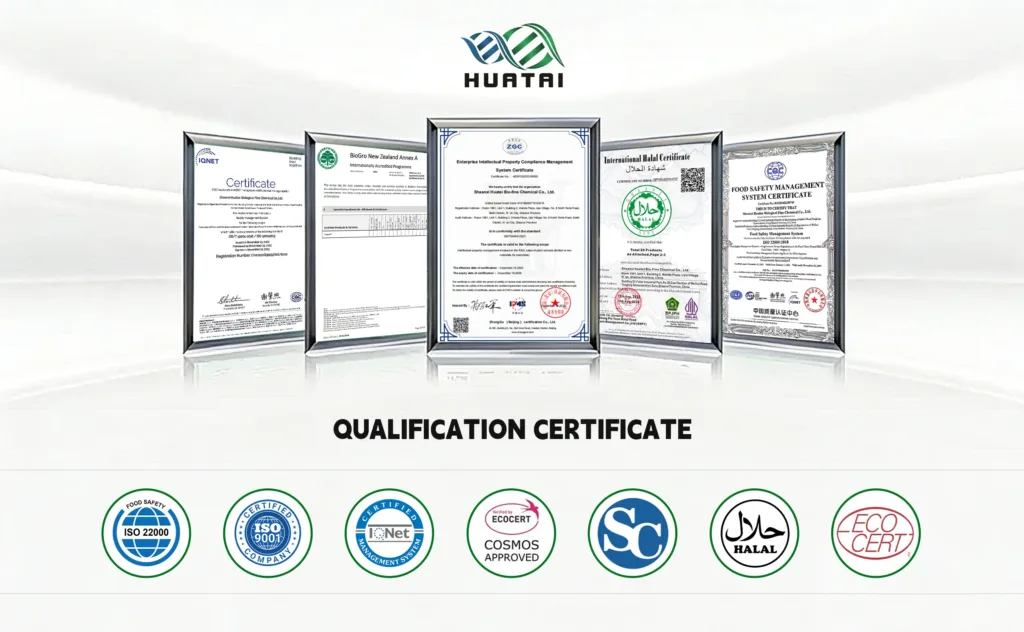
Huatai Bio proporciona una cartera integral de productos de alta eficacia. ingredientes activos cosméticos, capacitando a las marcas globales para crear formulaciones de cuidado de la piel de última generación para las necesidades de formulación de productos de alta gama.
Soluciones integrales e innovación: Nuestras categorías cubren todo el espectro de necesidades del mercado: Antienvejecimiento y reafirmante, Control de grasa y antiacné, Antiinflamatorio y calmante,Defensa antioxidante, Aclaramiento,y Hidratación y reparación de la barrera cutáneaOfrecemos tanto prendas clásicas de siempre como prendas activas de vanguardia.
Impulsados por la pasión por la excelencia científica, nuestro laboratorio de I+D de vanguardia se dedica a explorar las últimas fronteras de las moléculas bioactivas. Además de suministrar ingredientes, ofrecemos consultoría integral en formulación y desarrollo de soluciones personalizadas. Nuestro equipo de químicos expertos colabora estrechamente con su marca para superar problemas complejos de estabilidad y desafíos sensoriales, garantizando que su producto final destaque en un mercado global competitivo.
Calidad y credibilidad inquebrantables: Garantizamos que cada lote de nuestros productos cumple con nuestros estándares. Ingredientes activos para el cuidado de la piel Cumple con rigurosos estándares de calidad, incluyendo las certificaciones COSMOS, ISO 9001/22000 y HALAL. Este compromiso, respaldado por un expediente técnico completo, ofrece soluciones con respaldo clínico y garantiza el cumplimiento para cualquier desafío de formulación.



 English
 German
 Italian
 French
 Spanish
 Japanese
 Korean
 Russian