
The combination of Tranexamic Acid (TXA) and Retinol is a cornerstone of modern, high-performance skincare. While both are powerful, they function through entirely different biological pathways. Understanding how to integrate them effectively allows for a dual-action approach to skin health: addressing texture and aging with Retinol, while simultaneously managing pigmentation and inflammation with Tranexamic Acid.
The Biological Synergy
Retinol, a vitamin A derivative, works primarily by increasing cell turnover and stimulating collagen production. It is the gold standard for refining texture, minimizing fine lines, and firming the skin.
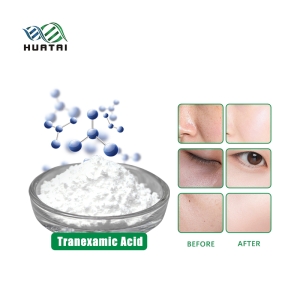
Tranexamic Acid is an amino acid derivative that targets the plasminogen/plasmin system. By inhibiting this pathway, it modulates the signaling that tells melanocytes to produce excess melanin. This makes it exceptionally effective for treating melasma, post-inflammatory hyperpigmentation (PIH), and stubborn dark spots.
When combined, these ingredients offer a complementary effect:
- Preventative & Corrective: Retinol exfoliates and promotes cell renewal, while TXA prevents the formation of new pigment and fades existing spots.
- Inflammation Control: Retinol can occasionally cause irritation or redness during the retinization process. TXA possesses inherent anti-inflammatory properties, which may help mitigate some of the harsh side effects associated with high-strength retinoids.
Formulation and Stability Considerations
From a manufacturing perspective, the two ingredients are highly compatible because they occupy different chemical “spaces” in a formulation.
- Stability Profiles: Tranexamic Acid is a stable, water-soluble crystalline powder that remains effective across a broad pH range. It does not easily oxidize and has minimal interaction with other ingredients. Conversely, Retinol is notoriously unstable—highly sensitive to heat, light, and oxygen.
- Encapsulation: In advanced professional formulations, Retinol is almost always encapsulated. Encapsulation protects the Retinol from environmental stress, ensuring it reaches the skin before degrading. This also allows formulators to create multi-active systems where the stabilized Retinol and the water-soluble Tranexamic Acid coexist without destabilizing each other.
- Manufacturing Best Practices:
- pH Management: Both ingredients perform best in a balanced environment (pH 5.0 – 6.5).
- Thermal Control: Always add encapsulated Retinol during the final cooling phase (below 40°C) to preserve capsule integrity.
- Chelation: Include chelating agents like Disodium EDTA to ensure trace metal ions do not catalyze the oxidation of the Retinol.
Practical Application for Users
While safe for most skin types, the potency of this combination necessitates a cautious approach.
- Introduce Gradually: Start by using Retinol 2–3 times per week, allowing the skin to adjust. Tranexamic Acid can typically be introduced more frequently due to its gentle nature.
- Layering Strategy:
- The Layering Approach: Apply your Tranexamic Acid serum first (after cleansing/toning), let it absorb, then follow with your Retinol product.
- The Split Routine: For those with sensitive skin, it is highly effective to use Tranexamic Acid in the morning (followed by SPF) and Retinol at night. This ensures maximum efficacy without overwhelming the skin barrier.
- Barrier Support: Because Retinol increases cell turnover, always support the skin with a high-quality moisturizer to prevent dryness and maintain barrier integrity.
Summary of Compatibility
| Feature | Tranexamic Acid | Retinol (Encapsulated) |
| Primary Function | Brightening & Anti-inflammatory | Anti-aging & Cell turnover |
| Water/Oil Solubility | Water-soluble | Oil-soluble (requires carrier) |
| Stability | High | Low (Sensitive to Light/Air) |
| Best Time of Use | AM and PM | PM only |
References
- Cosmetify. “Can You Use Tranexamic Acid With Retinol?”
- Dermatica. “Ask A Derm: Can You Use Tranexamic Acid and Retinol, or Retinoids?”
- QRxLabs. “Can Tranexamic Acid Be Used with Retinol?”
- SkinLab. “Hyperpigmentation: Why Tranexamic Acid Works So Well”
- Szeasychem. “Tranexamic Acid Article 3 – Formulation Stability And Compatibility”



 English
 German
 Italian
 French
 Spanish
 Japanese
 Korean
 Russian