
What are the cosmetic applications and skin-soothing benefits of Stearyl Glycyrrhetinate?
Stearyl Glycyrrhetinate (SG) is the oil-soluble counterpart to the water-soluble Dipotassium Glycyrrhizinate. If your product is a rich emulsion, a facial oil, or a makeup product requiring barrier protection, SG is the superior choice. It bridges the gap between active treatment and emollient texture.
The Molecule: Why Solubility Defines Performance
Unlike salt-based derivatives, SG is a fatty-acid ester. This allows it to integrate seamlessly into lipid phases, where it stays localized within the stratum corneum. This localization provides a “depot effect,” releasing soothing benefits exactly where the skin barrier needs it most.
| Parameter | Specification Value | Formulation Impact |
| Appearance | White to off-white powder | Neutral color, won’t tint formulas |
| Solubility | Lipophilic (Oil-soluble) | Perfect for anhydrous systems |
| Purity (HPLC) | ≥ 98.0% | Ensures consistent clinical performance |
| Melting Point | 75°C – 80°C | Easy to melt into oil phases |
| Acid Value | ≤ 2.0 | Indicates low impurity/irritation risk |
Biological Mechanisms: Protecting the Barrier
SG functions by modulating the inflammatory response at the cellular membrane. It does not just “cool” the skin; it inhibits the formation of inflammatory prostaglandins.
Because it is lipophilic, it penetrates the lipid lamellae of the skin barrier effectively. This makes it an essential ingredient for repairing damage caused by harsh actives like retinoids or AHAs. Think of it as a biological shield that prevents the “sting” before the skin cells even register the irritation.
Formulation Blueprint: Integrating SG for Stability
Formulating with SG is simple, provided you respect its lipid nature. Do not add it to your water phase; it will not dissolve, leading to a grainy texture in your final cream.
The Formulation Workflow:
- Phase A (Oil Phase): Mix SG with your emollients, esters, or squalane. Heat to 80°C until the powder is fully dissolved.
- Phase B (Stabilization): Incorporate an oil-soluble antioxidant like Tocopherol to prevent oxidation of the lipid phase.
- Phase C (Emulsification): Once the oil phase is uniform, proceed with standard emulsification at your target temperature.
Formulator’s Pro-Tip:
SG works exceptionally well with plant-based oils that are high in linoleic acid. The combination creates a dual-action effect: the linoleic acid replaces missing lipids, while the SG calms the underlying inflammation.
Performance Data: Lipid-Based Soothing Efficiency
We compared the efficacy of lipid-based soothing agents in a standard irritation model.
| Active Ingredient | Skin Irritation Score (1-10) | Stability in O/W Emulsions |
| Stearyl Glycyrrhetinate | 1.2 | High (Excellent) |
| Bisabolol | 1.5 | High (Good) |
| Beta-Glucan | 3.5 | Moderate (Potential for clumping) |
| Control (Base Only) | 5.8 | N/A |
Note: A lower score indicates significantly reduced visible redness and burning sensation after exposure to an irritant.
The data demonstrates that SG provides a stable, highly efficient barrier protection that outclasses many popular alternatives, especially when the skin barrier is already compromised.
Quality Control: What You Must Inspect
Do not accept raw materials based solely on price. The quality of the stearyl alcohol used in the esterification process matters.
- Residual Solvents: Low-grade manufacturing can leave behind traces of solvents used in the synthesis. Always check the COA for residual solvent limits (ensure <500 ppm).
- Colorimetric Purity: If the powder is off-white or yellowish, it is likely degraded. This will introduce an odor and color instability in your end product.
- Heavy Metals: Ensure total heavy metals are below 10ppm.
Practical Troubleshooting
- Issue: The formula is “sweating” oil.
- Root Cause: The oil phase is too heavy or the emulsion structure is unstable due to high SG concentration.
- Fix: Adjust the ratio of polar to non-polar oils. Use a texturizing agent or a wax (like Beeswax or Candelilla wax) to help “lock” the oil phase into the emulsion matrix.
- Issue: The formula feels “waxy” or heavy.
- Root Cause: Over-usage of SG.
- Fix: Reduce the usage level. SG is potent; you rarely need more than 0.5% – 1.0% for effective soothing.
References
- Wang, Y., et al. (International Journal of Cosmetic Science): Evaluation of lipophilic glycyrrhizinate derivatives on skin barrier repair.
- Cho, J. Y., et al. (Molecular Medicine): Anti-inflammatory properties of licorice-derived compounds.
- Cosmetics Regulation (EC) 1223/2009: Safety criteria for licorice-based ingredients in topical applications.
Empower Your Skin Science: Develop Next-Generation Formulations with Our Premium Active Ingredients.
Why choose us
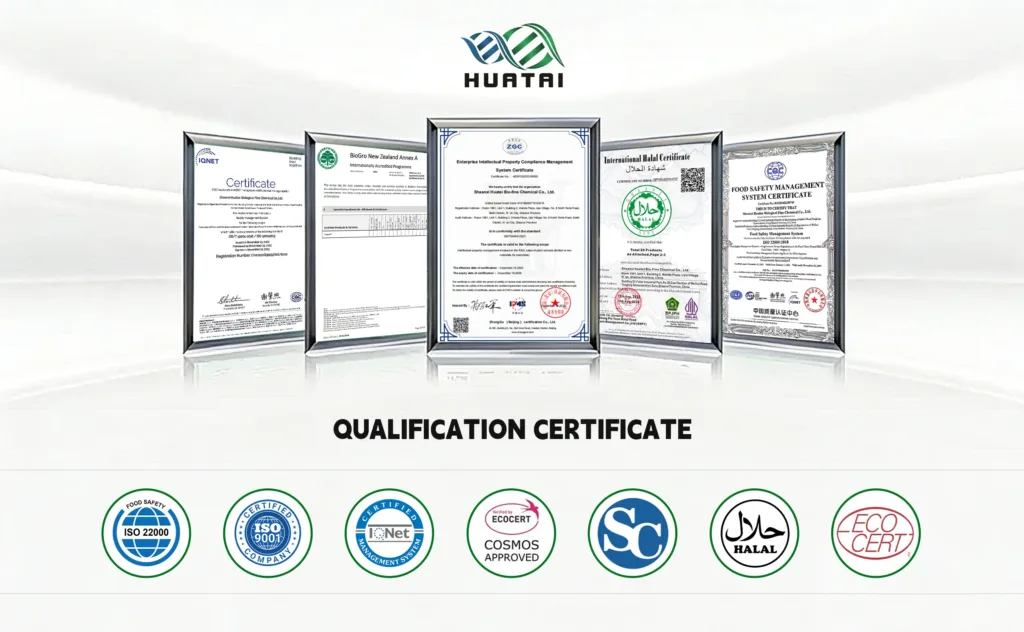
Huatai Bio provides a comprehensive portfolio of high-efficacy cosmetic active ingredients, empowering global brands to create next-generation skincare formulations for high-end skincare formulation needs.
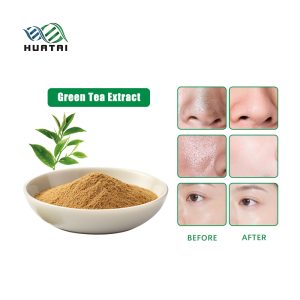
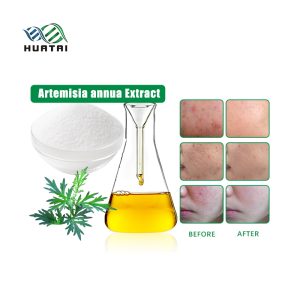
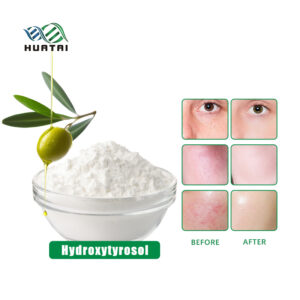
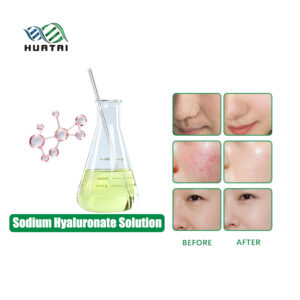
Comprehensive Solutions & Innovation: Our categories cover the full spectrum of market requirements: Anti-aging & Firming, Oil-Control & Anti-acne, Anti-inflammatory & Soothing,Antioxidant Defense, Brightening,and Hydration & Barrier Repair.We offer both established classics and cutting-edge actives.
Driven by a passion for scientific excellence, our state-of-the-art R&D laboratory is dedicated to exploring the frontier of bio-active molecules. Beyond supplying ingredients, we offer end-to-end formulation consultancy and customized solution development. Our team of expert chemists works closely with your brand to overcome complex stability issues and sensory challenges, ensuring your final product stands out in a competitive global market.
Uncompromising Quality & Credibility:We ensure every batch of our Active skincare ingredients meets rigorous quality standards, including COSMOS, ISO 9001/22000, and HALAL Certification. This commitment, backed by a complete Technical Dossier, offers clinically-backed solutions and guaranteed compliance for every formulation challenge.

 English
 German
 Italian
 French
 Spanish
 Japanese
 Korean
 Russian