
What Causes Hyperpigmentation?
Hyperpigmentation occurs when melanocytes produce excess melanin — triggered by UV exposure, inflammation, hormonal changes (as in melasma), or post-inflammatory response (PIH). The melanin then transfers to surrounding keratinocytes, accumulating in the upper layers of the epidermis as visible dark spots or uneven tone.
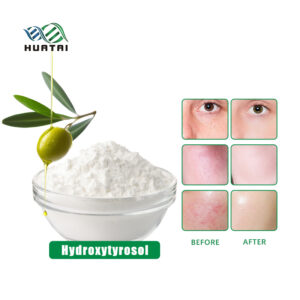
From a formulation standpoint, this process has three targetable points: melanin synthesis (tyrosinase-dependent oxidation reactions), melanosome transfer from melanocyte to keratinocyte, and inflammation-driven melanocyte stimulation. Different actives work at different points — which is why multi-active approaches consistently outperform single-ingredient formulations for complex or persistent hyperpigmentation.
- Optimal pH range: 5.0–6.5 (dependent on active selection and stability requirements)
- Best delivery systems: O/W emulsion, hydroalcoholic serum, or aqueous gel (grade-dependent)
- Core combination strategy: tyrosinase inhibition + melanosome transfer blockade + anti-inflammatory support
- Selection is primarily driven by pigmentation type, formulation base, and regulatory positioning rather than efficacy alone
Top Brightening Actives Compared
The five actives most commonly specified in professional brightening formulas are glabridin, alpha arbutin, kojic acid, niacinamide, and tranexamic acid (TXA). They differ significantly in mechanism, stability, tolerance profile, and regulatory status.
| Active | Mechanism | Efficacy Profile | Stability | Irritation Risk | Best Application |
|---|---|---|---|---|---|
| Glabridin | Tyrosinase inhibition (reported multi-site or non-competitive interaction in in vitro enzyme assays) + UVB-induced pigmentation suppression | IC₅₀ ~0.09 μmol/L (mushroom tyrosinase, in vitro, assay-dependent); 16.8% MI reduction at 0.03% active in 4-week clinical study (human trial) | Good at pH 5.0–6.5; sensitive to UV and alkaline conditions | Low irritation risk; 0 adverse reactions in 30-subject patch test | Sun damage, melasma, PIH; clean beauty and natural certified positioning |
| Alpha Arbutin | Competitive tyrosinase inhibition | Well-documented; water-soluble glycoside with slower onset compared to some polyphenolic inhibitors | High; stable across pH ~4–7 | Very low | Water-based formulas; combination with glabridin for complementary dual-mechanism coverage |
| Kojic Acid | Copper chelation at tyrosinase active site | Proven efficacy; widely used reference active | Poor; oxidizes and discolors in presence of iron, heat, and light | Moderate; potential sensitization at higher concentrations | Cost-sensitive formulas; more challenging to position in premium formulations due to stability and regulatory perception considerations |
| Niacinamide | Inhibits melanosome transfer from melanocyte to keratinocyte | Strong clinical backing; works independently of and synergistically with tyrosinase inhibitors | Excellent stability; generally stable in pH ~5–7; hydrolysis to nicotinic acid may occur at lower pH | Very low; anti-inflammatory | Combination formulas; acne-associated PIH; sensitive skin |
| TXA (Tranexamic Acid) | Modulation of plasmin pathway (keratinocyte–melanocyte signaling axis); anti-inflammatory | Strong clinical evidence for melasma at 2%–5% topical concentration | High; water-soluble; stable | Very low; well-tolerated | Melasma; hormonal pigmentation; combination with tyrosinase inhibitors |
Key Distinctions for Formulators
Glabridin and alpha arbutin both operate at the tyrosinase level, but through different binding mechanisms. Glabridin's interaction gives it a substantially lower IC₅₀ (~0.09 vs. ~2.70 μmol/L for arbutin in comparable assay conditions) — meaning it achieves equivalent inhibition at lower concentrations. However, most glabridin grades require an alcohol phase or oil phase for incorporation; Huatai's 10% water-soluble grade (HP-β-cyclodextrin inclusion complex) reduces this formulation constraint for aqueous systems, allowing incorporation into the water phase under appropriate conditions, with reduced need for co-solvents and, in some cases, without elevated temperature.
Niacinamide and TXA work downstream of tyrosinase. They do not directly inhibit melanin synthesis but primarily interrupt the transfer and accumulation processes, making them less effective as standalone brightening actives for synthesis-driven pigmentation, but highly valuable in combination formulas where they address mechanisms that tyrosinase inhibitors cannot reach.
Kojic acid remains widely used as a cost-accessible reference active, but its formulation challenges — color instability, chelation sensitivity — can make it more challenging to position in premium formulations, due to stability and regulatory perception considerations. Its primary practical advantages are cost and established consumer recognition in certain markets.
Which Combinations Work Best for Hyperpigmentation?
The most effective hyperpigmentation formulas combine actives that work at different points in the melanogenesis pathway. The selection is primarily driven by pigmentation type, formulation base, and regulatory positioning rather than efficacy alone.
Glabridin addresses tyrosinase-driven melanin production; niacinamide blocks melanosome transfer to keratinocytes. This combination covers two independent steps in the pathway and suits a range of formulation systems.
- Option A — Water-based systems (toners, transparent serums, sheet mask essences): Use Huatai's 10% water-soluble glabridin powder. Can be dispersed or dissolved into the ambient water phase alongside niacinamide. No elevated temperature is typically required; supports cold-process manufacturing and maintains visual clarity in transparent gels. Target active input: 0.3%–1.0% of the 10% grade (delivering ~0.03%–0.10% glabridin active).
- Option B — O/W emulsions and standard serums: Use 40% alcohol-soluble powder. Pre-disperse in a polyol carrier (propanediol or butylene glycol) at ≤60°C, then incorporate into the cool-down phase at ≤45°C. Target active input: 0.08%–0.25% of the 40% grade (delivering ~0.03%–0.10% glabridin active).
Glabridin and alpha arbutin provide complementary tyrosinase inhibition — glabridin through dual-site binding, arbutin through competitive inhibition at a different site — while niacinamide addresses the transfer step. This three-active approach provides comprehensive pathway coverage for stubborn or established hyperpigmentation.
For melasma and hormonal pigmentation, where inflammation and keratinocyte–melanocyte interaction are significant drivers, TXA adds a mechanism that pure tyrosinase inhibitors miss. Glabridin's own documented anti-inflammatory activity complements TXA's action on the plasmin pathway.
Compatibility Note: Glabridin is compatible with most aqueous actives when pre-dissolved in a polyol carrier or incorporated as the water-soluble cyclodextrin grade. Direct incorporation of alcohol-soluble grades into high-electrolyte systems should be evaluated for turbidity risk. Multi-active systems require stability validation under accelerated conditions (40°C, 75% RH; freeze-thaw cycles) to confirm color and potency stability across shelf life.
Why Glabridin Stands Out for Hyperpigmentation Formulas
IC₅₀ of ~0.09 μmol/L (in vitro, mushroom tyrosinase assay) gives glabridin meaningful tyrosinase inhibition at concentrations that do not burden the formula system. In human efficacy testing, a product containing 0.03% glabridin active produced a 16.8% reduction in Melanin Index over 4 weeks — a result observed at a concentration well within standard formulation ranges.
Beyond tyrosinase inhibition, glabridin suppresses UVB-induced pigmentation through a second mechanism, addressing both intrinsic melanogenesis and photoactivated pigmentation.
Published literature documents anti-inflammatory properties for glabridin, clinically relevant for post-inflammatory hyperpigmentation where inflammation is both a cause and an aggravating factor.
Glabridin extracted from Glycyrrhiza glabra is available in COSMOS-certified grades, increasingly important for clean beauty, EU-regulated natural cosmetics, or retail channels with clean ingredient requirements.
Formulation Versatility Across All System Types
| Formulation System | Recommended Grade | Target Active Input | Processing Advantage |
|---|---|---|---|
| Aqueous serums, toners, sheet masks | 10% water-soluble powder | 0.3%–1.0% of grade | Cold-processable; incorporates into water phase; no crystallization risk; maintains transparency |
| O/W emulsions, standard serums | 40% alcohol-soluble powder | 0.08%–0.25% of grade | Cost-effective; compatible with standard cosmetic polyols; versatile for mass-market and prestige positioning |
| Anhydrous face oils, balms, oil-phase brightening | 90% oil-soluble powder | 0.03%–0.10% of grade | Dissolves directly into lipid phase; zero filler interference; suited for anhydrous and waterless formulations |
How to Source Glabridin for Your Hyperpigmentation Product
Documentation for hyperpigmentation claims: Brands making brightening or hyperpigmentation-related claims benefit from suppliers who can provide the underlying clinical data and mechanism documentation alongside standard COAs. Huatai Bio makes available the 4-week human clinical study (35 subjects, CMA-certified testing institute) and published tyrosinase inhibition data to support claim substantiation.
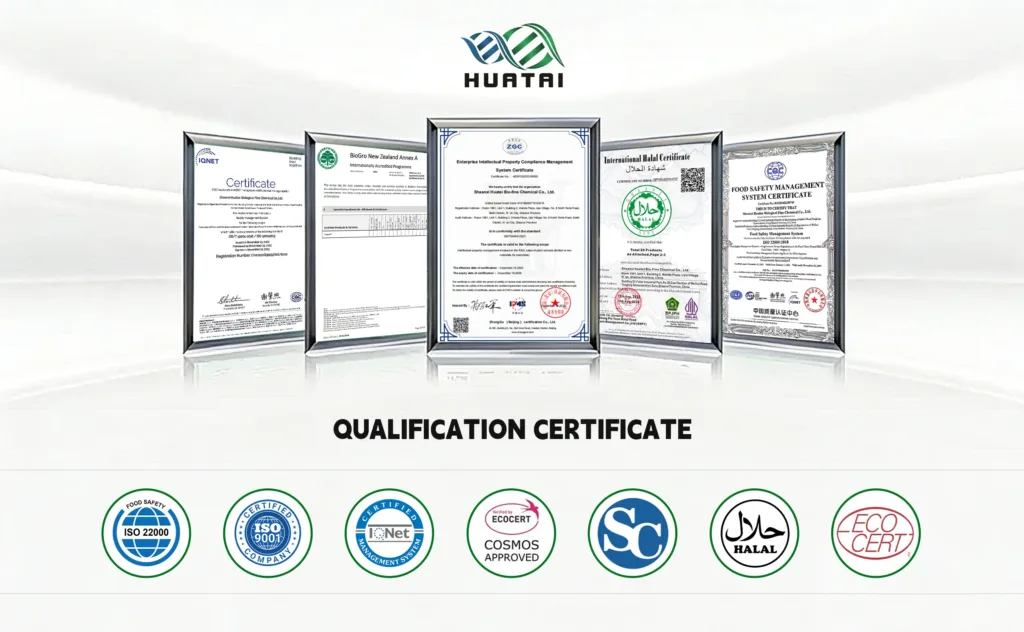
COSMOS certification for clean beauty positioning: If the hyperpigmentation formula targets natural retail channels, confirm that the glabridin grade you are using is specifically listed in the supplier's COSMOS certificate scope — not just that the supplier holds a general COSMOS certificate.
Shaanxi Huatai Bio-Fine Chemical Co., Ltd. supplies COSMOS-certified glabridin powder in grades from 40% to 99%, plus the 10% water-soluble grade, to OEM manufacturers and cosmetic brands across 30+ countries. Batch COA is provided with every order; HPLC chromatogram, heavy metal report, and pesticide residue report available on request. Samples and technical documentation typically available within 24 hours.
Frequently Asked Questions
References
- Kubo I, Kinst-Hori I. Tyrosinase inhibitors from Glabridin. Bioorganic & Medicinal Chemistry, 1999, 7(7):1373-1379
- Hakozaki T, et al. The effect of niacinamide on reducing cutaneous pigmentation and suppression of melanosome transfer. British Journal of Dermatology, 2002, 147(1):20-31
- Yokota T, et al. The inhibitory effect of glabridin from licorice extracts on melanogenesis and inflammation. Pigment Cell Research, 1998, 11(6):355-361
- Zhu W, Gao J. The use of botanical extracts as topical skin-lightening agents. Journal of Investigative Dermatology Symposium Proceedings, 2008, 13(1):20-24
- Guangdong Weipu Testing Technology Co., Ltd. (CMA certified) — Clinical Study Report GZA01-23080632-JC-01
- Ecocert Greenlife SAS — COSMOS v4 Certificate N°277614-20251216_0226 (Huatai Bio-Fine Chemical)
- Huatai Bio-Fine Chemical — Glabridin Product Grade Matrix (internal specification, May 2026)

 English
 German
 Italian
 French
 Spanish
 Japanese
 Korean
 Russian