
UV exposure is one of the major extrinsic triggers of melanogenesis in most skin types, and its downstream effects — including hyperpigmentation, melasma aggravation, and post-inflammatory hyperpigmentation in UV-exposed or inflammation-prone skin — are among the most common brightening concerns. A product that reduces the UV trigger while simultaneously modulating the downstream melanogenic response addresses both aspects of the equation.
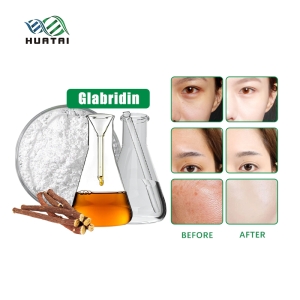
Glabridin is a suitable brightening active for this combination, but requires careful integration within the overall formulation system. Sunscreen products have specific regulatory requirements, pH constraints, and processing conditions that must be compatible with glabridin's stability requirements.
The Scientific Rationale for Combining UV Protection and Brightening
UV radiation triggers melanogenesis through two pathways:
Direct pathway: UV can activate melanogenic signaling pathways in melanocytes, including MITF-related regulation, leading to increased tyrosinase expression and activity.
Indirect pathway: UV generates reactive oxygen species (ROS) that trigger a cellular stress response, and stimulates keratinocytes to release prostaglandins and cytokines that contribute to increased melanocyte activity.
A sunscreen reduces UV exposure at the UV filtering stage, thereby lowering activation of melanogenic and inflammatory signaling pathways. Glabridin may help modulate downstream melanogenic responses. It has been reported to inhibit tyrosinase activity and exhibit anti-inflammatory activity, including effects on COX-related inflammatory pathways, thereby potentially contributing to attenuation of melanogenic activation under UV-induced or inflammation-associated conditions.
The combination is not redundant. It provides complementary protection layers across different levels of the pigmentation cascade: UV reduction through sunscreen filters and modulation of downstream melanogenic pathways through glabridin. Together, they improve overall control of UV-induced pigmentation compared with either approach alone.
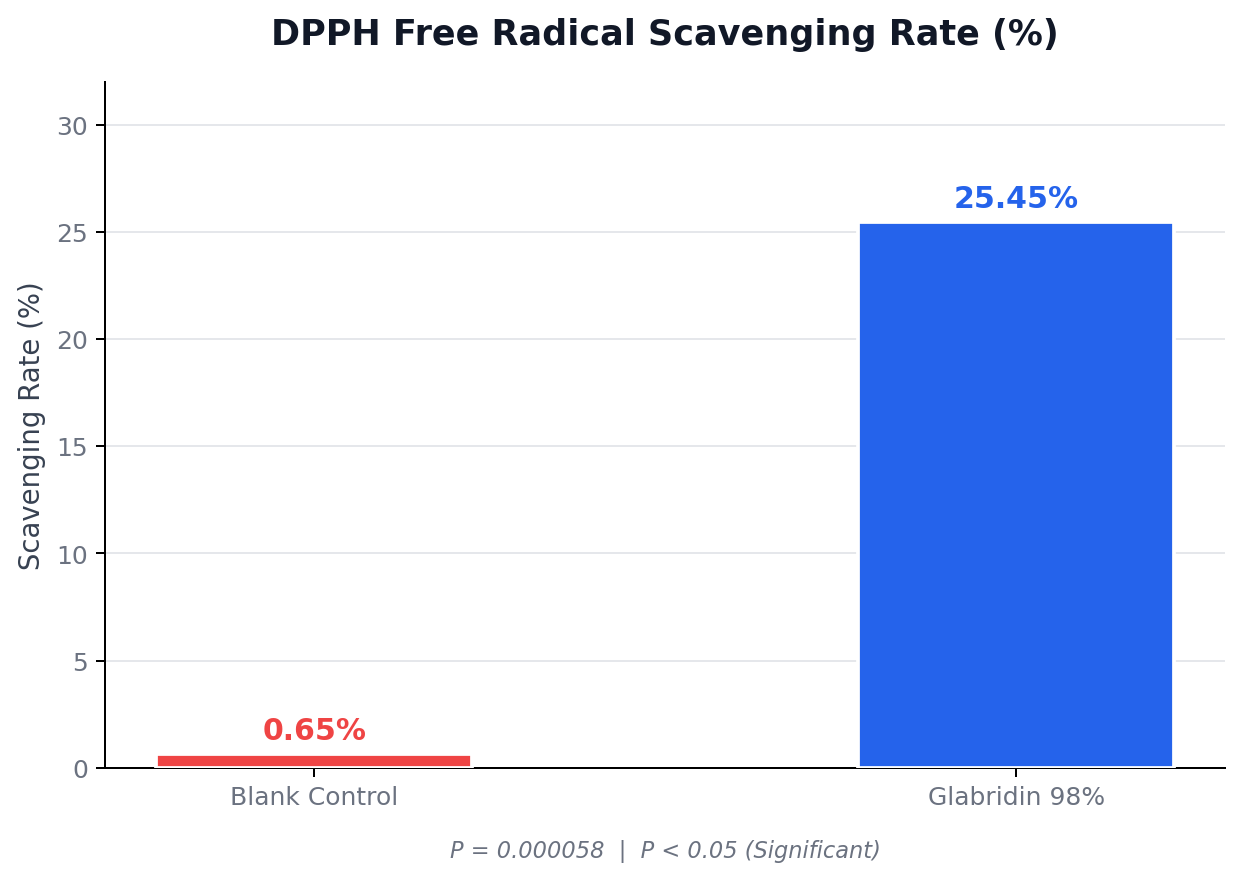
Additionally, glabridin's antioxidant activity — demonstrated by a DPPH radical scavenging rate of 25.45% in standardized in-vitro testing (Guangdong Youjie Testing Technology Co., Ltd., Report No. YJ-R-GX202503-0099) — suggests antioxidant potential under chemical free-radical systems and may contribute to oxidative stress modulation, providing antioxidant co-protection alongside SPF filtration.
Formulation Compatibility Considerations
pH
This is one of the key compatibility parameters for glabridin in SPF formulations.
Mineral sunscreen systems, particularly zinc oxide-based formulations, may require careful pH management because certain emulsion systems can tend to drift toward neutral or mildly alkaline conditions depending on the overall formulation design. pH above 7.0 may increase the risk of glabridin degradation under certain conditions and should be confirmed through stability testing. Many mineral SPF emulsions can be designed within a pH range of 5.5–6.5, but SPF performance and physical stability need to be re-validated after any pH adjustment.
Chemical/organic sunscreen systems typically tolerate a relatively broad pH range depending on the specific UV filters and formulation system. Many organic UV filters and their systems are compatible within pH 4.5–7.0, although stability is filter-dependent, allowing formulation flexibility within pH 5.0–6.0, which is well within glabridin's optimal range.
Formulation guideline: Design the SPF base to pH 5.0–6.5 prior to incorporating glabridin. If the sunscreen system requires a pH above 6.5, strengthen the antioxidant and metal chelation systems and evaluate the final formulation performance under the intended pH conditions. If pH exceeds 7.0, glabridin stability should be carefully evaluated, as higher pH may increase degradation risk under oxidative or environmental stress conditions.
| Sunscreen System | Typical pH Range | Glabridin Compatible? | Notes |
|---|---|---|---|
| Zinc oxide (uncoated) | 6.5–8.0 | ⚠️ pH-sensitive | May require buffering; system pH should be controlled for stability |
| Zinc oxide (coated/treated) | 5.5–7.0 | ✅ Compatible | More formulation-flexible; pH 5.5–6.5 commonly used |
| Titanium dioxide | 5.0–7.5 | ✅ Compatible | Largely formulation-dependent, not strongly pH-limited |
| Organic UV filters | 4.5–7.0 | ✅ Compatible | pH varies by filter; commonly enables pH 5.0–6.5 systems |
| Hybrid (mineral + organic) | 5.0–7.0 | ✅ Compatible (monitoring) | Optimize pH based on mineral component |
Processing Temperature
Organic UV filters are typically added to the oil phase and require thorough mixing at elevated temperatures (60–80°C) to ensure full dissolution. Glabridin is preferably added during the cool-down phase (typically below 60°C) to minimize thermal degradation risk. The processing sequence should be designed to ensure that the UV filter phase is fully prepared before glabridin addition.
Standard SPF processing sequence with glabridin:
- Process oil phase (UV filters dissolved) at required temperature
- Process water phase separately
- Emulsify at standard conditions
- Cool down to below 50°C
- Add glabridin (pre-dissolved in polyol, or 10% water-soluble grade direct)
- Add other cool-down actives
- Verify final pH
- Complete to specification
Interaction with UV Filters
Some UV filter systems may influence overall oxidative stability through formulation interactions, so compatibility testing is recommended. Key considerations:
- Avobenzone (Butyl Methoxydibenzoylmethane): No common incompatibility with glabridin has been widely reported, but compatibility should be confirmed in the final formula.
- Zinc oxide: Metal ions released from mineral systems may contribute to oxidative stress of phenolic actives; chelators such as EDTA may help improve stability.
- Titanium dioxide: Treated titanium dioxide is generally considered compatible with many cosmetic actives; compatibility should still be evaluated in the final formula.
The standard glabridin stabilization protocol — tocopherol (0.2–0.5%) + EDTA (0.05–0.1%) or sodium phytate + pH 5.0–6.5 — can support oxidative stability in many SPF systems.
Recommended Glabridin Grade for SPF Applications
| SPF Format | Recommended Glabridin Grade | Notes |
|---|---|---|
| Fluid SPF emulsion (O/W) | 40% white or 90% alcohol-soluble in polyol phase | Pre-dissolve in propylene glycol or butylene glycol; typically added during cool-down phase |
| Mineral sunscreen stick/balm (anhydrous) | 90% oil-soluble | 0.2% use level may be suitable for oil-phase systems; dispersion stability should be verified in the final formula |
| SPF tinted moisturizer (light O/W) | 40% white (pre-dissolved) or 10% water-soluble | White grade may reduce interference with color cosmetics pigments |
| Water-resistant SPF sport formula | 40% white (polyol phase) | Stability should be verified under water-resistance and high-shear conditions |
Why white grades are preferred for SPF: Most SPF tinted or untinted products are designed with neutral or controlled visual appearance aesthetics. The reddish-brown 40% grade may introduce a warm tone that can be less compatible with white or neutral-finish formulations commonly used in daily sunscreen products. Commonly used grades for SPF applications include 40% white, 90%, and 98% purity grades depending on formulation design requirements.
Active System Design for SPF + Brightening
Core Combination

| Active | Mechanism | Role |
|---|---|---|
| Sunscreen system | UV filtration | Reduces UV exposure and lowers UV-induced melanogenic stimulation |
| Glabridin (primary brightening) | Tyrosinase inhibition + anti-inflammatory activity (including COX-related pathways) + antioxidant activity | Helps modulate downstream melanogenic responses under UV-induced or inflammatory conditions; contributes to antioxidant support |
| Niacinamide | Melanosome transfer inhibition; barrier function | Downstream coverage; also provides skin-feel and formula aesthetics co-benefits |
| Stable Vitamin C derivative (AA-2G or 3-O-EAA) | Melanin modulation through antioxidant activity and reduction of oxidized melanogenesis intermediates | Supports ROS modulation and may complement UV-induced oxidative stress control; compatible at pH 5.0–6.5 |
What to avoid in SPF + brightening:
- Ascorbic acid — may create formulation challenges due to its low pH requirement and oxidation sensitivity
- Kojic acid — may present stability challenges, particularly in metal-containing systems, and skin tolerance should be evaluated
- High-dose niacinamide — should be evaluated for compatibility, sensory properties, and overall formula stability
SPF with Anti-PIH Positioning
For formulations targeting Fitzpatrick III–VI or PIH-prone skin specifically, the combination of glabridin's COX-related anti-inflammatory activity with UV reduction through sunscreen filters creates a strong anti-PIH rationale:
- UV protection reduces the UV-triggered melanogenic stimulus
- Glabridin may help modulate inflammatory pathways associated with pigmentation, including COX-related signaling
- Together, they address both UV-driven and inflammation-associated pathways involved in pigmentation
This is a science-based positioning for an SPF + brightening product targeting skin types with higher susceptibility to UV-induced and post-inflammatory pigmentation concerns, where both UV-driven and inflammation-associated pigmentation are common concerns.
SPF + Brightening Fluid Emulsion — Structural Blueprint
| Phase | Ingredient | Notes |
|---|---|---|
| Oil phase | UV filters (chemical/organic) | Per required SPF level; consult filter supplier for combination |
| Oil phase | Emollient esters | C12–15 alkyl benzoate, isononyl isononanoate |
| Oil phase | Mixed Tocopherols | 0.2–0.5%; recommended antioxidant support |
| Water phase | Purified water | Buffered |
| Water phase | Citric acid / Sodium citrate | pH adjustment system; final pH target 5.0–6.5 after all additions |
| Water phase | Disodium EDTA | 0.05–0.1%; metal ion chelation support, particularly useful in mineral sunscreen systems |
| Water phase | Niacinamide | 2–4% |
| Water phase | AA-2G or 3-O-Ethyl Ascorbic Acid | 1–3% |
| Oil phase (if mineral) | Zinc oxide / TiO₂ | Pre-dispersed; treated/coated grade preferred; monitor pH impact on final system |
| Cool-down | Glabridin 40% white (pre-dissolved in PG) | 0.1–0.3% active (depending on grade, efficacy target, and regulatory requirements) |
| Cool-down | Preservative | Appropriate for pH 5.0–6.0 |
| Final | pH verification | Final pH should ideally be maintained within 5.0–6.5 after all additions |
Packaging: Airless pump is recommended for reducing oxidation and supporting formula stability. Many SPF products use opaque or UV-protective packaging to protect UV filters and active ingredients, depending on the formulation design.
Regulatory note: SPF products are subject to drug or quasi-drug regulations in many markets. Confirm all active ingredient combinations, use levels, and labeling claims with regional regulatory guidance prior to commercialization. Sun protection claims may require specific substantiation protocols.
Every batch ships with COA, TDS, and SDS/MSDS. Additional testing available upon request.
References
- Yokota T, Nishio H, Kubota Y, Mizoguchi M. The inhibitory effect of glabridin from licorice extracts on melanogenesis and inflammation. Pigment Cell Research, 11(6), 355–361, 1998. DOI: 10.1111/j.1600-0749.1998.tb00494.x.
- Pan C, Liu X, Zheng Y, et al. The mechanisms of melanogenesis inhibition by glabridin: molecular docking, PKA/MITF and MAPK/MITF pathways. Food Science and Human Wellness, 12(1), 212–222, 2023. DOI: 10.1016/j.fshw.2022.07.011.
- Ao M, Shi Y, Cui Y, Guo W, Wang J, Yu L. Factors influencing glabridin stability. Natural Product Communications, Vol. 5(12), 1907–1912, 2010. DOI: 10.1177/1934578X1000501214. PMID: 21299118.
- Guangdong Youjie Testing Technology Co., Ltd. Report No. YJ-R-GX202503-0099. DPPH radical scavenging study, Glabridin 98%. Commissioned by Huatai Bio-Fine Chemical.
- Guangdong Weipu Testing Technology Co., Ltd. (CMA No. 202119135666). Report No. GZA01-23080632-JC-01. Human skin brightening efficacy study, 0.03% Glabridin. Commissioned by Huatai Bio-Fine Chemical.
- ICH Q1A(R2): Stability Testing of New Drug Substances and Products. International Council for Harmonisation, 2003.


 English
 German
 Italian
 French
 Spanish
 Japanese
 Korean
 Russian