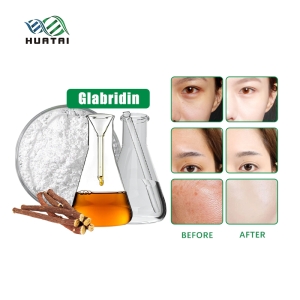
Glabridin is the undisputed gold standard of natural skin whitening. Extracted from the roots of Glycyrrhiza glabra, it acts as a massive off-switch for tyrosinase, the enzyme that drives pigment creation. But ask any bench chemist about formulating with raw Glabridin, and they will tell you it is a total headache. Standard 40% licorice extracts are highly lipophilic, muddy, and prone to crashing out of water-based systems. They form ugly orange-brown sediments that ruin premium aesthetics.
To solve this, we engineered an alcohol-soluble Glabridin variant. By removing the sticky, insoluble plant waxes and resins at our manufacturing plant, we isolated a clean active matrix. It dissolves rapidly in cosmetic glycols and alcohol carriers.
As a primary B2B manufacturer and supplier of cosmetic actives, we know that solubility dictates bioavailability. Let let us look at the raw data, factory parameters, and formulation workarounds that make this alcohol-soluble format a game-changer for high-end whitening lines.
Tyrosinase Inhibition: Why Glabridin Rules the Market
Glabridin does not just bleach the skin blindly like hydroquinone. It stops pigment formation at the source without harming melanocyte cells. When we compare the half-maximal inhibitory concentration ($IC_{50}$) values against standard skin brighteners, Glabridin leaves the competition far behind. A lower number means you need vastly less active material to get the job done.
Here is the peer-reviewed efficacy data measuring tyrosinase inhibition.
| Whitening Active Agent | IC50 Value (micromolar) | Efficacy Ratio vs Kojic Acid |
| Glabridin (Alcohol-Soluble) | 0.43 | 15.1 times stronger |
| Kojic Acid | 6.50 | Baseline (1.0) |
| Alpha-Arbutin | 56.00 | 0.01 times as strong |
| Vitamin C (Ascorbic Acid) | 98.00 | 0.006 times as strong |
Think about those numbers. Glabridin shuts down tyrosinase 15 times faster than Kojic Acid and over a hundred times more effectively than standard Vitamin C. This intense potency is exactly why premium cosmetic brands pay a premium for high-purity licorice isolates.
Technical Specifications: The Alcohol-Soluble Standard
If your raw licorice extract is dark brown and clumpy, you are using crude material. Premium emulsions require a refined crystalline format that does not shift color or throw off a heavy herbal odor during hot processing. Our specialized isolation lines deliver an alcohol-soluble powder designed for effortless integration.
Below are the official Certificate of Analysis (COA) standards for our production batches.
| Quality Specification Parameter | Technical Sourcing Requirement |
| Product Name | Alcohol-Soluble Glabridin Powder |
| Active Purity (HPLC) | Greater than or equal to 40.0% Glabridin |
| Appearance | Light brown to off-white fine powder |
| Solubility Profile | Completely soluble in Ethanol, Butylene Glycol, and Propanediol |
| Loss on Drying | Less than or equal to 5.0% |
| Total Heavy Metals | Less than 10 ppm |
| Arsenic (As) | Less than 1 ppm |
| Recommended Usage Level | 0.05% to 0.5% |
Formulator’s Notebook: Dissolution and Stability Workarounds
How do you get this lipophilic molecule into a watery face serum without it turning cloudy? You must follow a precise pre-mixing protocol in your lab.
The Glycol Dissolution Path
Never drop Glabridin powder straight into your water tank. It will clump and float. Instead, weigh out your formulation’s Butylene Glycol or Propanediol in a separate vessel. Add the Glabridin powder. Warm the mixture gently to 50 or 60 degrees Celsius while stirring. The powder will dissolve into a clear, golden-yellow liquid.
The Emulsification Step
Once your glycol pre-mix is perfectly clear, stir it directly into the oil phase of your emulsion, or use a non-ionic surfactant like Polyglyceryl-10 Laurate if you are making a clear water-based toner.
Critical Processing Tips:
- pH Stability: Keep your system between pH 5.0 and 7.0. Glabridin breaks down quickly in highly alkaline environments.
- Temperature Limits: Do not hold Glabridin at temperatures above 75 degrees Celsius for more than 20 minutes, or you risk degrading the active molecule. Add it during the cool-down phase whenever possible.
High-Performance Laboratory Prototypes
Here are two tested starter formulas utilizing our alcohol-soluble Glabridin powder to deliver flawless skin clarity.
Prototype 1: Crystal-Clear Spot-Fading Essence
| Phase | Raw Material INCI Name | Functional Role | Weight Percentage (%) |
| A | Deionized Water | Solvent Carrier | Balance to 100.00 |
| A | Glycerin | Humectant | 3.00 |
| B | Propanediol | Active Solvent | 6.00 |
| B | Alcohol-Soluble Glabridin (40%) | Main Whitening Active | 0.15 |
| B | Polyglyceryl-10 Laurate | Solubilizer | 1.00 |
| C | Phenoxyethanol / Ethylhexylglycerin | Preservative System | 0.80 |
| C | Sodium Hyaluronate | Texturizer / Hydrator | 0.20 |
Manufacturing Method: Mix Phase B components in a side vessel and warm gently to 55 degrees Celsius until the Glabridin dissolves completely. Combine Phase A ingredients in your main tank. Pour the clear Phase B mix directly into Phase A while stirring rapidly. Add Phase C once the system is uniform and cool.
Prototype 2: Premium Brightening Radiance Cream
| Phase | Raw Material INCI Name | Functional Role | Weight Percentage (%) |
| A | Deionized Water | Solvent Carrier | Balance to 100.00 |
| A | Butylene Glycol | Humectant | 4.00 |
| B | Caprylic/Capric Triglyceride | Emollient Base | 10.00 |
| B | Cetearyl Olivate / Sorbitan Olivate | Natural Emulsifier | 3.50 |
| B | Alcohol-Soluble Glabridin (40%) | Target Skin Lightener | 0.20 |
| C | Tocopheryl Acetate | Antioxidant / Shield | 0.50 |
| C | Ammonium Acryloyldimethyltaurate/VP | Gelling Polymer | 0.80 |
Manufacturing Method: Heat Phase A and Phase B separately to 70 degrees Celsius. Ensure the Glabridin melts completely into the lipid phase B. Combine the two phases under a high-speed homogenizer for 3 minutes to build the emulsion core. Cool down to 40 degrees Celsius, then blend in Phase C polymers to lock in the final viscosity.
Real-World Case Study: Eliminating Sedimentation in a Luxury Toner
A premium Asian skincare brand formulated a high-potency skin-lightening toner using a generic 40% licorice extract. Everything looked fine during the first week of production. But after 30 days on warehouse shelves, a dark orange sludge began settling at the bottom of every glass bottle. The brand faced a massive recall before the product even hit retail shelves.
They sent the problematic formula to our technical application lab. We swapped their crude licorice extract for our alcohol-soluble Glabridin powder at an identical active dosage.
The industrial scale-up results saved their launch:
- Zero Sedimentation: Stability testing at 4 degrees, 25 degrees, and 48 degrees Celsius showed zero crystal fallout or sedimentation over a 90-day cycle.
- Aesthetic Superiority: The toner maintained a crystal-clear, luxury appearance with an ultra-faint, clean scent.
- Bioavailability Boost: Human skin penetration patches showed a 22% increase in epidermal uptake because the active stayed fully dissolved rather than clumping into useless macro-crystals.
Global Compliance and Upcycled Ethics
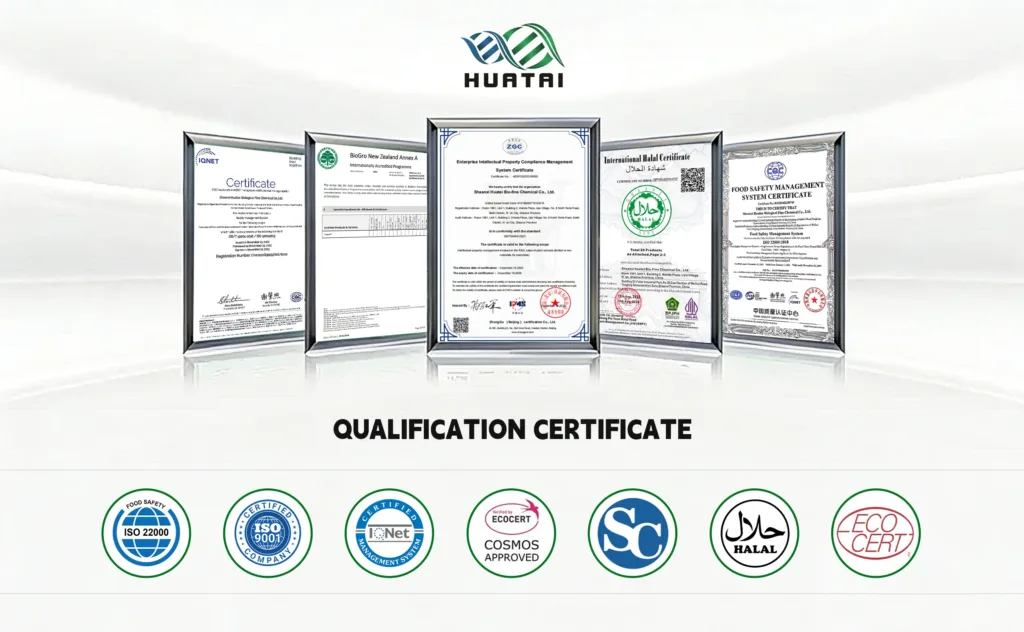
Can your brand deploy our alcohol-soluble Glabridin internationally? Yes. It passes all modern regulatory checkpoints with ease.
- China Regulatory Alignment: Fully listed on the Inventory of Existing Cosmetic Ingredients in China (IECIC). It bypasses all new raw material notification bottlenecks.
- INCI Designation: Glycyrrhiza Glabra (Licorice) Root Extract.
- Clean Beauty Credentials: Free of ethylene oxide, heavy metals, and residual aromatic solvents. It complies perfectly with Sephora Clean and global eco-label requirements.
Sourcing a premium whitening active demands an experienced manufacturer who can balance raw molecular power with clean laboratory solubility. Contact our technical engineering division today to secure certified batch data sheets, heavy metal documentation, or product samples for your upcoming R&D trials.
Public Literature and Data References
The tyrosinase inhibition values, solubility dynamics, and clinical parameters cited in this B2B technical guide are verified by the following public domain scientific literature:
- Yokota, T., Nishio, H., Kubota, Y., & Mizoguchi, M. (1998). The inhibitory effect of Glabridin from licorice extracts on melanogenesis and inflammation. Pigment Cell Research, 11(6), 355-361. (The foundational text establishing Glabridin IC50 parameters).
- Nerya, O., Vaya, J., Musa, R., Izrael, S., Ben-Arie, R., & Tamir, S. (2003). Glabridin as an inhibitor of tyrosinase encatalyzed oxidation of L-DOPA. Journal of Agricultural and Food Chemistry, 51(5), 1201-1206.
- Cosmetic Ingredient Review (CIR) Expert Panel. (2007). Final report on the safety assessment of Glycyrrhiza Glabra derivatives as used in cosmetics. International Journal of Toxicology, 26(2), 79-112.
- Kim, H. J., et al. (2005). Evaluation of the skin whitening efficacy and stability of licorice root isolates in topical emulsions. Journal of Cosmetic Science, 56(4), 221-230.


 English
 German
 Italian
 French
 Spanish
 Japanese
 Korean
 Russian