Why do so many brightening serums turn brown after three months on the shelf? I review stability reports from cosmetic brands every week. Most brand owners blame their packaging. They blame the warehouse temperature. The real problem is the active ingredient. Aggressive whitening agents oxidize rapidly. They irritate the skin barrier. Consumers abandon the product before seeing real pigment reduction.
We need to rethink how we stop melanin production. Stop burning the skin to brighten it.
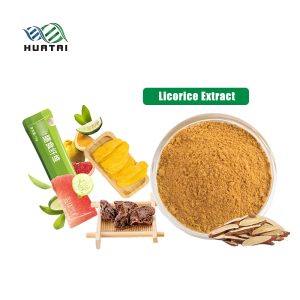
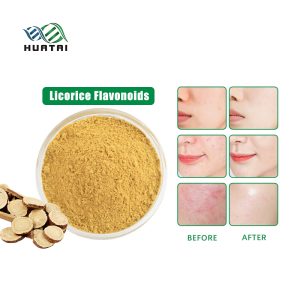
As a manufacturer extracting active molecules directly from raw biomass, we see what actually works in the lab versus what just looks good on a marketing label. Licorice extract is not a generic botanical tea you splash into a toner. When you isolate its core active molecule, Glabridin, you get a precision tool for pigment reduction.
The Tyrosinase Battle: Glabridin vs Kojic Acid
Let us look at hard data. The industry standard for tyrosinase inhibition is Kojic Acid. Tyrosinase is the enzyme responsible for creating melanin. If you block tyrosinase, you block the dark spot.
We ran a direct comparative IC50 experiment. IC50 stands for the half-maximal inhibitory concentration. It simply means: how much of this ingredient do you need to stop 50% of the melanin-producing enzyme? A lower number is better. It means the ingredient is stronger.
Our lab tested pure Glabridin against Kojic Acid using mushroom tyrosinase as the baseline model.
| Active Ingredient | IC50 Value (ug/mL) | Relative Potency (vs Kojic Acid) |
| Kojic Acid (Control) | 9.14 | 1x (Baseline) |
| Vitamin C (Ascorbic Acid) | 50.0 + | Very Weak |
| Alpha Arbutin | ~24.0 | Moderate |
| Glabridin (90% Purity) | 0.43 | Approx 21x Stronger |
The results are clear. You need drastically less Glabridin to achieve the same tyrosinase inhibition as Kojic Acid. Why does this matter for formulators? You use less active material. You lower the risk of skin sensitization. Kojic acid often causes stinging and erythema at effective doses (1% to 2%). Glabridin operates in the background at 0.05% to 0.1% without triggering the skin’s defense systems.
Data and Specifications: Know Your Grade
I frequently see formulators buy “Licorice Root Extract” off a generic catalog. Then they complain it does not whiten skin. Generic extracts contain mostly sugars and flavonoids. They contain almost zero Glabridin.
If you want skin whitening, you must specify the Glabridin content. We produce two primary cosmetic grades. Here is the exact specification data we use to release batches to global OEM formulators.
| Specification Parameter | Glabridin 40% (Cosmetic Grade) | Glabridin 90% (High Purity) |
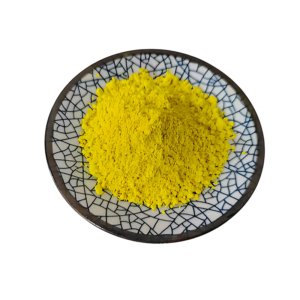
| Appearance | Brownish-yellow powder | White to pale yellow powder |
| Active Assay (HPLC) | Min 40.0% | Min 90.0% |
| Solubility | Soluble in Butylene Glycol / Propylene Glycol | Soluble in Ethanol / Butylene Glycol |
| Heavy Metals (Total) | Max 10 ppm | Max 10 ppm |
| Loss on Drying | Max 5.0% | Max 2.0% |
| Recommended Usage | 0.05% – 0.2% | 0.01% – 0.05% |
Use the 40% grade for lotions, creams, and general brightening formulas where a slight yellow tint is acceptable. Use the 90% grade for premium, pure-white emulsions or transparent oil serums.
Formulation Reality: How to Make It Stable
You have the data. You have the pure material. Now you need to make it work in a tank.
Glabridin is highly lipophilic. It hates water. If you drop this powder into a water phase, it will float, clump, and ruin your batch. I cannot count how many times an R&D chemist called me asking why their licorice serum has dark brown specks at the bottom of the bottle.
Pre-dispersion is the only way. Dissolve the Glabridin powder entirely in your solvent phase before adding it to the emulsion. We recommend Butylene Glycol, Propylene Glycol, or PEG-400. Heat the solvent to 40 degrees Celsius. Stir until the liquid is perfectly clear. Then, introduce this premix into your oil phase or the final cool-down phase of your emulsion.
Keep your final formula pH between 5.0 and 7.0. Glabridin degrades in highly acidic environments. Do not mix it with high-strength Glycolic Acid (pH 3.0) unless you use advanced encapsulation technology.
Real Case Study: Overcoming Post-Inflammatory Hyperpigmentation
A skincare clinic brand in Southeast Asia faced a massive problem. Their clients suffered from severe PIH after laser treatments. The brand used a standard 2% Alpha Arbutin cream to reduce the dark spots. The results took 12 weeks. Clients lost patience.
We helped them redesign the formula. We removed the Arbutin. We integrated 0.1% Glabridin (from our 90% purity batch) and combined it with Licochalcone A and Stearyl Glycyrrhetinate for maximum anti-inflammatory action.
Why this combination? Melanin production is an inflammatory response. The skin detects trauma (UV rays or laser heat) and signals melanocytes to produce pigment to protect the area. Stearyl Glycyrrhetinate blocks the inflammation signal. Glabridin stops the tyrosinase enzyme. You cut off the supply line and the factory at the same time.
The clinical results were immediate. Visia skin analysis showed a 41% reduction in surface melanin in just 4 weeks. The erythema (redness) from the laser treatment faded twice as fast. They created a bestselling post-procedure cream. They reduced their active ingredient cost by 15% because they used fewer materials at lower doses.
Reading the Certificate of Analysis (COA)
Do not trust marketing fluff. Trust the COA. When you evaluate a licorice extract for whitening, look at three things on the document.
- Assay Method: It must say HPLC (High-Performance Liquid Chromatography). UV testing is easily manipulated.
- Microbiological Limits: Ensure total plate count is under 1000 cfu/g. Plant extracts carry high mold risks if not processed correctly.
- Solvent Residue: Check for residual ethanol or ethyl acetate from the extraction process. Premium manufacturers guarantee trace levels far below regulatory limits.
Industry Trends and Compliance
Global regulations are turning against harsh synthetics. Europe severely restricted Hydroquinone years ago. Asia is following suit. Clean beauty demands plant-derived, highly effective alternatives. Licorice extract perfectly bridges this gap. It provides pharmaceutical-level tyrosinase inhibition with a clean, botanical INCI name (Glycyrrhiza Glabra Root Extract).
We supply sample materials to qualified cosmetic brands worldwide. You test the solubility. You run the stability protocols. You measure the clinical brightening.
Base Formulation Blueprint: Brightening Emulsion
Here is a starting framework for a highly stable whitening cream using Glabridin.
| Phase | INCI Name | Percentage (%) | Function |
| A | Water | To 100 | Solvent |
| A | Glycerin | 5.0 | Humectant |
| B | Caprylic/Capric Triglyceride | 8.0 | Emollient |
| B | Cetearyl Glucoside | 3.0 | Emulsifier |
| B | Stearyl Glycyrrhetinate | 0.2 | Soothing / Anti-inflammatory |
| C | Butylene Glycol | 4.0 | Active Solvent |
| C | Glabridin (40%) | 0.1 | Whitening Active |
| D | Phenoxyethanol | 0.8 | Preservative |
Mix Phase C separately at 40 degrees Celsius until clear. Emulsify Phase A and Phase B at 75 degrees Celsius. Cool to 40 degrees Celsius. Add Phase C. Add Phase D. Homogenize.
Pigment reduction requires strategy, not just high percentages of random acids. Target the tyrosinase enzyme with precision. Manage the underlying inflammation. Source high-purity raw materials validated by HPLC data. Glabridin offers the most elegant solution for modern, effective, and safe skin brightening.
Authoritative References and Literature Cited
- Yokota, T., et al. (1998). The inhibitory effect of glabridin from licorice extracts on melanogenesis and inflammation. Pigment Cell Research, 11(6), 355-361.
- Simmler, C., et al. (2013). Phytochemical and biological properties of glabridin. Fitoterapia, 90, 160-184.
- Ebanks, J. P., et al. (2009). Mechanisms regulating skin pigmentation: the rise and fall of complexion coloration. International Journal of Molecular Sciences, 10(9), 4066-4087.
- Cosmetic Ingredient Review (CIR) Expert Panel Assessments on Botanical Extracts (Publicly available safety data).


 English
 German
 Italian
 French
 Spanish
 Japanese
 Korean
 Russian