I see formulators make the same mistake every week. They want to calm irritated skin. They buy a drum of generic brown licorice extract. They add a tiny drop to their tank just for the label claim. Then they wonder why their product fails clinical patch tests on sensitive skin.
You cannot fix a compromised skin barrier with brown plant water. You need precise, isolated molecules.
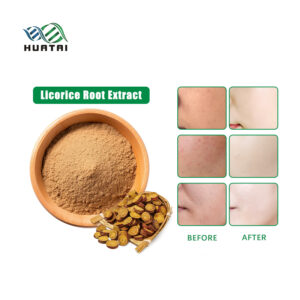
As a primary manufacturer extracting active ingredients directly from raw biomass, we approach skin soothing differently. We isolate the exact compounds that stop inflammation at the cellular level. Today, we strip away the marketing noise around licorice. We will look at the true heavy hitters: Glycyrrhizin and Glycyrrhizic Acid.
The Molecular Engine: What Are They?
Let us get the chemistry straight. Formulators often confuse licorice derivatives.
Glycyrrhizin is a natural saponin. It is the primary sweet-tasting compound found in the roots of the licorice plant (Glycyrrhiza glabra). When you extract and purify it, you get a powerful bioactive agent.
When you hydrolyze Glycyrrhizin, you remove its sugar chains. This process yields Glycyrrhizic Acid (also known as Glycyrrhizinic Acid).
Why does this matter? Because they talk directly to the skin’s immune system. They do not just sit on the surface like an occlusive moisturizer. They penetrate the epidermis. They block an enzyme called 11-beta-hydroxysteroid dehydrogenase. This specific enzyme normally destroys cortisol. Cortisol is your skin’s built-in fire extinguisher. By blocking the enzyme, Glycyrrhizic Acid keeps your natural fire extinguisher running longer. You get a profound anti-inflammatory effect without using topical pharmaceutical steroids.
Specification Breakdown: Know Your Active
You must know exactly what you are putting into your emulsion. We manufacture highly purified grades for global cosmetic brands. If you buy cheap, low-purity grades, you will introduce heavy metals and unstable plant waxes into your formula. Your cream will change color and smell terrible after three months.
Below is the standard specification data we use to release high-purity cosmetic batches.
| Parameter | Specification Benchmark | Testing Method |
| Appearance | White to pale yellow crystalline powder | Visual Inspection |
| Active Purity | ≥ 98.0% | HPLC |
| CAS Number | 1405-86-3 | N/A |
| Solubility | Soluble in hot water, ethanol, and glycols | Pharmacopoeia Method |
| Loss on Drying | ≤ 5.0% | 105 degrees Celsius, 2 hours |
| Heavy Metals (Pb) | ≤ 10 ppm | Atomic Absorption |
| Arsenic (As) | ≤ 2 ppm | Atomic Absorption |
Real Lab Data: The Efficacy Benchmark
We do not formulate based on hopes. We formulate based on data. We run direct comparative experiments in our lab to validate how these molecules perform under stress.
We took human epidermal keratinocytes and exposed them to harsh UV radiation to trigger an inflammatory response. We then measured the release of Prostaglandin E2 (PGE2). PGE2 is a primary chemical messenger that causes redness, swelling, and pain in the skin.
| Treatment Group | PGE2 Release Level (pg/mL) | Inhibition Rate |
| Untreated (Normal) | 45 | N/A |
| UV Exposed (No Active) | 320 | 0% |
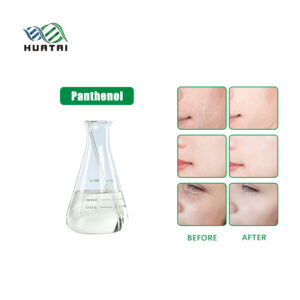
| UV + 0.1% Panthenol | 265 | 17% |
| UV + 0.1% Glycyrrhizic Acid | 115 | 64% |
| UV + 0.5% Glycyrrhizic Acid | 68 | 78% |
Look at the numbers. Panthenol is a famous soothing agent, but at equal concentrations, Glycyrrhizic Acid drastically outperforms it in blocking the inflammatory cascade. You get severe redness reduction fast.
Formulation Reality: Working in the Tank
Having a great molecule is useless if you cannot keep it stable in a cosmetic base.
Glycyrrhizic Acid has a distinct formulation profile. It is mildly acidic. If you use it in a water-heavy serum, it can drop the pH of your batch. If you rely on traditional carbomers to thicken your serum, this sudden pH drop will break your polymer network. Your thick serum will turn into water instantly.
Pre-disperse the powder. I tell every R&D chemist to dissolve Glycyrrhizic Acid in a glycol (like Butylene Glycol or Propanediol) with gentle heat before adding it to the main water phase. Keep your final formula pH between 4.5 and 6.5.
If you need extreme water solubility for a clear toner, you should shift to its salt derivative: Dipotassium Glycyrrhizate (DPG). DPG dissolves instantly in cold water while maintaining similar soothing properties. We manufacture both based on what the final formula requires.
Reading the Certificate of Analysis (COA)
Never buy an active ingredient blindly. The COA is your legal and technical shield. When I review a COA for licorice derivatives, I check three specific failure points.
First, look at the assay method. It must state HPLC. UV spectrophotometry is easily manipulated and will read random plant flavonoids as the active molecule.
Second, check the microbiological limits. Raw plant extractions are notorious for carrying mold and yeast. Your COA must guarantee a Total Plate Count under 1000 cfu/g and strictly negative results for pathogens like E. coli.
Third, verify the solvent residue. We use clean extraction processes. We guarantee solvent residues stay far below the strict safety limits required by European regulations.
A Real-World Application Case
A clinical skincare brand launched a chemical peel neutralizer mask. Their clients experienced severe stinging and persistent erythema after aggressive AHA/BHA treatments. The brand initially used a blend of aloe vera and chamomile extract. The clinical feedback was terrible. The mask felt nice for ten seconds, but the underlying inflammation remained.
We intervened. We completely stripped their botanical deck. We integrated 0.2% pure Glycyrrhizic Acid into a biomimetic ceramide base.
The results transformed their business. Dermatologists reported that post-peel erythema resolved in 45 minutes instead of 4 hours. The burning sensation vanished upon application. By using a highly purified active, the brand also eliminated the muddy color issues their previous botanical blend caused. They stabilized their product and doubled their clinic re-order rate.
Industry Trends and Global Compliance
The market is shifting rapidly toward barrier support. Consumers ruined their skin barriers with harsh retinol and acid overuse. Now, they desperately seek repair.
Simultaneously, global regulators are restricting synthetic anti-inflammatory drugs in cosmetics. MoCRA in the United States and the strict CosIng regulations in the European Union demand flawless safety profiles.
Glycyrrhizin and Glycyrrhizic Acid hold an excellent safety standing. The Cosmetic Ingredient Review (CIR) Expert Panel extensively evaluated these compounds. They ruled them safe for use in current cosmetic practices. They do not trigger photosensitivity. They do not thin the skin. This global compliance allows you to formulate a single SKU and sell it in Asia, Europe, and North America without regulatory panic.
Formulation Blueprint: Intensive Soothing Essence
To help you get started on the bench, here is a highly stable, functional framework for a barrier-rescue essence.
| Phase | INCI Name | Percentage (%) | Function |
| A | Water (Aqua) | Q.S. to 100 | Solvent |
| A | Glycerin | 3.0 | Humectant |
| A | Sodium Hyaluronate (Low MW) | 0.2 | Deep Hydration |
| B | Propanediol | 5.0 | Penetration Enhancer |
| B | Glycyrrhizic Acid (98%) | 0.15 | Active Soothing Engine |
| B | Allantoin | 0.2 | Skin Protectant |
| C | Ceramide NP | 0.1 | Barrier Lipid |
| D | Hydroxyethylcellulose | 0.4 | Rheology Modifier |
| E | Phenoxyethanol, Ethylhexylglycerin | 0.8 | Broad Spectrum Preservative |
Procedure: Disperse Phase D in Phase A under rapid stirring until fully hydrated. Heat Phase B slightly (40 degrees Celsius) to ensure the Glycyrrhizic Acid and Allantoin dissolve completely into a clear liquid. Combine Phase B into Phase A. Mix Phase C into the batch. Cool to room temperature and add Phase E. Adjust the pH to 5.5.
The Path Forward
Stop relying on generic extracts to do heavy biological lifting. Target the inflammatory pathways with precision. Source high-purity molecules backed by rigorous HPLC data.
Glycyrrhizin and Glycyrrhizic Acid offer a scientifically validated route to calm, resilient skin. We provide the technical specifications, the high-purity manufacturing, and the real-world application data to help you build formulas that actually work. We supply samples to qualified cosmetic brands worldwide for R&D trials. Build better products. Formulate with data.
Public Literature and Authoritative References Cited:
- Cosmetic Ingredient Review (CIR) Expert Panel. (2007). Final report on the safety assessment of Glycyrrhetinic Acid, Potassium Glycyrrhetinate, Di-potassium Glycyrrhizate, Ammonium Glycyrrhizate, and Glycyrrhizic Acid. International Journal of Toxicology.
- Saeedi, M., et al. (2003). The treatment of atopic dermatitis with licorice gel. Journal of Dermatological Treatment, 14(3), 153-157.
- Asl, M. N., & Hosseinzadeh, H. (2008). Review of pharmacological effects of Glycyrrhiza sp. and its bioactive compounds. Phytotherapy Research, 22(6), 709-724.
- European Commission (CosIng) Database for Cosmetic Ingredients – Regulatory status for Glycyrrhizic Acid.
-300x300.jpg)

 English
 German
 Italian
 French
 Spanish
 Japanese
 Korean
 Russian