
¿Por qué tantos sérums iluminadores se vuelven marrones después de tres meses en el estante? Reviso informes de estabilidad de marcas cosméticas cada semana. La mayoría de los propietarios de marcas culpan a su empaque. Culpan a la temperatura del almacén. El verdadero problema es el ingrediente activo. Los agentes blanqueadores agresivos se oxidan rápidamente. Irritan la barrera cutánea. Los consumidores abandonan el producto antes de ver una reducción real del pigmento.
Necesitamos repensar cómo detener la producción de melanina. Deja de quemar la piel para aclararla.
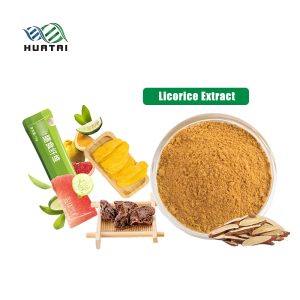
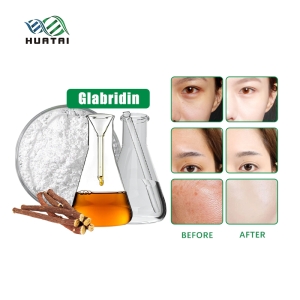
Como fabricante que extrae moléculas activas directamente de biomasa cruda, vemos lo que realmente funciona en el laboratorio frente a lo que solo se ve bien en una etiqueta de marketing. El extracto de regaliz no es un té botánico genérico que se vierte en un tónico. Cuando aíslas su molécula activa principal, la glabridina, obtienes una herramienta de precisión para la reducción de pigmentos.
La batalla de la tirosinasa: Glabridina vs. Ácido Kójico
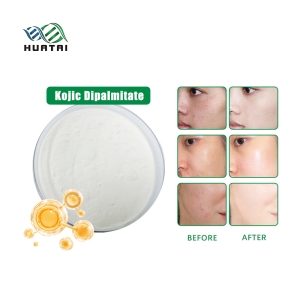
Echemos un vistazo a datos concretos. El estándar de la industria para la inhibición de la tirosinasa es el ácido kójico. La tirosinasa es la enzima responsable de crear melanina. Si bloqueas la tirosinasa, bloqueas la mancha oscura.
Realizamos un experimento comparativo directo de IC50. IC50 significa concentración inhibitoria media. Simplemente significa: ¿cuánto de este ingrediente necesitas para detener el 100% de la enzima productora de melanina? Un número más bajo es mejor. Significa que el ingrediente es más fuerte.
Nuestro laboratorio probó la glabridina pura frente al ácido kójico utilizando tirosinasa de champiñón como modelo de referencia.
| Ingrediente activo | Valor IC50 (ug/mL) | Potencia Relativa (vs. Ácido Kójico) |
| Ácido Kójico (Control) | 9.14 | 1x (Referencia) |
| Vitamina C (Ácido Ascórbico) | 50.0 + | Muy Débil |
| Alfa arbutina | ~24.0 | Moderado |
| Glabridina (90% de Pureza) | 0.43 | Aproximadamente 21 veces más fuerte |
Los resultados son claros. Necesitas drásticamente menos glabridina para lograr la misma inhibición de la tirosinasa que el ácido kójico. ¿Por qué esto es importante para los formuladores? Usas menos material activo. Reduces el riesgo de sensibilización de la piel. El ácido kójico a menudo causa escozor y eritema en dosis efectivas (1% a 2%). La glabridina opera en segundo plano al 0.05% a 0.1% sin activar los sistemas de defensa de la piel.
Datos y Especificaciones: Conoce tu Grado
Con frecuencia veo formuladores que compran "Extracto de Raíz de Regaliz" de un catálogo genérico. Luego se quejan de que no blanquea la piel. Los extractos genéricos contienen principalmente azúcares y flavonoides. Contienen casi cero glabridina.
Si quieres blanqueamiento de la piel, debes especificar el contenido de glabridina. Producimos dos grados cosméticos principales. Aquí están los datos exactos de especificación que utilizamos para liberar lotes a formuladores OEM globales.
| Parámetro de especificación | Glabridina 40% (Grado Cosmético) | Glabridina 90% (Alta Pureza) |
| Apariencia | Polvo amarillo parduzco | Polvo de color blanco a amarillo pálido |
| Active Assay (HPLC) | Mínimo 40% | Mínimo 90% |
| Solubilidad | Soluble en Butilenglicol / Propilenglicol | Soluble en Etanol / Butilenglicol |
| Metales Pesados (Total) | Máximo 10 ppm | Máximo 10 ppm |
| Pérdida por secado | Máx. 5.0% | Máximo 2% |
| Uso recomendado | 05% – 0.2% | 0,01% – 0,05% |
Usa el grado 40% para lociones, cremas y fórmulas iluminadoras generales donde se acepta un ligero tinte amarillo. Usa el grado 90% para emulsiones premium de color blanco puro o sérums de aceite transparentes.
Realidad de la Formulación: Cómo Hacerlo Estable
Tienes los datos. Tienes el material puro. Ahora necesitas hacerlo funcionar en un tanque.
La glabridina es altamente lipofílica. Odia el agua. Si dejas caer este polvo en una fase acuosa, flotará, se aglomerará y arruinará tu lote. No puedo contar cuántas veces un químico de I+D me llamó preguntando por qué su sérum de regaliz tenía motas marrones oscuras en el fondo de la botella.
La pre-dispersión es la única manera. Disuelve completamente el polvo de glabridina en tu fase solvente antes de añadirlo a la emulsión. Recomendamos Butilenglicol, Propilenglicol o PEG-400. Calienta el solvente a 40 grados Celsius. Revuelve hasta que el líquido esté perfectamente claro. Luego, introduce esta premezcla en tu fase oleosa o en la fase final de enfriamiento de tu emulsión.
Mantén el pH de tu fórmula final entre 5.0 y 7.0. La glabridina se degrada en ambientes muy ácidos. No la mezcles con Ácido Glicólico de alta concentración (pH 3.0) a menos que utilices tecnología de encapsulación avanzada.
Caso de Estudio Real: Superando la Hiperpigmentación Post-Inflamatoria
Una marca de clínica de cuidado de la piel en el Sudeste Asiático enfrentó un gran problema. Sus clientes sufrían de PIH severa después de tratamientos con láser. La marca usó una crema estándar de 2% de Alfa Arbutina para reducir las manchas oscuras. Los resultados tardaron 12 semanas. Los clientes perdieron la paciencia.
Les ayudamos a rediseñar la fórmula. Eliminamos la Arbutina. Integramos 0.1% de Glabridina (de nuestro lote de pureza 90%) y la combinamos con Licochalcona A y Estearil Glicirretinato para una máxima acción antiinflamatoria.
¿Por qué esta combinación? La producción de melanina es una respuesta inflamatoria. La piel detecta trauma (rayos UV o calor del láser) y señala a los melanocitos que produzcan pigmento para proteger el área. El Estearil Glicirretinato bloquea la señal de inflamación. La Glabridina detiene la enzima tirosinasa. Cortas la línea de suministro y la fábrica al mismo tiempo.
Los resultados clínicos fueron inmediatos. El análisis de piel Visia mostró una reducción del 40% en la melanina superficial en solo 4 semanas. El eritema (enrojecimiento) del tratamiento con láser se desvaneció el doble de rápido. Crearon una crema post-procedimiento superventas. Redujeron su costo de ingredientes activos en un 15% porque usaron menos materiales en dosis más bajas.
Lectura del Certificado de Análisis (COA)
No confíes en la palabrería de marketing. Confía en el COA. Cuando evalúes un extracto de regaliz para blanqueamiento, mira tres cosas en el documento.
- Método de Ensayo: Debe decir HPLC (Cromatografía Líquida de Alta Resolución). Las pruebas UV se manipulan fácilmente.
- Límites Microbiológicos: Asegúrate de que el recuento total de placas esté por debajo de 1000 ufc/g. Los extractos de plantas conllevan altos riesgos de moho si no se procesan correctamente.
- Residuo de Solvente: Verifica si hay residuos de etanol o acetato de etilo del proceso de extracción. Los fabricantes premium garantizan niveles traza muy por debajo de los límites regulatorios.
Tendencias de la industria y cumplimiento
Las regulaciones globales se están volviendo en contra de los sintéticos agresivos. Europa restringió severamente la Hidroquinona hace años. Asia está siguiendo el ejemplo. La belleza limpia exige alternativas de origen vegetal y altamente efectivas. El extracto de regaliz cierra perfectamente esta brecha. Proporciona inhibición de la tirosinasa a nivel farmacéutico con un nombre INCI limpio y botánico (Extracto de Raíz de Glycyrrhiza Glabra).
Suministramos materiales de muestra a marcas cosméticas calificadas en todo el mundo. Usted prueba la solubilidad. Ejecuta los protocolos de estabilidad. Mide el brillo clínico.
Plano de Formulación Base: Emulsión Iluminadora
Aquí hay un marco de partida para una crema blanqueadora altamente estable que utiliza Glabridina.
| Fase | Nombre INCI | Porcentaje (%) | Función |
| A | Agua | Hasta 100 | Solvente |
| A | Glicerina | 5.0 | Humectante |
| B | Caprylic/Capric Triglyceride | 8.0 | Emollient |
| B | Cetearil Glucósido | 3.0 | Emulsionante |
| B | estearilglicirretinato | 0.2 | Calmante / Antiinflamatorio |
| do | Butilenglicol | 4.0 | Solvente Activo |
| do | Glabridina (40%) | 0.1 | Activo Blanqueador |
| D | Fenoxietanol | 0.8 | Preservativo |
Mezcle la Fase C por separado a 40 grados Celsius hasta que esté transparente. Emulsione la Fase A y la Fase B a 75 grados Celsius. Enfríe a 40 grados Celsius. Agregue la Fase C. Agregue la Fase D. Homogeneice.
La reducción de pigmentos requiere estrategia, no solo altos porcentajes de ácidos aleatorios. Diríjase a la enzima tirosinasa con precisión. Controle la inflamación subyacente. Obtenga materias primas de alta pureza validadas por datos de HPLC. La glabridina ofrece la solución más elegante para un brillo de piel moderno, efectivo y seguro.
Referencias autorizadas y literatura citada
- Yokota, T., et al. (1998). El efecto inhibidor de la glabridina de extractos de regaliz sobre la melanogénesis y la inflamación. Pigment Cell Research, 11(6), 355-361.
- Simmler, C., et al. (2013). Propiedades fitoquímicas y biológicas de la glabridina. Fitoterapia, 90, 160-184.
- Ebanks, J. P., et al. (2009). Mecanismos que regulan la pigmentación de la piel: el auge y la caída de la coloración del cutis. Revista Internacional de Ciencias Moleculares, 10(9), 4066-4087.
- Evaluaciones del Panel de Expertos del Cosmetic Ingredient Review (CIR) sobre Extractos Botánicos (Datos de seguridad disponibles públicamente).

 English
 German
 Italian
 French
 Spanish
 Japanese
 Korean
 Russian