
Formulators often wonder why their expensive brightening serum turns brown at week eight. We see this daily on the factory floor. You formulate a beautiful Alpha Arbutin product. You put it in the stability oven. Two months later, the pH crashes. The emulsion smells sharp. The clinical trial fails.
Why does this happen? You are treating a fragile glycoside like basic glycerin.
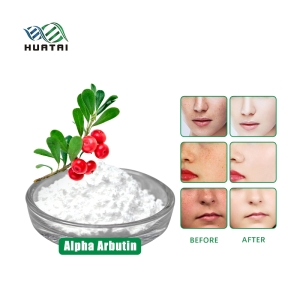
Let us drop the marketing myths. Alpha Arbutin is highly effective, but it demands strict chemical respect. It is a synthetic molecule designed to safely deliver hydroquinone to the melanocytes without causing cellular death. It acts as a decoy. The tyrosinase enzyme binds to the arbutin instead of tyrosine. This halts melanin production instantly. But if you process it wrong, you break the molecule.
Look at the benchmark data. We test Alpha Arbutin against its cheaper counterpart, Beta Arbutin, to show the raw performance gap.
| Specification Marker | Alpha Arbutin | Beta Arbutin | Formulation Impact |
| Tyrosinase Inhibition Power | High (10x stronger) | Low | Determines clinical efficacy speed |
| Optimal Formulation pH | 3.5 to 6.5 | 5.0 to 7.0 | Dictates compatibility with other acids |
| Water Solubility | Excellent (151 g/L) | Poor | Affects clarity in liquid serums |
| Light Stability | Moderate | Very Poor | Demands opaque packaging |
The Hydrolysis Trap: A Formulation Case Study
Last spring, a clinical skincare brand brought us a failing formula. They wanted an aggressive brightening serum. They combined 2% Alpha Arbutin with 10% pure L-Ascorbic Acid. The logic seemed sound. But chemistry does not care about marketing concepts.
The pure Vitamin C drove the formula pH down to 3.0. At this highly acidic level, the glycosidic bond in the Alpha Arbutin broke apart. The molecule hydrolyzed directly into free hydroquinone. The product became illegal to sell in Europe overnight.
We tore their formula down. We replaced the highly acidic L-Ascorbic Acid with Ascorbyl Glucoside. We added a Lactic Acid and Sodium Lactate buffer system to lock the water phase strictly at pH 5.0. We instructed them to dissolve the Alpha Arbutin in cold water, adding it only during the final emulsion cool-down below 40 degrees Celsius.
The new formula passed a 12-week accelerated stability test at 45 degrees Celsius. The color remained pristine. The hydroquinone levels remained undetectable.
Decoding the Certificate of Analysis (COA)
You cannot fix a formula if your raw material is compromised. Buyers often purchase cheap active ingredients. They ignore the trace impurities. You must audit your Certificate of Analysis aggressively.
| Critical COA Marker | Required Standard | Why It Matters For Production |
| Assay (HPLC) | Greater than 99.0% | Guarantees consistent clinical performance |
| Hydroquinone Residue | Less than 10 ppm | Critical for EU and US regulatory compliance |
| Heavy Metals (Pb, As) | Less than 1 ppm | Trace metals catalyze oxidation and color shifts |
| pH Value (1% Solution) | 5.0 to 7.0 | Proves the powder has not started degrading |
Synergistic R&D Combinations
Alpha Arbutin works best when it has a support system. Melanin production is a multi-step factory. You need to block different doors.
- The Dual-Blocker System: Combine 1.5% Alpha Arbutin with 1.0% Kojic Acid Dipalmitate. The arbutin acts as the tyrosinase decoy. The Kojic Acid ester chelates the copper ions the enzyme needs to fire. You starve the process from two sides.
- The Transfer Blocker: Pair 2.0% Alpha Arbutin with 4.0% Niacinamide. The arbutin stops new pigment from forming. The Niacinamide stops existing pigment from traveling up into the visible skin layers.
- The Exfoliation Catalyst: Mix 1.0% Alpha Arbutin with 5.0% Mandelic Acid. The large molecular weight of the AHA gently dissolves dead skin without triggering inflammation. This clears the path for the arbutin to penetrate deeper into the epidermis.
Global Compliance and Industry Trends
Regulators are watching brightening agents closely. The European Scientific Committee on Consumer Safety (SCCS) recently issued a definitive ruling on Alpha Arbutin. The era of dumping 5% into a cream is over.
You must cap your usage. The strict legal limit is 2% in face creams and 0.5% in body lotions. The regulators set these limits because of the theoretical risk of hydroquinone release. This is why our high-purity specification matters. When you start with a raw material that guarantees less than 10 ppm of free hydroquinone, your safety assessor signs off on the Cosmetic Product Safety Report (CPSR) without hesitation.
You do not need to push the dosage limits to get results. You just need pure molecules and stable processing.
Test the raw material on your bench. Dissolve the powder in your buffered water phase. Drop the emulsion into the incubator. Measure the pH drift over four weeks. Let the stability data prove the performance.
References from Public Literature:
- Sugimoto, K., et al. (2004). “Inhibitory effects of alpha-arbutin on melanin synthesis in cultured human melanoma cells and a three-dimensional human skin model.” Biological and Pharmaceutical Bulletin, 27(4), 510-514.
- SCCS (Scientific Committee on Consumer Safety). (2023). “Opinion on the safety of alpha-arbutin and beta-arbutin in cosmetic products.” European Commission.
- Sarkar, R., et al. (2013). “Cosmeceuticals for hyperpigmentation: What is available?” Journal of Cutaneous and Aesthetic Surgery, 6(1), 4-11.

 English
 German
 Italian
 French
 Spanish
 Japanese
 Korean
 Russian