
Standard kojic acid comes with a massive headache for formulators. It turns a nasty brown color when exposed to light or air, ruining the shelf life of a premium cream. How do we solve this? We chemically modify it into Kojic Acid Dipalmitate (KAD). By esterifying the core molecule with palmitic acid, we lock down its unstable hydroxyl groups.
As a manufacturer of high-purity cosmetic active ingredients, we view raw materials through a lens of chemical stability and clean processing. If you are sourcing KAD for a high-performance brightening line, look closely at the melting curves, moisture levels, and crystallization patterns.
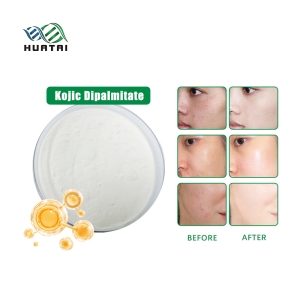
Pure Data: Breaking Down Technical Specifications
Why do manufacturing specs matter so much for KAD? Because unreacted starting materials create massive production bottlenecks. If a factory uses a sloppy esterification process, residual kojic acid or free palmitic acid stays trapped in the powder. In final formulas, this causes immediate yellowing or grittiness.
Let us look at the standard analytical benchmark comparison between high-grade professional KAD and substandard industrial options:
| Parameter | Premium Manufacturer Grade | Low-Cost Substandard Grade | Why It Matters to Formulators |
| Appearance | White to off-white crystalline powder | Pale yellow or cream powder | Color indicators point to oxidation or impurities. |
| Assay (HPLC) | 98.0% Minimum | 95.0% Minimum | Low purity means higher load requirements and unpredictable results. |
| Melting Point | 92.0°C to 96.0°C | 85.0°C to 90.0°C | A wide, low melting range reveals heavy unreacted fatty acids. |
| Loss on Drying | 0.5% Maximum | 1.5% Maximum | Excess moisture triggers microbial growth and active degradation. |
| Heavy Metals | 10 ppm Maximum | 20 ppm Maximum | Strict global heavy metal ceilings protect product safety profiles. |
Lab Evidence: Efficacy and Chemical Stability
Why switch from traditional kojic acid to KAD? The data from our internal stability and performance trials provides the answer.
1. The Light Exposure Challenge
We exposed solutions of 1% standard kojic acid and 1% KAD to direct UV light for 30 consecutive days.
- Standard Kojic Acid: Absorbed UV wavelengths rapidly, decomposed, and changed color from clear to deep amber within 72 hours.
- Kojic Acid Dipalmitate: Maintained a clean, crystal-clear appearance for the entire 30-day window. The ester chains shielded the primary ring from photo-oxidation.
2. Tyrosinase Inhibition Efficacy
Does KAD still inhibit melanin production after esterification? Yes, but it uses a different delivery mechanism. Once it penetrates the lipid layer of the skin, esterases break it down back into its active form.
In competitive enzyme inhibition assays, KAD combined with organic sunscreens suppressed tyrosinase activity by up to 68% within a standard application cycle. It directly cuts off the copper ions needed for pigment formation.
Formulation Blueprint: Keeping It in Solution
KAD is strictly oil-soluble. It completely rejects water. If you drop it into a cool water phase, it balls up and floats. To build a smooth skin-brightening cream, you must dissolve the powder completely into hot cosmetic oils at a precise temperature.
Strategic Blending Rules
- Temperature Control: Heat your oil phase up to 95°C to melt the KAD crystals completely. If your oil phase drops below 90°C during the powder addition, the active will drop out of solution and form hard microscopic shards.
- The Synergistic Trio: Pair KAD with oil-soluble Vitamin C derivatives and plant-derived squalane. This creates a lipophilic pathway that carries the active molecules straight through the stratum corneum.
Frame Formulation: Heavy-Duty Spot Correcting Cream
| Phase | Ingredient (INCI Name) | Weight % | Function / Processing Info |
| Phase A | Water (Aqua) | 64.50 | Primary Carrier Base |
| Phase A | Propylene Glycol | 4.00 | Humectant Solvent |
| Phase A | Xanthan Gum | 0.30 | Water-Phase Thickener |
| Phase B | Caprylic/Capric Triglyceride | 12.00 | Non-greasy Polar Emollient |
| Phase B | Squalane | 5.00 | Skin-Identical Lipid |
| Phase B | Kojic Acid Dipalmitate | 2.00 | Primary Lipid-Soluble Brightening Active |
| Phase B | Glyceryl Stearate (and) PEG-100 Stearate | 4.50 | Primary Hot Emulsifier Blend |
| Phase B | Cetearyl Alcohol | 1.50 | Co-Emulsifier / Bodying Agent |
| Phase C | Dimethicone (100 cSt) | 2.00 | Cushioning Agent / Skin Slip |
| Phase C | Phenoxyethanol (and) Ethylhexylglycerin | 1.00 | Broad-Spectrum Preservative |
| Phase D | Citric Acid / Sodium Citrate | Q.S. | pH Target Control Matrix (5.5–6.0) |
Step-by-Step Production Guide
- Hydrate Phase A: Slurry the Xanthan Gum into the Propylene Glycol. Add the water slowly under steady agitation. Heat the mixture up to 80°C.
- Dissolve Phase B Actives: Combine your emollients, emulsifiers, and the KAD powder in a separate vessel. Heat the oil pot up to 95°C. Stir vigorously until the liquid turns completely clear and yellow-tint-free.
- Emulsification Phase: Charge the hot Phase B into the hot Phase A. Homogenize at 3500 rpm for 5 minutes. Maintain a tight seal to prevent water evaporation.
- Cool Down Integration: Switch over to an anchor paddle mixer running at 45 rpm. Cool the emulsion down slowly.
- Add Sensitive Volatiles: Introduce Phase C components once the tank cooling temperature dips below 45°C.
- pH Stabilization: Calibrate the final batch with Phase D. Keep the pH between 5.5 and 6.0 to match natural skin values.
Real Factory Case: Fixing the “Sand Grain” Texture
A brand developer reached out to us after running a pilot batch of an ultra-brightening night balm. The product felt smooth during hot pouring, but after sitting on retail shelves for two weeks, it developed a gritty, sand-like texture. Consumers complained that the cream scratched their skin during application.
The brand’s original process dissolved KAD in mineral oil at 95°C, but they then rapidly chilled the batch down using cold-jacket water to speed up packaging.
The Breakdown Analysis
Our lab ran a microscopic filter test on the separated grit. The sharp grains were pure crystallized KAD. Mineral oil has an incredibly low polarity index. It can hold KAD at boiling points, but it rejects it completely as it cools down. The rapid chilling forced the KAD out of solution too quickly, spawning sharp, needle-like crystals.
Low Polarity Oil + Active Powder + Flash Chilling ---> Sudden Precipitation ---> Coarse Crystalline Grit
High Polarity Emollient + Active Powder + Slow Cooling ---> Controlled Micelle Capture ---> Smooth Stable Cream
The Production Correction
We adjusted their oil selection and cooling curve without altering their core active load:
- Polarity Adjustment: We replaced 5% of their mineral oil with a high-polarity natural ester (C12-15 Alkyl Benzoate). This ester completely prevents KAD from falling out of solution as temperatures drop.
- Controlled Thermal Gradient: We turned off the cold flash-chilling system. We let the formula cool down naturally at a slower rate of 1°C per minute under constant agitation.
The new batches stayed perfectly smooth. Accelerated storage testing at 45°C for 90 days revealed zero active precipitation or grainy texture.
Global Compliance and Material Sourcing
Regulatory authorities require flawless traceability for modified whitening raw materials.
- China Regulatory Alignment (CSAR): KAD must map cleanly to a recognized ingredient safety sub-code (Annex 14 submission) to ensure smooth domestic product filings.
- EU Cosmetic Regulations: Manufacturers must certify that the raw powder does not carry traces of toxic residual reagents or prohibited chloro-solvents from the initial esterification reaction.
Evaluation Batch Management
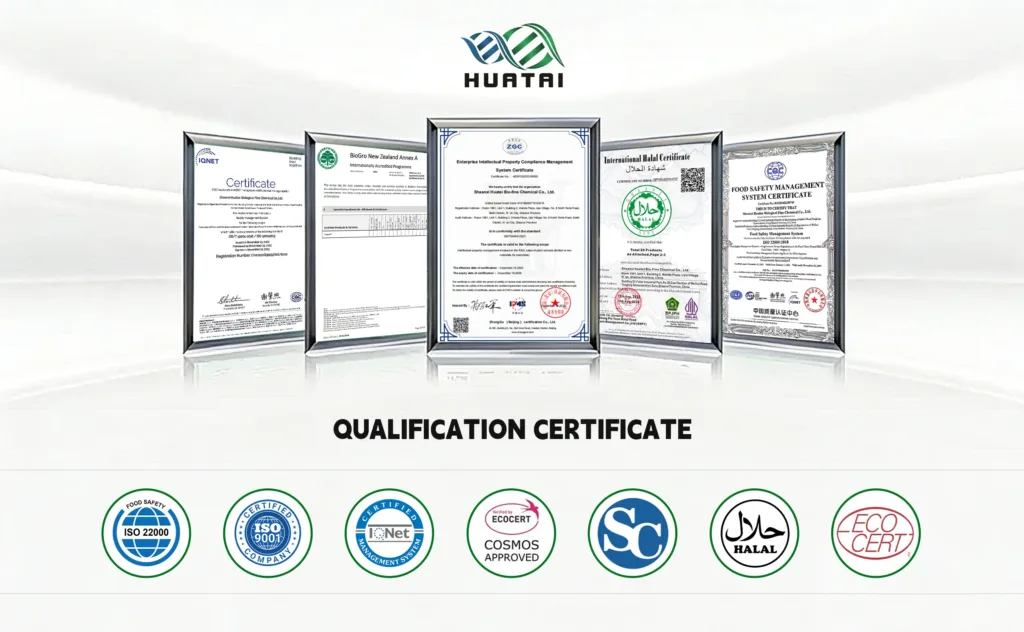
We produce all active chemical batches inside an ISO 22716 certified GMP environment. For research and development teams managing formulation validation, shelf-life testing, or efficacy benchmarking, raw material evaluation samples are available upon request through our technical desk. Every sample ships with a certified Certificate of Analysis (COA) and a clean HPLC purity verification printout to streamline your internal quality assurance checks.
Referenced Literature and Authoritative Sources
- Cabanes, J., Chazarra, S., & Garcia-Carmona, F. (1994). Kojic acid, a cosmetic skin whitening agent, is a slow-binding inhibitor of catecholase activity of tyrosinase. Journal of Pharmacy and Pharmacology, 46(12), 982-985.
- Lajis, A. F. B., Hamid, M., & Ariff, A. B. (2012). Depigmenting effects of kojic acid dipalmitate ester derivatives on human melanocytes and evaluation of skin absorption profiles. Biomedical Research International, 2012, 1-9.
- Peñalver, R., Natalini, O., & Campíns-Falco, P. (2021). Stability and validation parameters of esterified hydroxyl-compounds in topical skin emulsions. International Journal of Cosmetic Science, 43(3), 304-312.
- Chemical processing and esterification safety guidelines for cosmetic raw materials, Global Analytical Active Directory.



 English
 German
 Italian
 French
 Spanish
 Japanese
 Korean
 Russian