
Kojic acid has long been recognized in the cosmetic industry for its skin brightening and pigmentation reduction properties, but its widespread use has consistently been challenged by issues of instability, susceptibility to oxidation, limited solubility, and the risk of causing irritation at higher concentrations. These limitations have driven the development of more stable derivatives that retain efficacy while improving usability for formulators, among which kojic dipalmitate stands out as one of the most commercially viable alternatives. When buyers evaluate raw cosmetic materials for integration into formulations, the choice between kojic acid and kojic dipalmitate often boils down to a question of performance, stability, safety, and overall value. While kojic acid is typically cheaper per unit weight, kojic dipalmitate delivers broader advantages across the formulation and commercial lifecycle, making it increasingly favored by formulators and procurement teams alike. Understanding why kojic dipalmitate offers more value requires a detailed comparison of the two molecules, from their chemical structure to their market dynamics, while also addressing the concerns of raw material buyers who must ensure that what they purchase aligns with both technical and regulatory requirements.
Kojic acid is a naturally derived chelation agent originally discovered in fungal species, with the ability to inhibit tyrosinase activity and reduce melanin production. However, it is chemically unstable, prone to oxidation under light, heat, or even moderate storage conditions, leading to discoloration, loss of activity, and eventual incompatibility in cosmetic products. This instability often forces formulators to adopt stabilizers or special packaging, increasing formulation complexity and cost. Kojic dipalmitate, by contrast, is a dipalmitate ester of kojic acid. Through esterification with palmitic acid, the reactive hydroxyl groups of kojic acid are protected, which drastically improves stability against oxidation and light. The resulting molecule is lipophilic, easily incorporated into oil phases of cosmetic formulations, and remains stable throughout extended storage periods. From a chemical perspective, this modification alone translates into a substantial practical benefit for buyers: reduced waste, longer shelf life, and fewer product recalls due to ingredient degradation.
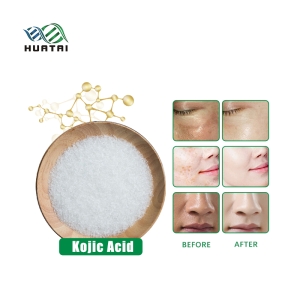
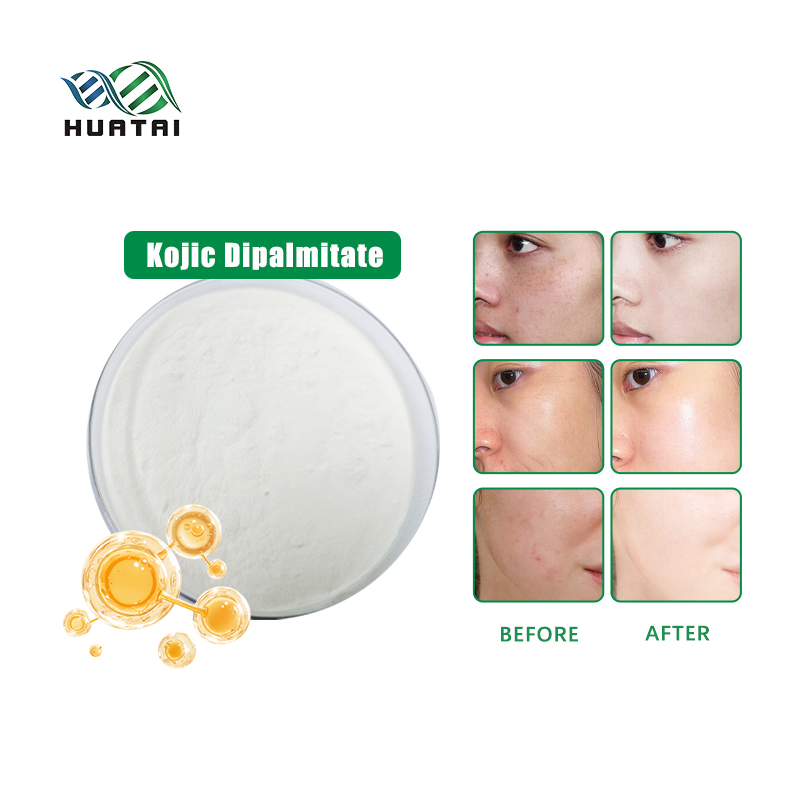
From a usability standpoint, kojic dipalmitate demonstrates superior compatibility in emulsions, creams, and lotions compared to kojic acid. Since kojic acid is water soluble and unstable in high-temperature emulsification, formulators often face challenges in integrating it without compromising stability. Kojic dipalmitate, being oil-soluble, disperses easily in emulsions and works synergistically with other lipophilic actives and oils. This adaptability in diverse formulation types provides buyers with a more versatile ingredient that can be applied across multiple product categories without requiring extensive reformulation efforts. For procurement teams, this translates to higher value because one raw material can be used across several product lines, increasing economies of scale and simplifying inventory management.
Another aspect that elevates kojic dipalmitate’s value is safety and consumer perception. Kojic acid, though effective, has been associated with irritation and sensitivity in certain skin types, particularly when used in higher concentrations to achieve noticeable brightening effects. Regulatory bodies in some regions have also raised concerns about kojic acid’s potential cytotoxicity, leading to restrictions on its allowable levels in cosmetic formulations. Kojic dipalmitate, on the other hand, demonstrates a much lower potential for irritation, making it more suitable for sensitive skin formulations. Its safer profile allows formulators to create products that appeal to a broader consumer base, including individuals with delicate or reactive skin. For buyers, this means reduced regulatory risk, smoother product registrations, and fewer customer complaints, all of which contribute to overall value beyond the raw material’s price tag.
The stability of kojic dipalmitate also extends to commercial distribution channels. Products containing kojic acid often suffer from color changes or potency loss when exposed to light during retail display or long transport times. These issues directly affect consumer trust, as customers may perceive the discoloration as spoilage or contamination. In contrast, kojic dipalmitate maintains its appearance and efficacy over extended shelf lives, ensuring that finished products look appealing and deliver consistent performance. Buyers who select kojic dipalmitate therefore minimize the risk of costly returns, damaged reputation, or rework of finished goods, adding measurable long-term value.
In addition to performance and safety, kojic dipalmitate offers advantages in regulatory compliance and global market acceptance. While kojic acid faces varying restrictions depending on region, kojic dipalmitate is generally considered safer and enjoys broader acceptance across international regulatory frameworks. For procurement teams serving multinational brands, this simplifies compliance processes, reduces the burden of region-specific reformulation, and accelerates time-to-market. When buyers consider the total costs of product development, regulatory approval, and international logistics, an ingredient that avoids legal complications delivers much greater overall value than one that poses regulatory uncertainties.
The role of consumer trends also cannot be overlooked. Modern consumers not only demand efficacy in cosmetic products but also seek stability, safety, and long-term results. Social media, product reviews, and beauty forums amplify consumer dissatisfaction if products degrade quickly or cause irritation. Brands are under pressure to deliver consistent performance, which means raw material buyers must prioritize ingredients that meet these evolving expectations. Kojic dipalmitate aligns well with this shift, offering a scientifically validated brightening effect while addressing the shortcomings that limit kojic acid’s reputation. For procurement managers, this ensures that the products launched with kojic dipalmitate stand a better chance of succeeding in a competitive marketplace where consumer trust directly influences sales.
From a financial perspective, while kojic dipalmitate generally costs more per kilogram than kojic acid, its stability reduces waste during storage and production. Formulators often need to use stabilizers, antioxidants, or encapsulation technologies to make kojic acid viable, all of which add to the overall cost of formulations. Kojic dipalmitate simplifies this process by being inherently more stable, lowering the need for costly additives. Additionally, the reduced risk of product recalls, reformulation, and regulatory barriers translates into significant cost savings over time. Buyers who focus only on initial purchase price may miss this broader cost-benefit equation, but those who adopt a holistic view of value quickly realize that kojic dipalmitate’s higher upfront price is offset by lower hidden costs.
The supply chain perspective also plays a role in determining value. Kojic acid’s sensitivity means it requires careful handling and packaging during transport and storage. Any exposure to light, oxygen, or improper temperatures can compromise quality before the ingredient even reaches the formulator. This raises risks for buyers who operate across long global supply chains. Kojic dipalmitate, being more stable, withstands transit conditions more effectively, reducing the likelihood of losses. Reliable shelf stability also makes it easier for suppliers to guarantee consistent quality across multiple shipments. Buyers benefit from predictable supply, reduced quality disputes, and better production planning, all of which enhance efficiency and profitability.
The sustainability dimension is also relevant. Modern cosmetic companies are increasingly evaluated on their ability to align with sustainability goals, whether through reducing waste, minimizing recalls, or sourcing ingredients with stable shelf lives that reduce overproduction. Since kojic dipalmitate enables longer-lasting formulations and minimizes the need for excess packaging or stabilizers, it indirectly contributes to sustainability efforts. Buyers who select kojic dipalmitate can therefore market their final products as more reliable, safer, and potentially more environmentally responsible, adding intangible brand value that extends beyond cost and performance metrics.
It is also important to consider long-term scalability. As consumer demand for brightening and skin tone-evening products grows globally, formulators need ingredients that can support high-volume production without quality variation. Kojic dipalmitate’s robust stability profile makes it easier to scale production across different facilities and geographic regions, ensuring consistent results. For buyers working with large-scale brands, this scalability adds value by reducing the risk of performance differences between batches or regions, thereby safeguarding global product launches.
Finally, the availability of technical support further reinforces kojic dipalmitate’s value. Suppliers who specialize in kojic dipalmitate often provide detailed technical documentation, application notes, and formulation guidance. This level of support allows buyers to integrate the ingredient more effectively and optimize its performance in formulations. By contrast, kojic acid suppliers may focus primarily on volume sales without offering equivalent technical assistance. Access to supplier expertise reduces development time and cost, which directly benefits buyers seeking efficient formulation pipelines.
In conclusion, kojic dipalmitate offers more value than kojic acid in cosmetic formulations because it addresses the fundamental weaknesses of its predecessor while delivering broader benefits across safety, stability, usability, regulatory compliance, supply chain reliability, and long-term commercial performance. Buyers evaluating raw materials must recognize that initial purchase price is only one factor in the overall equation of value. When considering the full lifecycle of a cosmetic product—from formulation development to consumer use—kojic dipalmitate consistently demonstrates superior performance and reduced risk, making it a strategically better choice for procurement teams and formulators. By selecting kojic dipalmitate, buyers not only invest in an ingredient that works more reliably but also secure a foundation for product success in increasingly competitive global markets where consumer expectations, regulatory scrutiny, and brand reputation demand nothing less than excellence.




 English
 German
 Italian
 French
 Spanish
 Japanese
 Korean
 Russian