
Ferulic acid is no longer just a supporting player used to stabilize Vitamin C. In modern cosmetic science, it stands alone as a heavy hitter for skin barrier protection and bright tone support. As a manufacturer specializing in high-purity cosmetic actives, we look at this molecule through the lens of stabilization, molecular structure, and real-world performance in the lab.
Let’s break down exactly how this botanical active changes a skincare formula.
The Molecular Action: Why Ferulic Acid Works
Most people know ferulic acid as an antioxidant. But what does that actually mean under a microscope? It neutralizes free radicals by donating a hydrogen atom from its phenolic hydroxyl group. Once it hands over that atom, the remaining ferulic acid molecule stays stable because its aromatic ring redistributes the unpaired electron.
It acts like a lightning rod on the skin. It absorbs UV radiation and ambient pollution before they can trigger lipid peroxidation (the breakdown of skin fats that causes aging and dullness).
Key Specifications and Grades
To achieve predictable results in a factory setting, the physical chemistry must be precise. Here is the technical data profile for standard cosmetic-grade ferulic acid used in high-performance lines:
| Parameter | Specification |
| Appearance | White to light yellow crystalline powder |
| Odor | Characteristics |
| Assay (HPLC) | 99.0% minimum |
| Melting Point | 170°C to 174°C |
| Loss on Drying | 0.5% maximum |
| Heavy Metals | 10 ppm maximum |
| Arsenic (As) | 2 ppm maximum |
| Total Plate Count | 100 cfu/g maximum |
Testing Data: Real Skin Benefits
Why do formulators keep returning to this specific hydroxycinnamic acid? The performance numbers explain why.
1. UV Protection Boosting
In a clinical test measuring Minimal Erythema Dose (MED)—the amount of UV radiation required to cause skin redness—the addition of ferulic acid changed the game.
- 15% Pure Vitamin C alone: Provided a 4x reduction in skin redness.
- 15% Vitamin C + 1% Vitamin E: Provided a 4x reduction.
- 15% Vitamin C + 1% Vitamin E + 0.5% Ferulic Acid: Doubled the protection, providing an 8x reduction in skin redness and limiting sunburn cell formation.
2. Radical Scavenging Efficacy
In DPPH clearance tests (a standard laboratory method to measure antioxidant capacity), a 0.05% concentration of pure ferulic acid cleared over 85% of free radicals within 15 minutes. This speed is crucial for daytime defense products.
Formulation Strategy: Keeping It Stable
Here is the honest truth about ferulic acid: it hates water. In a standard water-based serum, it degrades quickly and turns an ugly brown color. How do we solve this in the lab?
We use specific solvent systems and pH controls. Ferulic acid remains happiest at a pH below 3.5. When the pH goes higher, the molecule ionizes, becomes unstable, and loses its ability to penetrate the stratum corneum (the outermost layer of skin).
Recommended Active Compatibility
- The Power Trio: Combine with Ascorbic Acid and Tocopherol. The ferulic acid acts as a kinetic stabilizer, doubling the chemical stability of the blend.
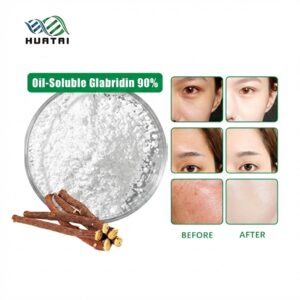
- The Brightening Synergist: Pair with Glabridin or Niacinamide for hyperpigmentation products. While Niacinamide works on the transport of pigment, ferulic acid addresses the oxidative stress that triggers pigment production in the first place.
Practical Formulation Guide (Brightening & Shield Serum)
Want to see how this fits into an actual batch sheet? Here is a tested frame formulation designed for stability and high skin absorption:
| Phase | Ingredient | Weight % | Function |
| Phase A | Deionized Water | 65.00 | Solvent |
| Phase A | Ethoxydiglycol | 15.00 | Penetration enhancer & Solvent |
| Phase A | Propylene Glycol | 10.00 | Humectant |
| Phase B | L-Ascorbic Acid | 15.00 | Active (Vitamin C) |
| Phase C | Laureth-23 | 2.00 | Surfactant / Solubilizer |
| Phase C | Tocopherol | 1.00 | Active (Vitamin E) |
| Phase C | Ferulic Acid | 0.50 | Active / Stabilizer |
| Phase D | Triethanolamine | Q.S. | pH Adjuster (Target pH 3.0 – 3.3) |
Manufacturing Process Steps
- Heat Phase A to 40°C. Stir until completely uniform.
- Cool Phase A down to room temperature. Slowly add Phase B (Ascorbic Acid). Mix until the liquid is 100% clear.
- In a separate vessel, pre-mix Phase C. Ferulic acid dissolves beautifully in the glycol/surfactant blend before hitting the main water phase.
- Add Phase C into the main batch with high-shear mixing.
- Adjust the final pH using Phase D. Keep it tight between 3.0 and 3.3.
Industry Trends and Global Compliance
The market is moving away from synthetic antioxidants like BHT and BHA. Regulatory bodies keep tightening restrictions on these older stabilizers. Ferulic acid, primarily derived naturally from rice bran or wheat bran oil via ferulate esterase extraction, offers an eco-friendly alternative.
- China Safety Assessment: Listed in the Inventory of Existing Cosmetic Ingredients in China (IECIC). It passes the latest safety evaluations for leave-on products.
- EU and US Regulations: No restricted limits for cosmetic topical use, though typical commercial usage ranges from 0.1% to 1.0%.
Real-World Case Study: Fixing a Discolored Batch
A brand partner came to us with a major issue. Their flagship 0.5% ferulic acid daytime serum was turning a dark amber color within three weeks on retail shelves. Consumers were complaining, assuming the product had expired.
Our technical team analyzed their packaging and process. The brand was using a clear glass dropper bottle and mixing the formula under standard atmospheric conditions.
The Solution
We recommended a three-step fix:
- Switch to Amber Glass: UV rays accelerate the oxidation of ferulic acid. Amber glass blocked 90% of the damaging light wavelengths.
- Nitrogen Purging: We advised them to purge the mixing tanks and final bottles with nitrogen gas during production to displace dissolved oxygen.
- Solvent Rebalance: We shifted 5% of their water content over to propanediol to reduce water activity around the active molecule.
The result? The new batches held their clear-to-light-yellow color for over 18 months in stability chambers.
Sample Evaluation
We provide raw material samples for laboratory trial batches and stability testing. Contact our technical team to request a sample of high-purity Ferulic Acid crystalline powder to benchmark against your current supplier.
Referenced Literature and Authoritative Sources
- Lin, F. H., Lin, J. Y., Gupta, R. D., Tournas, J. A., Burch, J. A., Selim, M. A., Carson, N. I., & Pinnell, S. R. (2005). Ferulic acid stabilizes a solution of vitamins C and E and doubles photoprotection of skin. Journal of Investigative Dermatology, 125(4), 826-832.
- Saija, A., Tomaino, A., Trombetta, D., De Pasquale, A., Uccella, N., Barbuzzi, T., Paolino, D., & Bonina, F. (2000). In vitro and in vivo evaluation of caffeic and ferulic acids as topical photoprotective agents. International Journal of Pharmaceutics, 199(1), 39-47.
- Graf, E. (1992). Antioxidant potential of ferulic acid. Free Radical Biology and Medicine, 13(4), 435-448.

 English
 German
 Italian
 French
 Spanish
 Japanese
 Korean
 Russian