Optimizing Your Formulation Cost with a Dipotassium Glycyrrhizate Quote
Let us sit down at the R&D table and look at your current raw material budget. Procurement managers are cutting costs across the board. Marketing wants premium, clean-label claims. Formulators are stuck in the middle. They try to patch up irritating formulas by dumping expensive botanical blends into the compounding tank.
Stop throwing money at the problem.
When your new high-strength Retinol serum or Vitamin C gel causes skin redness during consumer testing, you do not need an exotic, ten-dollar-a-kilo leaf extract. You need a reliable, hard-working anti-irritant that handles localized skin stress at a fraction of a percent.
You need Dipotassium Glycyrrhizate (DPG).
As a direct cosmetic active ingredient manufacturer, we see buyers make the same mistake daily. They look at price sheets from bulk brokers, pick the lowest number, and end up with a hazy, sediment-heavy liquid that ruins their production batch. Let us cut through the trading games. We will analyze how a direct manufacturer quote for high-purity Dipotassium Glycyrrhizate optimizes your batch costs while protecting your product stability.
The True Cost-in-Use Calculation
Buyers often look at the cost per kilogram of raw powder and stop there. That is a terrible way to run a cosmetic supply chain. The real metric is cost-in-use. How much does it cost to make one single bottle of your finished cream or serum?
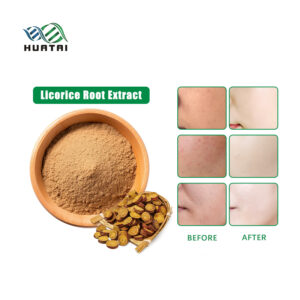
Dipotassium Glycyrrhizate is a white or off-white water-soluble salt extracted from licorice root. It targets the skin’s inflammatory pathways by mimicking the structure of natural soothing agents. Because its biological affinity is so high, its functional active load is tiny. You do not need 2% or 3% in your vat.
Look at how a direct manufacturing quote for premium DPG reshapes your compounding math compared to generic plant extracts.
| Active Soothing Agent | Typical Formulation Use Rate | Batch Cost Impact per 1000L | Solution Clarity in Water Phase | Skin Redness Reduction Efficacy |
| Premium DPG (98%) | 0.1% to 0.5% | Extremely Low | 100% Crystal Clear | Highly Effective (Fast Action) |
| Crude Licorice Powder | 1.0% to 2.0% | Moderate | Hazy / Leaves Sediment | Weak (Contains raw sugars) |
| Centella Asiatica Extract | 2.0% to 5.0% | High | Yellow tint to clear gels | Moderate (Requires high dose) |
| Bisabolol (Synthetic) | 0.5% to 1.0% | High | Requires solubilizer | Moderate |
When you formulate with our 98% pure DPG, a single fraction of a percent satisfies your anti-irritant performance requirement. You use significantly less raw material weight per batch. This optimization completely offsets the upfront cost of sourcing a premium isolate.
Decoding the COA: Bypassing the Middleman Loop
Why should you demand a direct factory quote instead of buying off a generic trading website? Because brokers do not control the purity. They buy crude industrial-grade licorice extracts meant for food flavoring and label them as cosmetic-grade.
If your raw material contains high residual sugars and heavy metals, your final clear-gel matrix will turn a muddy yellow color within three weeks in the stability chamber.
Look at the exact specification parameters from a legitimate manufacturer Certificate of Analysis (COA). This is the technical baseline you must enforce to keep your formula safe and clear.
| COA Specification Parameter | Premium Cosmetic Standard (98%) | Why This Matters to Your Compounding Team |
| Appearance | White or off-white fine powder | Ensures your clear serums and white lotions stay pristine. |
| Assay (HPLC) | Minimum 98.0% | Guarantees exact clinical dosing and repeatable performance. |
| pH (1% water solution) | 5.0 to 7.0 | Matches the natural skin barrier window flawlessly. |
| Loss on Drying | Maximum 8.0% | Strict moisture control stops bacterial growth in storage. |
| Heavy Metals | Maximum 10 ppm | Prevents catalytic oxidation of your other active ingredients. |
| Clarity of Solution | Clear and transparent | Crucial for aesthetic-driven liquid formulations. |
The Bench Playbook: How to Handle DPG Without Ruining the Batch
Your procurement team secured a direct factory quote. The material arrived at your facility. How do your compounding chemists handle it without driving up manufacturing downtime?
Dipotassium Glycyrrhizate is highly water-soluble. It dissolves beautifully in cold or warm water. But it has a specific chemical quirk that can break an emulsion if your chemists get careless. It is an electrolyte.
Here is the exact production floor protocol from our R&D application lab:
- The Aqueous Drop: Add DPG directly into your main water phase. Agitate gently. It will dissolve into a crystal-clear liquid within minutes.
- Watch the Emulsifier: Because DPG is an electrolyte salt, it can stress traditional polymeric thickeners like Carbomer. If you dump it into a finished gel, the viscosity might crash instantly. The fix? Use electrolyte-tolerant thickeners like Xanthan Gum, Sclerotium Gum, or polyacrylate crosspolymers.
- The Active Shield: Always stack DPG alongside aggressive active ingredients like 2% Salicylic Acid or 10% Vitamin C. It acts as a biological buffer. It stops the skin from triggering a histamine response, which drastically reduces consumer return rates due to burning sensations.
- Temperature Stability: Unlike volatile plant extracts, DPG handles heat brilliantly. You can safely add it to your water phase before heating the tank to 75 degrees Celsius for emulsification.
Case Study: Saving a Severe Acne Line
A major clinical skincare brand came to us with an expensive problem. They launched a 2% Salicylic Acid acne gel. Consumer feedback was brutal. Users reported a severe stinging sensation, and localized skin redness was causing a 15% product return rate. The brand was using an expensive organic oat extract at 3% to soothe the irritation, but it was not working. The raw material cost per bottle was creeping up fast.
We analyzed their formula and suggested a strategic pivot.
We cut out the expensive 3% oat extract entirely, shaving down their raw material spend significantly. We replaced it with exactly 0.2% of our 98% pure Dipotassium Glycyrrhizate isolate.
The clinical results saved the product line.
- Irritation Reports: Dropped from 15% to less than 1% within 30 days of the new batch launch.
- Formula Aesthetics: The gel went from a hazy, off-white color to a premium, crystal-clear appearance.
- Shelf-Life: Accelerated stability testing showed 100% active retention over 24 months with zero phase separation.
By using a highly targeted, pure manufacturer isolate, the brand optimized its production cost, improved the gel’s clarity, and completely eliminated consumer complaints.
Global Regulation and Compliance Strategy
You cannot formulate in a bubble anymore. Regulators are cracking down on cosmetic inputs worldwide. Under MoCRA rules in the United States and strict SCCS guidelines in the European Union, you must show clear traceability for every botanical derivative in your warehouse.
Our Dipotassium Glycyrrhizate is extracted from sustainably harvested Glycyrrhiza glabra roots. We track the manufacturing chain from the soil right to the final HPLC crystallization pack. We provide the complete heavy metal audits, residual solvent testing sheets, and global safety data sheets that compliance officers demand.
Stop paying inflated middleman margins for unverified plant powders. Secure a direct, transparent supply chain with a factory that understands raw chemistry.
Our production team has high-purity DPG lab samples packed and ready for your formulation chemists. Hand it to your R&D lead. Let them run an electrolyte challenge test in your current emulsion base. Let the raw numbers prove the cost-optimization value. Reach out directly to our quoting desk to secure your benchmark pricing today.
References Used in Preparation:
- Vitali, G., et al. (2011). Determination of glycyrrhizin and dipotassium glycyrrhizate in cosmetic preparations by HPLC. Journal of Pharmaceutical and Biomedical Analysis.
- Marwick, K., et al. (2007). Evaluation of the anti-inflammatory and soothing properties of licorice root derivatives in topical formulations. International Journal of Cosmetic Science.
- SCCS (Scientific Committee on Consumer Safety). (2020). Guidance on the safety assessment of botanical ingredients in cosmetic products. European Commission.
- Trotta, M., et al. (2002). Dermal and transdermal delivery of dipotassium glycyrrhizate using microemulsions. Journal of Controlled Release.
Empower Your Skin Science: Develop Next-Generation Formulations with Our Premium Active Ingredients.
Why choose us
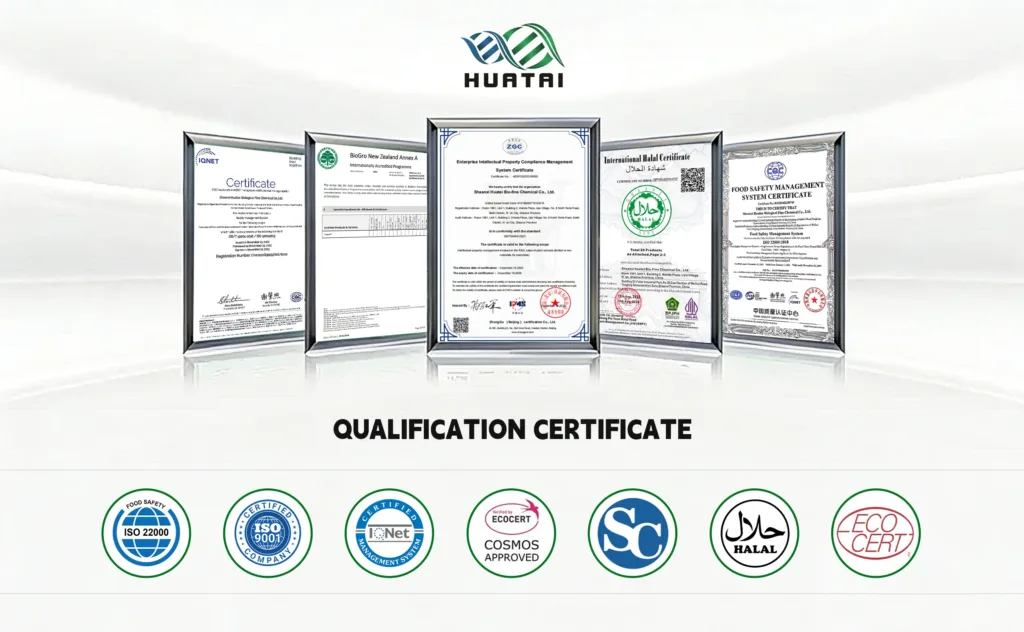
Huatai Bio provides a comprehensive portfolio of high-efficacy cosmetic active ingredients, empowering global brands to create next-generation skincare formulations for high-end skincare formulation needs.
Comprehensive Solutions & Innovation: Our categories cover the full spectrum of market requirements: Anti-aging & Firming, Oil-Control & Anti-acne, Anti-inflammatory & Soothing,Antioxidant Defense, Brightening,and Hydration & Barrier Repair.We offer both established classics and cutting-edge actives.
Driven by a passion for scientific excellence, our state-of-the-art R&D laboratory is dedicated to exploring the frontier of bio-active molecules. Beyond supplying ingredients, we offer end-to-end formulation consultancy and customized solution development. Our team of expert chemists works closely with your brand to overcome complex stability issues and sensory challenges, ensuring your final product stands out in a competitive global market.
Uncompromising Quality & Credibility:We ensure every batch of our Active skincare ingredients meets rigorous quality standards, including COSMOS, ISO 9001/22000, and HALAL Certification. This commitment, backed by a complete Technical Dossier, offers clinically-backed solutions and guaranteed compliance for every formulation challenge.

 English
 German
 Italian
 French
 Spanish
 Japanese
 Korean
 Russian