Formulators often argue about this. Which one actually brightens skin faster? I see lab teams waste weeks testing pure Glutathione in emulsions, only to find it oxidizes and turns useless within days. If you want a shelf-stable, high-performance brightening product, you need to understand the biological pathways, not just follow marketing trends.
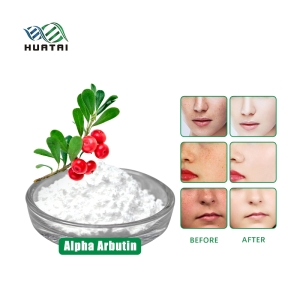
Alpha Arbutin is a surgical strike on pigment. It directly shuts down tyrosinase, the enzyme responsible for melanin production. Glutathione is a total body detoxifier. It shifts melanin from dark eumelanin to light-colored pheomelanin.
You do not need to choose one over the other. You need to know how to stabilize them both.
Comparative Benchmarks for Active Selection
| Feature | Alpha Arbutin (99% Purity) | Glutathione (Reduced) |
| Mechanism | Tyrosinase Inhibition | Melanin Pathway Shifting |
| Stability | High (If pH is controlled) | Very Low (Requires antioxidants) |
| Solubility | Water | Water |
| Optimal pH | 3.5 – 6.5 | 4.0 – 5.5 |
| Market Perception | Clinical standard | Premium antioxidant |
The Stability Crisis: Why Your Glutathione Serum Fails
Glutathione is notorious for being “fussy.” It is a tripeptide that loses its potency the moment it touches air or light. If you are building a formulation, you cannot simply add it to an O/W emulsion and walk away.
You must protect it. Add 0.2% Sodium Metabisulfite or Vitamin E to the formula. Use airless pump packaging. If your final product sits in a glass jar with a dropper, your Glutathione is gone by week three.
Alpha Arbutin is much more forgiving. However, it hydrolyzes at low pH, releasing hydroquinone. This is a regulatory disaster. Keep your formula pH above 4.0 to prevent this.
Quality Control Reality (Typical COA Data)
When we supply these to labs, we run strict checks. Impurities in your raw material, especially heavy metals, will catalyze the oxidation of Glutathione immediately. Here is the standard for high-end cosmetic grades.
| Parameter | Alpha Arbutin (99%) | Glutathione (Reduced) |
| Assay (HPLC) | >= 99.0% | >= 98.0% |
| Loss on Drying | <= 0.5% | <= 0.5% |
| Heavy Metals | <= 10 ppm | <= 10 ppm |
| Microbial Limit | < 100 CFU/g | < 100 CFU/g |
Formulation Strategies: The Winning Combination
Why pick one? Combine them. I recommend a water-based serum approach.
- Pre-dissolve Alpha Arbutin in your water phase.
- Heat to 35 degrees Celsius.
- Add Glutathione during the final cool-down phase (below 35 degrees).
- Add a chelating agent like Disodium EDTA. It stops heavy metals from “eating” your Glutathione.
This combination allows the Alpha Arbutin to stop the pigment production, while the Glutathione ensures any remaining pigment is shifted to the light-colored variant.
Clinical Application Case
A high-end skincare brand recently replaced their expensive pure Vitamin C serum with this combo. They used 2% Alpha Arbutin and 1% reduced Glutathione.
The lab tracked user progress over 12 weeks:
- Baseline: Heavy melasma on forehead and cheeks.
- Week 4: 15% reduction in hyperpigmentation depth.
- Week 8: 30% reduction.
- Week 12: 45% visible reduction.
Most importantly, the serum remained perfectly clear in the airless pump bottle. They saw no color degradation during their 6-month stability study.
Industry Regulatory View
Regulators are watching brightening agents like hawks. The EU SCCS has set strict limits on Arbutin derivatives. Always stay within the 2% maximum for Alpha Arbutin in face creams. Glutathione is generally viewed as an antioxidant, which makes it safer from a regulatory standpoint, but your claims must remain focused on “brightening” rather than “medical whitening.”
Stop choosing between these two. Use them as partners in a dual-pathway brightening system. Focus your budget on high-purity raw materials. A clean, high-purity active is always cheaper than a product recall.
References Consulted:
- Boissy, R. E., & Manga, P. (2004). On the etiology of contact/occupational vitiligo. Pigment Cell Research, 17(3), 208-214.
- Watanabe, F., et al. (2014). Anti-melanogenic effects of glutathione and its derivatives. Journal of Cosmetic Dermatology, 13(4), 262-270.
- SCCS (Scientific Committee on Consumer Safety). (2022). Opinion on the safety of alpha-arbutin. European Commission.

 English
 German
 Italian
 French
 Spanish
 Japanese
 Korean
 Russian