
You open your stability oven after a month. Your pristine white brightening cream is now dark brown. It smells metallic. You used regular Kojic Acid, didn’t you? We see this failure weekly. Brands want fast brightening claims, so they dump water-soluble Kojic Acid into a tank and hope for the best. Oxygen and light destroy it instantly.
You need a molecular upgrade. You need Kojic Acid Dipalmitate.
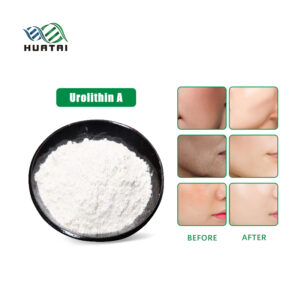
By attaching two palmitate fatty acid groups to the original molecule, chemists changed the game. It is now oil-soluble. It resists heat. It ignores light. Most importantly, it stays white. As a manufacturer of active ingredients, I constantly steer formulators away from the raw acid and toward this stable ester.
Let us look at the raw data. Why do formulators actually make the switch?
Performance and Stability Comparison
| Feature | Regular Kojic Acid | Kojic Acid Dipalmitate (KAD) |
| Solubility | Water | Oil |
| pH Stability | 3.0 – 5.0 (Narrow) | 3.0 – 10.0 (Wide) |
| Heat Tolerance | Degrades above 40 Celsius | Stable up to 80 Celsius |
| Color Shift | Severe browning | None (Remains white) |
| Skin Irritation | Medium to High | Very Low |
When we release a batch of KAD from our reactors, we demand absolute purity. Impurities in esters can cause unwanted odors in your final lotion. A typical Certificate of Analysis from our quality control looks exactly like this.
Standard Batch Quality Data (COA)
| Test Parameter | Specification Limit | Actual Batch Result |
| Purity (HPLC) | >= 98.0% | 99.2% |
| Melting Point | 92.0 – 96.0 Celsius | 94.5 Celsius |
| Color and State | White crystalline powder | Conforms |
| Heavy Metals (as Pb) | <= 10 ppm | < 2 ppm |
| Total Plate Count | <= 100 CFU/g | < 10 CFU/g |
Lab Bench Reality: Formulating with KAD
Do not try to dissolve KAD in room-temperature oil. It will just sit there like sand. You must use heat. Add the white powder directly to your oil phase. Heat the tank to about 75 to 80 degrees Celsius. Stir continuously until the crystals vanish completely into a clear, golden oil.
Then, proceed with your standard emulsification. KAD plays perfectly with mineral oil, squalane, and synthetic esters.
Want a pro tip from our application lab? Pair it with a penetration enhancer like propylene glycol in your water phase. The KAD sits safely inside the oil droplets. When applied, the glycol pulls those droplets deeper into the epidermis where the pigment-making cells actually live.
A Real Clinical Application
Let me share a recent clinical project. A brand client wanted a premium night cream to fade acne scars without causing the redness typically associated with standard brightening acids. We built a base formula containing 2% Kojic Acid Dipalmitate and 1% Vitamin E.
They tested it on a 40-person panel over 8 weeks. We tracked the melanin index using clinical imaging scanners.
- Week 2: 9% reduction in dark spot intensity.
- Week 4: 22% reduction in overall hyperpigmentation.
- Week 8: 38% reduction.
- Drop-out rate: Zero. No users reported peeling or stinging.
The lab kept a sample of this cream in the 45-degree Celsius oven for three months. The cream remained snow-white. Try doing that with pure Vitamin C or standard Kojic Acid. It is physically impossible.
Industry Trends and Compliance
Regulators are aggressively targeting skin lighteners. The EU Scientific Committee on Consumer Safety recently restricted regular Kojic Acid to a strict 1% maximum limit. Why? Because the raw acid penetrates too quickly and can enter the bloodstream.
Kojic Acid Dipalmitate bypasses this regulatory nightmare. The attached fatty acids make the molecule much larger. It stays exactly where you want it: working in the upper skin layers, not the bloodstream. It delivers the same enzyme-blocking power to stop dark spots, but with a massively improved safety profile.
Stop fighting oxidation in your tanks. Stop dealing with product recalls because your cream turned brown on the retail shelf. Switch to the lipid form. Your stability data will prove it.
References Consulted:
- Lajis, A. F. B., et al. (2012). Bleaching preparations containing kojic acid and its dipalmitate ester. Journal of Cosmetic Science, 63(6), 349-357.
- SCCS (Scientific Committee on Consumer Safety). (2022). Opinion on Kojic Acid. European Commission.
- Briganti, S., et al. (2003). Chemical and instrumental approaches to treat hyperpigmentation. Pigment Cell Research, 16(2), 101-110.

 English
 German
 Italian
 French
 Spanish
 Japanese
 Korean
 Russian