Have you ever mixed a brilliant brightening trio on the bench, only to watch it turn muddy brown in the stability oven? You are not alone. Formulators constantly try to combine Alpha Arbutin, Kojic Acid, and Niacinamide. It looks perfect on paper. You block the pigment factory from three different angles. But in the tank, it often becomes a nightmare. Let us look at what actually happens and how to fix it.
As raw material manufacturers, we analyze failed formulas every week. Brands buy these three actives, dump them into a water base, and hope for the best. This is a recipe for severe skin irritation and product recalls. You need to understand the individual chemical quirks before you force them to play together.
The Three-Pathway Matrix
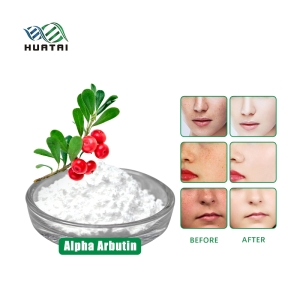
Why combine them at all? Because skin pigment is stubborn. Alpha Arbutin acts as a decoy. It safely mimics tyrosine, keeping the tyrosinase enzyme busy. Kojic Acid is a scavenger. It grabs the copper ions that the enzyme needs to function. Niacinamide works downstream. It stops the packaged pigment from transferring to the visible skin layers.
| Ingredient | Primary Action | Target Phase | Optimal pH Range |
| Alpha Arbutin | Tyrosinase Inhibition | Production | 4.5 – 6.5 |
| Kojic Acid | Copper Chelation | Production | 3.0 – 5.0 |
| Niacinamide | Melanosome Transfer Block | Transport | 5.5 – 6.5 |
Look closely at the pH column. Do you see the problem? Kojic Acid wants a highly acidic environment. Niacinamide hates high acid. If you drop the pH below 5.0, Niacinamide starts converting into nicotinic acid. Your customers will get a red, burning face. If you raise the pH above 6.5, Alpha Arbutin risks breaking down into trace hydroquinone.
A Real-World Stability Rescue
Last year, an indie brand sent us their new brightening serum. They used 2% Alpha Arbutin, 1% Kojic Acid, and 5% Niacinamide. Within one month at 45 degrees Celsius, the pH crashed from 5.5 to 4.2. The serum turned dark amber. The Kojic Acid oxidized, and the Niacinamide degraded.
We rebuilt their protocol from scratch. Here is exactly what we changed.
We buffered the water phase strictly at pH 5.5 using a Citric Acid/Sodium Citrate buffer. A buffer is non-negotiable here. We added 0.1% Disodium EDTA. Kojic Acid chelates anything it can find. If your water or equipment has trace iron, the Kojic Acid will bind to it and turn red. EDTA grabs the metals first. Finally, we added 0.2% Sodium Metabisulfite. You must give oxygen a cheaper target. The metabisulfite sacrifices itself to protect the Kojic Acid from oxidation. The formula survived a 12-week accelerated test perfectly.
Decoding the Raw Material COA
Your formula is only as stable as your raw materials. Stop buying cheap actives based on price alone. You must scrutinize the Certificate of Analysis (COA) to prevent batch failures.
| Critical COA Marker | Required Standard | Why It Matters For This Trio |
| Hydroquinone (in Arbutin) | Less than 5 ppm | Prevents severe skin toxicity and regulatory failure |
| Heavy Metals (in Kojic) | Less than 10 ppm | Stops rapid color shift and emulsion breakdown |
| Nicotinic Acid (in Niacinamide) | Less than 100 ppm | Prevents the infamous “niacin flush” skin reaction |
Regulatory Compliance and Smart Dosing
You cannot just max out the percentages. The European SCCS recently issued strict guidelines on Alpha Arbutin. You are capped at 2% for face creams and 0.5% for body lotions. Niacinamide hits a point of diminishing returns after 5%. Kojic Acid is highly effective at 1%, but pushing it higher drastically increases the risk of sensitization.
Keep your dosage smart. Use 1.5% Alpha Arbutin, 1% Kojic Acid, and 4% Niacinamide. This hits the sweet spot of maximum biological impact and minimal irritation.
We test these boundaries daily in our labs. We offer technical samples to R&D teams because bench testing reveals the truth. Mix the actives. Check the pH drift. Watch the color stability. Formulate with precision, not guesswork.
Public Literature References:
- Hakozaki, T., et al. (2002). “The effect of niacinamide on reducing cutaneous pigmentation and suppression of melanosome transfer.” British Journal of Dermatology, 147(1), 20-31.
- Smit, N., Vicanova, J., & Pavel, S. (2009). “The hunt for natural skin whitening agents.” International Journal of Molecular Sciences, 10(12), 5326-5349.
- SCCS (Scientific Committee on Consumer Safety). (2023). “Opinion on the safety of alpha-arbutin and beta-arbutin in cosmetic products.” European Commission.


 English
 German
 Italian
 French
 Spanish
 Japanese
 Korean
 Russian