
¿Alguna vez has mezclado un trío brillante iluminador en el banco, solo para verlo volverse marrón turbio en el horno de estabilidad? No estás solo. Los formuladores intentan constantemente combinar Alfa Arbutina, Ácido Kójico y Niacinamida. Parece perfecto en el papel. Bloqueas la fábrica de pigmentos desde tres ángulos diferentes. Pero en el tanque, a menudo se convierte en una pesadilla. Veamos qué sucede realmente y cómo solucionarlo.
Como fabricantes de materias primas, analizamos fórmulas fallidas cada semana. Las marcas compran estos tres activos, los vierten en una base de agua y esperan lo mejor. Esta es una receta para una irritación severa de la piel y retiros de productos. Necesitas comprender las peculiaridades químicas individuales antes de obligarlos a trabajar juntos.
La Matriz de Tres Vías
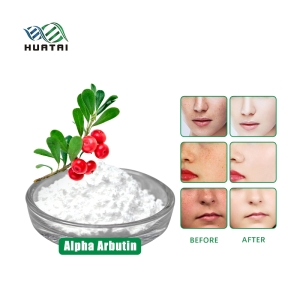
¿Por qué combinarlos? Porque el pigmento de la piel es terco. La Alfa Arbutina actúa como un señuelo. Imita de forma segura la tirosina, manteniendo ocupada a la enzima tirosinasa. El Ácido Kójico es un carroñero. Atrapa los iones de cobre que la enzima necesita para funcionar. La Niacinamida actúa aguas abajo. Detiene la transferencia del pigmento empaquetado a las capas visibles de la piel.
| Ingrediente | Acción primaria | Fase de Destino | Rango de pH óptimo |
| Alfa arbutina | Inhibición de la tirosinasa | Producción | 4.5 – 6.5 |
| Ácido kójico | Quelación de cobre | Producción | 0 – 5.0 |
| Niacinamida | Bloqueo de Transferencia de Melanocitos | Transporte | 5.5 – 6.5 |
Mira de cerca la columna de pH. ¿Ves el problema? El Ácido Kójico quiere un ambiente muy ácido. La Niacinamida odia el ácido alto. Si bajas el pH por debajo de 5.0, la Niacinamida comienza a convertirse en ácido nicotínico. Tus clientes tendrán la cara roja y ardiente. Si elevas el pH por encima de 6.5, la Alfa Arbutina corre el riesgo de descomponerse en trazas de hidroquinona.
Un Rescate de Estabilidad en el Mundo Real
El año pasado, una marca independiente nos envió su nuevo suero iluminador. Usaron 2% de Alfa Arbutina, 1% de Ácido Kójico y 5% de Niacinamida. En un mes a 45 grados Celsius, el pH se desplomó de 5.5 a 4.2. El suero se volvió ámbar oscuro. El Ácido Kójico se oxidó y la Niacinamida se degradó.
Reconstruimos su protocolo desde cero. Aquí está exactamente lo que cambiamos.
Tamponamos la fase acuosa estrictamente a pH 5.5 usando un tampón de Ácido Cítrico/Citrato de Sodio. Un tampón es innegociable aquí. Agregamos 0.1% de EDTA Disódico. El Ácido Kójico quela todo lo que puede encontrar. Si tu agua o equipo tiene trazas de hierro, el Ácido Kójico se unirá a él y se volverá rojo. El EDTA atrapa primero los metales. Finalmente, agregamos 0.2% de Metabisulfito de Sodio. Debes darle al oxígeno un objetivo más barato. El metabisulfito se sacrifica para proteger el Ácido Kójico de la oxidación. La fórmula sobrevivió perfectamente a una prueba acelerada de 12 semanas.
Decodificación del COA de Materias Primas
Tu fórmula es tan estable como tus materias primas. Deja de comprar activos baratos basándote solo en el precio. Debes examinar el Certificado de Análisis (COA) para prevenir fallos de lote.
| Marcador Crítico del COA | Estándar requerido | Por qué importa para este trío |
| Hidroquinona (en Arbutina) | Menos de 5 ppm | Previene toxicidad severa de la piel y fallos regulatorios |
| Metales Pesados (en Kójico) | Menos de 10 ppm | Detiene el rápido cambio de color y la ruptura de la emulsión |
| Ácido Nicotínico (en Niacinamida) | Menos de 100 ppm | Previene la infame reacción cutánea de "enrojecimiento por niacina" |
Cumplimiento Regulatorio y Dosificación Inteligente
No puedes simplemente maximizar los porcentajes. El SCCS europeo emitió recientemente directrices estrictas sobre la Alfa Arbutina. Estás limitado al 2% para cremas faciales y al 0.5% para lociones corporales. La Niacinamida alcanza un punto de rendimientos decrecientes después del 5%. El Ácido Kójico es muy eficaz al 1%, pero aumentarlo drásticamente aumenta el riesgo de sensibilización.
Mantén tu dosis inteligente. Usa 1.5% de Alfa Arbutina, 1% de Ácido Kójico y 4% de Niacinamida. Esto alcanza el punto óptimo de máximo impacto biológico y mínima irritación.
Probamos estos límites diariamente en nuestros laboratorios. Ofrecemos muestras técnicas a equipos de I+D porque las pruebas de banco revelan la verdad. Mezcla los activos. Comprueba la deriva del pH. Observa la estabilidad del color. Formula con precisión, no con conjeturas.
Public Literature References:
- Hakozaki, T., et al. (2002). “El efecto de la niacinamida en la reducción de la pigmentación cutánea y la supresión de la transferencia de melanosomas.” British Journal of Dermatology, 147(1), 20-31.
- Smit, N., Vicanova, J., & Pavel, S. (2009). “La búsqueda de agentes blanqueadores naturales para la piel”. International Journal of Molecular Sciences, 10(12), 5326-5349.
- SCCS (Scientific Committee on Consumer Safety). (2023). “Opinión sobre la seguridad de la alfa-arbutina y la beta-arbutina en productos cosméticos.” Comisión Europea.



 English
 German
 Italian
 French
 Spanish
 Japanese
 Korean
 Russian