
In the rapidly shifting landscape of dermo-cosmetics, where “miracle” ingredients appear and disappear with every passing season, Cosmetic Grade Retinol (Vitamin A) stands as a monumental exception. Backed by decades of clinical research and dermatological validation, it is one of the few molecules capable of fundamentally altering the skin’s biological behavior. As the global demand for “pro-aging” and “glass skin” solutions intensifies, why does this specific retinoid remain the non-negotiable cornerstone for every high-performance skincare routine?
The Molecular Architect: How Retinol Transforms the Skin
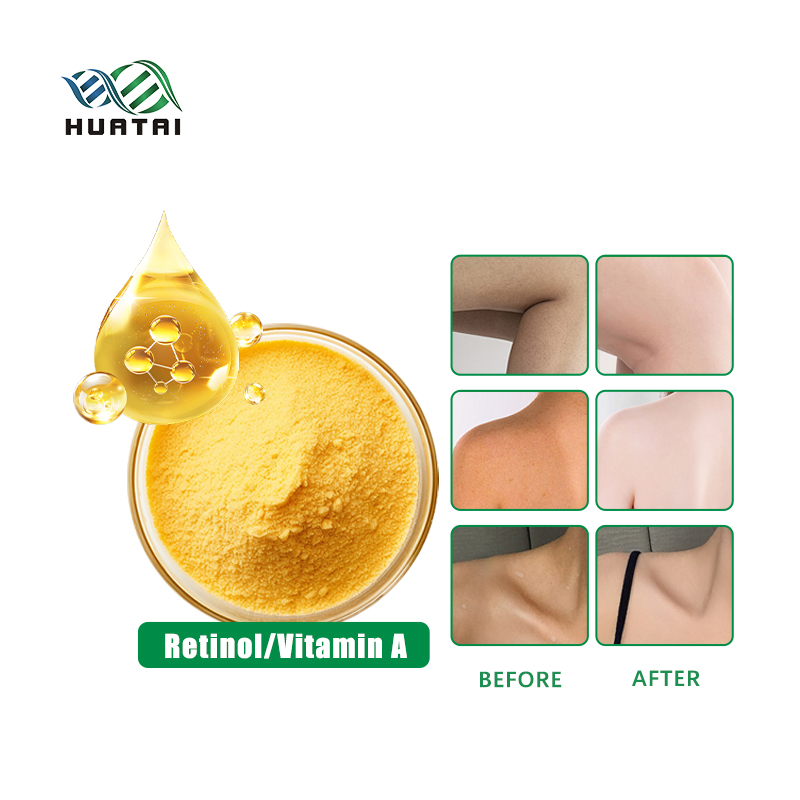
Retinol is a fat-soluble derivative of Vitamin A that acts as a powerful cell-communicating ingredient. When applied topically, it is converted by skin enzymes into retinaldehyde and eventually into retinoic acid—the active form that binds to nuclear receptors within skin cells. This process triggers a comprehensive “re-programming” of the skin:
- Accelerated Cellular Turnover: Retinol speeds up the rate at which new skin cells travel from the basal layer to the surface. This constant renewal prevents the buildup of dead cells, resulting in a smoother, more radiant texture.
- Dermal Matrix Reinforcement: It stimulates fibroblasts to produce high-quality Type I and Type III collagen. Simultaneously, it inhibits the production of collagenase, the enzyme responsible for collagen breakdown.
- Melanin Regulation: By normalizing the activity of melanocytes, Retinol effectively fades post-inflammatory hyperpigmentation (PIH), age spots, and sun-induced mottling.
- Pore Refinement: It prevents the clogging of pores by regulating sebum production and ensuring that follicular lining remains clear, making it a powerful ally against adult acne and congestion.
Technical Specifications and Product Data
To ensure maximum potency and safety in professional-grade formulations, the following technical data defines the standards for Cosmetic Grade Retinol:
| Parameter | Specification |
| INCI Name | Retinol |
| CAS Number | 68-26-8 |
| Appearance | Yellow to orange viscous liquid or crystalline powder |
| Purity / Assay | ≥ 50.0% / ≥ 98.0% (Available Grades) |
| Molecular Formula | C20H30O |
| Molecular Weight | 286.45 g/mol |
| Solubility | Soluble in oils, fats, and organic solvents; insoluble in water |
| Recommended Dosage | 0.01% – 1.0% (depending on application) |
| Storage | Store under inert gas (nitrogen), refrigerated (2°C – 8°C), protected from light |
| Shelf Life | 12–24 months when stored correctly |
Addressing the Challenges: Stability and Delivery
The primary challenge with Cosmetic Grade Retinol is its inherent sensitivity. It is highly reactive to oxygen, light, and heat, which can lead to degradation and loss of efficacy before it even reaches the skin.
To combat this, modern formulators utilize several strategies:
- Encapsulation Technology: Housing Retinol in liposomes or polymer shells to ensure timed release and deeper penetration while minimizing surface irritation.
- Antioxidant Stabilization: Pairing Retinol with Mixed Tocopherols or Ferulic Acid to shield the molecule from oxidative stress.
- Anhydrous Systems: Formulating in oil-based or silicone-based “waterless” environments to preserve the chemical integrity of the Vitamin A.
Strategic Applications in Skincare
Because of its potent nature, Retinol is utilized across diverse product categories:
- Resurfacing Night Serums: High-concentration treatments for deep wrinkle repair and texture improvement.
- Eye Renewal Creams: Low-concentration, buffered formulas designed to smooth crow’s feet without irritating the thin periorbital skin.
- Clarifying Lotions: Targeted at oily and acne-prone skin to reduce pore size and improve clarity.
- Neck and Décolleté Treatments: Formulated with soothing lipids to address the specific thinning and sagging of the neck area.
Conclusion: The Future of Retinoid Science
Cosmetic Grade Retinol represents the perfect intersection of proven efficacy and modern refinement. By providing a high-purity active that directly influences gene expression within the skin, it offers formulators a tool that delivers visible, transformative results. As consumer education grows, the demand for standardized, stable, and high-purity Retinol continues to rise, securing its place as the definitive “king” of anti-aging ingredients. For any brand aiming to provide true skin-transforming benefits, Retinol is not just an option—it is a biological necessity.



 English
 German
 Italian
 French
 Spanish
 Japanese
 Korean
 Russian