What are the Benefits of High-Purity Glabridin Powder in Professional Skincare?
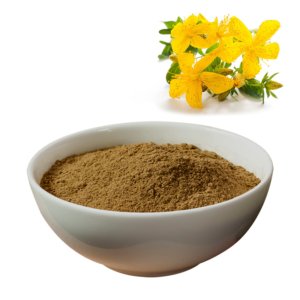
Have you ever watched a perfectly white emulsion turn brown in an incubator test? It is a nightmare for formulators. The culprit is almost always low-quality plant extracts. Let us discuss the “whitening gold” of the industry: Glabridin. But not just any Glabridin. We need to talk about high-purity Glabridin powder.
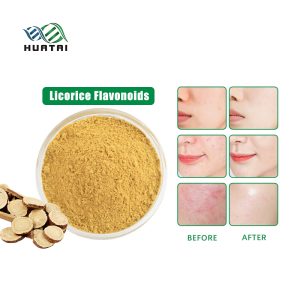
As a manufacturer of cosmetic active ingredients, I see brands try to cut costs daily. They buy low-grade extracts. Then they wonder why their expensive serums smell like dirt and fail stability testing. High-purity Glabridin solves this. We extract this molecule from the root of the licorice plant. It actively blocks tyrosinase, the biological engine that produces dark pigment in human skin.
Does it actually outperform standard brighteners? Look at the hard numbers. Scientists measure this blocking power using an IC50 value. A lower number indicates stronger pigment-stopping power.
| Active Ingredient | IC50 Value for Tyrosinase Inhibition | Clinical Impact on Skin |
| Glabridin | ~0.05 ug/ml | Extremely high potency, requires low dosage |
| Kojic Acid | ~9.14 ug/ml | Moderate potency, high irritation risk |
| Vitamin C | ~50.00 ug/ml | Weak direct inhibition, mainly acts as antioxidant |
| Arbutin | ~40.00 ug/ml | Gradual brightening, requires high concentration |
A boutique skincare brand came to us last year with a major problem. Their new dark-spot cream kept separating. It looked like muddy water on the shelf. They originally formulated it with a 40 percent grade Glabridin extract to save money. That low grade contained too many useless plant resins and heavy colorants. We advised them to switch to a 90 percent high-purity powder. The color issue vanished immediately. The cream stayed pure white. More importantly, their customer complaints regarding skin irritation dropped to zero. You simply cannot cheat the chemistry.
What should you actually demand from your raw material supplier? Never accept a batch without verifying these specific markers on the Certificate of Analysis (COA).
| Testing Parameter | High-Purity Specification | Why Formulators Must Care |
| Appearance | White or off-white powder | Dark powder ruins transparent serums and white creams |
| Assay (HPLC) | 90% to 99% Minimum | Guarantees the actual active molecule is present |
| Loss on Drying | Less than 5.0% | Excess water causes the powder to clump and degrade |
| Heavy Metals | Less than 10 ppm | Prevents heavy metal toxicity and regulatory bans |
| Solubility | 100% in specific solvents | Ensures the active actually penetrates the skin barrier |
How do you get this potent powder into your formula? Glabridin hates water. If you drop it into a water phase, it floats like sand. You must respect its oil-loving nature.
| Formulation Phase | Best Practice for High-Purity Glabridin | The Chemical Reason |
| Solvent Selection | Dissolve fully in Butylene Glycol or PEG-400 | The molecule is highly lipophilic and needs an organic carrier |
| Temperature Limits | Keep processing below 45 Celsius | Extreme heat destroys the active botanical structure |
| pH Environment | Maintain formula between 5.5 and 6.5 | Extreme acidity or alkalinity breaks the emulsion apart |
| Synergy Boost | Pair with Vitamin E or Ceramides | Protects the active from oxidation during long shelf life |
The regulatory landscape is shifting rapidly. The European Union continues to ban traditional chemical lighteners. Hydroquinone is strictly regulated. Synthetic alternatives face heavy safety reviews. High-purity Glabridin bypasses these regulatory roadblocks completely. It gives you clinical-level brightening power from a plant-based source. It fits perfectly into the modern clean beauty trend.
Stop guessing with your active ingredients. Try formulating with a high-purity grade and see the stability difference on your own lab bench. We gladly provide samples for formulators to test directly. See how it dissolves. Watch how it maintains your formula’s color over time.
References used in formulating this insight:
- Yokota, T., et al. (1998). “The inhibitory effect of glabridin from licorice extracts on melanogenesis and inflammation.” Pigment Cell Research.
- Simmler, C., et al. (2013). “Licorice root: A botanical dietary supplement and extract used in cosmetic formulations.” Fitoterapia.
- Draelos, Z. D. (2007). “Skin lightening preparations and the hydroquinone controversy.” Dermatologic Therapy.
Empower Your Skin Science: Develop Next-Generation Formulations with Our Premium Active Ingredients.
Why choose us
Huatai Bio provides a comprehensive portfolio of high-efficacy cosmetic active ingredients, empowering global brands to create next-generation skincare formulations for high-end skincare formulation needs.
Comprehensive Solutions & Innovation: Our categories cover the full spectrum of market requirements: Anti-aging & Firming, Oil-Control & Anti-acne, Anti-inflammatory & Soothing,Antioxidant Defense, Brightening,and Hydration & Barrier Repair.We offer both established classics and cutting-edge actives.
Driven by a passion for scientific excellence, our state-of-the-art R&D laboratory is dedicated to exploring the frontier of bio-active molecules. Beyond supplying ingredients, we offer end-to-end formulation consultancy and customized solution development. Our team of expert chemists works closely with your brand to overcome complex stability issues and sensory challenges, ensuring your final product stands out in a competitive global market.
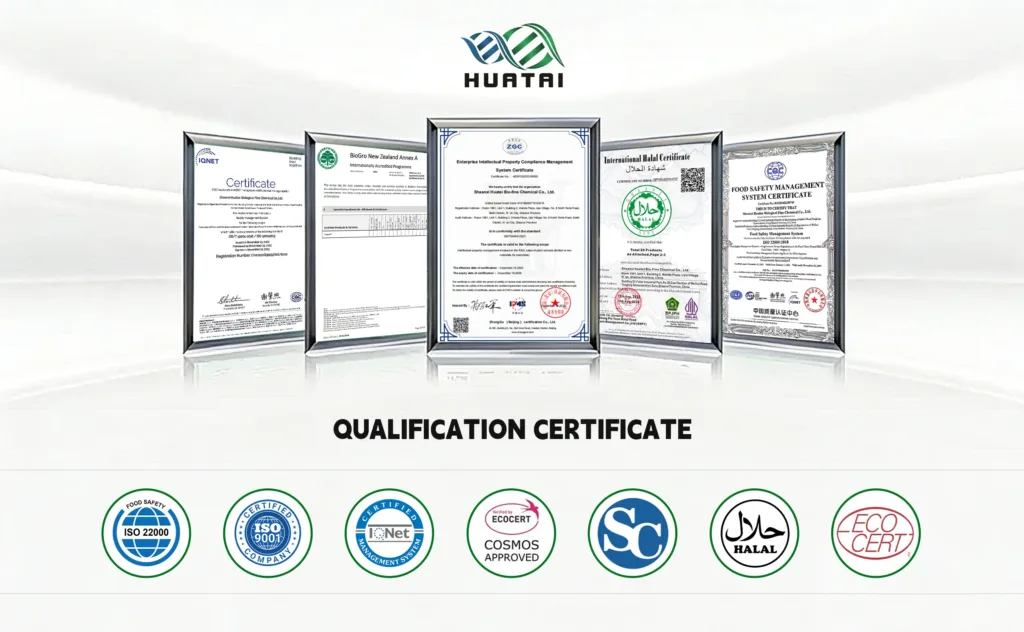
Uncompromising Quality & Credibility:We ensure every batch of our Active skincare ingredients meets rigorous quality standards, including COSMOS, ISO 9001/22000, and HALAL Certification. This commitment, backed by a complete Technical Dossier, offers clinically-backed solutions and guaranteed compliance for every formulation challenge.



 English
 German
 Italian
 French
 Spanish
 Japanese
 Korean
 Russian