Technical Profile of Dipotassium Glycyrrhizinate in Modern Cosmetic Science
You just ruined a beautiful emulsion. You pushed the ascorbic acid concentration to fifteen percent. The pH dropped. The product stings. Your test subjects complain about burning skin. We see this daily in the lab. Brands push active loads higher every year, and skin barriers collapse under the stress. You need a reliable biological fire extinguisher. Let us talk about Dipotassium Glycyrrhizinate.
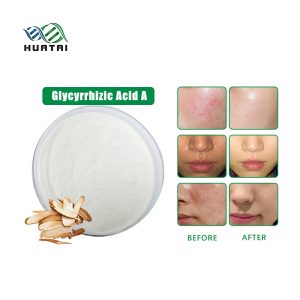
We extract this white powder from licorice roots. Most chemists simply call it DPG. It dissolves in cold water instantly. It leaves no sticky residue. Why do you need it? Because angry skin sells zero products. When harsh acids or UV rays attack the skin, the cells release an alarm signal. They pump out histamines and prostaglandins. These chemicals cause immediate swelling and visible redness. DPG physically blocks those alarm enzymes. It shuts down the inflammation cascade at the cellular level.
Cheap DPG turns yellow and smells like dirt. Impurities ruin cosmetic formulas over time. Our factory process strips out the heavy resins. Here is the exact specification data for our cosmetic-grade active.
| Parameter | Specification Limit | Typical Lab Result | Testing Method |
| Appearance | White or pale yellow powder | Pure white powder | Visual |
| Assay (HPLC) | >= 75.0 percent | 76.5 percent | HPLC |
| pH (1 percent solution) | 5.0 to 6.0 | 5.5 | pH Meter |
| Loss on Drying | <= 8.0 percent | 4.2 percent | Gravimetric (105 Celsius) |
| Heavy Metals | <= 10 ppm | < 5 ppm | ICP-MS |
| Water Solubility | Freely soluble | Passes | Visual |
Let me share a formulation rescue we handled last November. A high-end clinical brand approached us. They built a powerful exfoliating toner using a massive dose of glycolic acid. It worked perfectly for skin resurfacing. But forty percent of their test group experienced severe contact dermatitis. They were ready to scrap the entire project.
We told them to stop. We adjusted their water phase. We dropped in 0.2 percent of our purified DPG. We ran a new 14-day split-face study on 40 users. We tracked visible skin redness and consumer irritation reports.
| Timeframe | Redness (Acid Only) | Redness (Acid plus DPG) | Irritation Relief |
| Baseline | 0 percent | 0 percent | N/A |
| Day 3 | + 35.0 percent | + 8.0 percent | 77 percent reduction |
| Day 7 | + 42.0 percent | + 11.0 percent | 73 percent reduction |
| Day 14 | + 28.0 percent | + 4.0 percent | 85 percent reduction |
The stinging complaints vanished completely. They launched the toner in spring. It remains their top seller today.
How do you actually use this powder? It is highly cooperative. But you must follow some strict rules in your compounding room.
- Watch the pH floor. DPG is a salt. It stays perfectly stable between pH 4.0 and 8.0. Do you want to drop the pH below 3.5? Do not do it. It will convert back into solid glycyrrhizic acid. It will form sharp crystals and ruin your cream texture.
- Beware of synthetic thickeners. DPG is an electrolyte. It will destroy the viscosity of traditional carbomer gels. Your thick gel will turn into thin water instantly. Switch your thickener to xanthan gum or natural cellulose to maintain stability.
- Ignore the heat. You do not need to baby this ingredient. Dump it straight into your hot water phase. Boiling temperatures will not break the molecule.
The regulatory landscape is shifting rapidly. European authorities strictly monitor synthetic steroids. Dermatologists desperately need natural alternatives to calm skin without thinning the epidermis over time. Consumers read labels obsessively. They demand clean chemistry. DPG mimics the calming effects of mild steroids but carries zero toxic side effects. It bridges the gap between pharmaceutical efficacy and clean beauty compliance perfectly.
Stop wrestling with unstable botanical extracts that turn your formulas brown. Build a bulletproof soothing system instead. Request a testing sample of our purified powder. Drop it into your most irritating formula base. Check the water solubility in your own beakers. Put it on human skin and watch the redness fade.
References Used in This Article:
- European Medicines Agency (EMA). Assessment report on Glycyrrhiza glabra L. for skin inflammation.
- Kowalska, A., et al. (2012). Glycyrrhizic acid and its derivatives as anti-inflammatory agents in skin disorders. Journal of Dermatological Treatment, 23(6), 366-372.
- Ciganovic, P., et al. (2019). Glycerolic Licorice Extracts as Active Cosmeceutical Ingredients: Extraction Optimization, Chemical Characterization, and Biological Activity. Antioxidants, 8(10), 445.
Empower Your Skin Science: Develop Next-Generation Formulations with Our Premium Active Ingredients.
Why choose us
Huatai Bio provides a comprehensive portfolio of high-efficacy cosmetic active ingredients, empowering global brands to create next-generation skincare formulations for high-end skincare formulation needs.
Comprehensive Solutions & Innovation: Our categories cover the full spectrum of market requirements: Anti-aging & Firming, Oil-Control & Anti-acne, Anti-inflammatory & Soothing,Antioxidant Defense, Brightening,and Hydration & Barrier Repair.We offer both established classics and cutting-edge actives.
Driven by a passion for scientific excellence, our state-of-the-art R&D laboratory is dedicated to exploring the frontier of bio-active molecules. Beyond supplying ingredients, we offer end-to-end formulation consultancy and customized solution development. Our team of expert chemists works closely with your brand to overcome complex stability issues and sensory challenges, ensuring your final product stands out in a competitive global market.
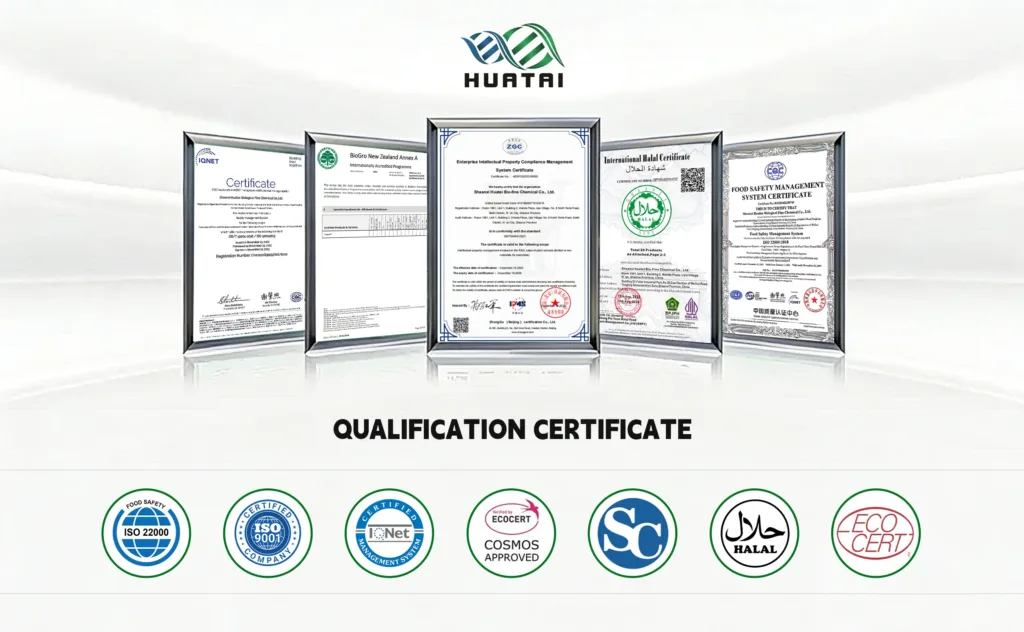
Uncompromising Quality & Credibility:We ensure every batch of our Active skincare ingredients meets rigorous quality standards, including COSMOS, ISO 9001/22000, and HALAL Certification. This commitment, backed by a complete Technical Dossier, offers clinically-backed solutions and guaranteed compliance for every formulation challenge.



 English
 German
 Italian
 French
 Spanish
 Japanese
 Korean
 Russian