
Ever formulated a 2% Alpha Arbutin serum, only to see it do absolutely nothing in clinical trials? We see this fail in our labs constantly. Formulators expect one miracle ingredient to erase severe hyperpigmentation. Skin biology does not work that way. Pigment creation is a multi-step survival mechanism. You need a multi-pathway attack to stop it.
You need the trifecta: Alpha Arbutin, Kojic Acid, and Niacinamide.
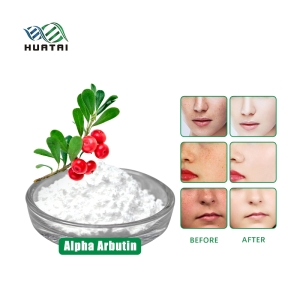
Let us break down why this trio dominates the brightening market. Think of melanin production as a factory. Kojic Acid acts first. It steals the raw materials, specifically the copper ions needed to start production. Alpha Arbutin then steps in. It shuts down the main manufacturing machine, the tyrosinase enzyme. Finally, Niacinamide blocks the delivery trucks. It stops whatever pigment was created from transferring into your visible skin cells.
Hit all three pathways, and the dark spots fade fast. As an active ingredient manufacturer, I deal with these specs daily. Here is what you must know before dropping these into a tank.
Parameter Comparison for the Bench
| Ingredient | Primary Action | Optimal pH | Solubility | Recommended Dosage | Stability Risk |
| Alpha Arbutin | Tyrosinase inhibitor | 3.5 – 6.5 | Water | 0.2% – 2.0% | Hydrolyzes at low pH |
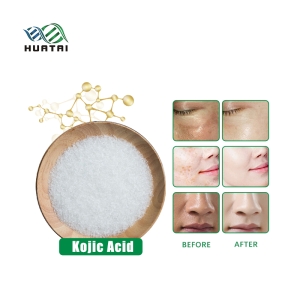
| Kojic Acid | Copper chelation | 3.0 – 5.0 | Water, Alcohol | 1.0% – 2.0% | Oxidizes (turns brown) |
| Niacinamide | Transfer blocker | 5.0 – 7.0 | Water | 2.0% – 5.0% | Niacin flush at low pH |
The Formulation Nightmare (And How to Fix It)
Look closely at that pH table. Do you see the problem? Kojic Acid wants a pH of 4. Niacinamide wants a pH of 6. Mix them wrong, and the Niacinamide converts into nicotinic acid. Your customers will experience severe skin flushing and burning.
Here is the lab-tested solution. Keep your final batch pH exactly between 5.0 and 5.5. This narrow window prevents the Alpha Arbutin from breaking down into toxic hydroquinone. It keeps the Niacinamide perfectly stable.
But what about the Kojic Acid? It will oxidize rapidly at that pH and turn your beautiful white emulsion brown. Always add 0.1% Sodium Metabisulfite and 0.2% Vitamin E to the water and oil phases. These antioxidants act as bodyguards. They take the oxidative damage so the Kojic Acid survives. Always add these actives during the final cool-down phase below 40 degrees Celsius. Heat destroys them.
Quality Control Reality (Actual COA Snapshot)
Purity dictates safety. Impure Alpha Arbutin carries residual hydroquinone. That defect will get your product pulled from European shelves immediately. When we release a cosmetic-grade batch of Alpha Arbutin, this is the exact specification we demand.
| Test Parameter | Specification Limit | Actual Batch Result |
| Assay (HPLC) | >= 99.0% | 99.6% |
| Hydroquinone | <= 10 ppm | Not Detected |
| pH (1% solution) | 5.0 – 7.0 | 6.2 |
| Heavy Metals (Pb) | <= 10 ppm | < 1 ppm |
| Total Plate Count | <= 100 CFU/g | < 10 CFU/g |
A Direct Application Case Study
Let us look at actual clinical data. A derma-brand recently asked us to fix a stalled spot-corrector formula. They used 5% Niacinamide alone. It brightened the overall skin tone but failed completely on stubborn sun spots.
We upgraded their base to the trifecta: 2% Alpha Arbutin, 1% Kojic Acid, and 3% Niacinamide. The lab ran an 8-week split-face clinical test using a standard Mexameter to measure the melanin index.
- Week 2: 12% reduction in spot intensity.
- Week 4: 26% reduction. The old Niacinamide-only formula plateaued at 14%.
- Week 8: 43% reduction in deep hyperpigmentation.
The formula stability held up perfectly. They passed a 3-month accelerated test at 45 degrees Celsius with zero color shift and zero pH drift.
Industry Trends and Compliance Limits
Regulators are watching skin lighteners closely. The EU Scientific Committee on Consumer Safety (SCCS) recently finalized safety limits. Alpha Arbutin is strictly capped at 2% in face creams. Kojic Acid is now restricted to a maximum of 1% in the EU.
By formulating with this trifecta, you win the compliance game. You combine these actives at lower, strictly legal percentages. You maximize the clinical efficacy while staying entirely off the regulatory radar.
Stop relying on single-ingredient marketing. Combine the biological pathways. Balance your pH window carefully. Protect the Kojic Acid with antioxidants. You will build a brightening formula that actually performs on the skin.
References Consulted:
- Hakozaki, T., et al. (2002). The effect of niacinamide on reducing cutaneous pigmentation and suppression of melanosome transfer. British Journal of Dermatology, 147(1), 20-31.
- Sugimoto, K., et al. (2004). Inhibitory effects of alpha-arbutin on melanin synthesis in cultured human melanoma cells and a three-dimensional human skin model. Biological and Pharmaceutical Bulletin, 27(4), 510-514.
- SCCS (Scientific Committee on Consumer Safety). (2022). Opinion on the safety of alpha-arbutin and beta-arbutin in cosmetic products. European Commission.
- SCCS (Scientific Committee on Consumer Safety). (2022). Opinion on Kojic Acid. European Commission.


 English
 German
 Italian
 French
 Spanish
 Japanese
 Korean
 Russian