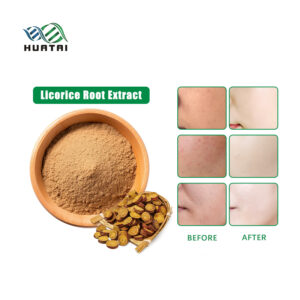
Walk into any cosmetics procurement office today. Look at the Request for Quote (RFQ) emails sent to suppliers. Most buyers ask for “Licorice Root Extract 40 Percent.” They do not specify the testing methodology. They do not set a limit on heavy metals. They receive twenty quotes back from various traders. They pick the cheapest price per kilogram.
Six months later? Their new skin brightening serum separates in the bottle. The emulsion turns a muddy brown. The product smells like burnt sugar. The brand issues a massive recall.
I oversee the extraction columns and isolation reactors on the factory floor. I see the raw chemistry right here at the source. We will cut the marketing noise right now. Buyers waste millions of dollars because they do not know how to interrogate their suppliers.
We will look at the hard clinical data, the true cost of raw material failure, and the exact parameters you must put in your next RFQ to secure clinical-grade Glabridin without getting scammed by a middleman.
The Potency Illusion
Buyers often make a fatal mathematical mistake. They look at the bulk price of pure Glabridin and panic. They buy a cheap botanical water extract instead. They do not calculate the actual cost-in-use.
Skin creates dark spots using an enzyme called tyrosinase. Think of tyrosinase as a biological pigment factory. Most mass-market chemical lighteners try to bleach the skin. They require massive compounding doses to work.
Glabridin operates differently. It acts as a biological roadblock. It binds directly to the pigment factory and shuts off the power. It does not kill the healthy skin cell. It is incredibly potent. We measure this potency using half-maximal inhibitory concentration. We call it IC50 in the analytical lab. Lower numbers mean you need drastically less raw powder in your mixing tank to kill the pigment.
| Active Brightener | IC50 Tyrosinase Inhibition (micromoles/L) | Typical Compounding Dose | Cost Impact per 1000L Batch |
| Pure Glabridin | 0.43 | 0.05 to 0.1 Percent | Highly Optimized |
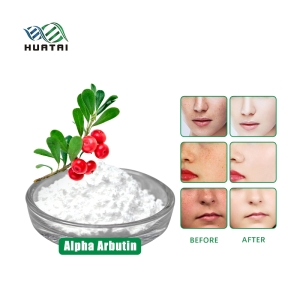
| Alpha Arbutin | 4.00 | 1.0 to 2.0 Percent | Moderate |
| Hydroquinone | 7.00 | 2.0 to 4.0 Percent | High (Plus legal risk) |
| Kojic Acid | 9.10 | 1.0 to 2.0 Percent | High (Oxidizes easily) |
Look at the raw math. You use a microscopic fraction of a percent of pure Glabridin. A single bag of pure isolate lasts for months of continuous production. When you calculate the actual active cost per bottle, this molecule is highly cost-effective. You just have to know how to buy it.
The Broker Trap: Forcing the True COA
Why do so many indie brands fail their stability testing? They buy from traders who do not own a single extraction reactor.
These middlemen buy a crude 4 percent licorice powder. They cut it with cheap maltodextrin. They label it cosmetic grade. They run crude ultraviolet (UV) testing. Ultraviolet testing counts random plant noise and background tannins as the active ingredient.
You must demand precision High-Performance Liquid Chromatography (HPLC) testing. Your RFQ must explicitly state this requirement. If you do not ask for HPLC, traders will send you UV-tested dirt.
Here is the exact specification standard you must copy and paste into your supplier RFQ to weed out the brokers.
| Specification Parameter | True 40 Percent Grade | Ultra-Pure 90 Percent Isolate | Technical Impact on Your Emulsion |
| Appearance | Light yellow fine powder | Off-white crystalline powder | Prevents baseline discoloration. |
| Assay Method | Minimum 40.0 Percent (HPLC) | Minimum 90.0 Percent (HPLC) | Guarantees exact clinical dosing. |
| Glycyrrhizin Content | Maximum 1.0 Percent | Maximum 0.5 Percent | High levels trigger unwanted skin swelling. |
| Heavy Metals | Maximum 10 ppm | Maximum 5 ppm | Meets strict global clean beauty audits. |
| Loss on Drying | Maximum 2.0 Percent | Maximum 1.0 Percent | Prevents moisture decay in warehouse storage. |
If a supplier replies with a quote but dodges your questions about the exact HPLC testing methods, delete their email.
The Formulator Playbook: Stop Wasting Expensive Powder
You used the strict RFQ. You secured the verified HPLC crystalline powder. You paid for premium chemistry. Do not ruin it during compounding.
Glabridin is intensely hydrophobic. It loves oil. It completely hates water. If your compounding chemists dump the dry powder directly into the aqueous phase, it will crash out instantly. It will float on top of the water like wet sand. Your final cream will feel gritty. You just threw your procurement budget down the drain.
Here is the exact production protocol our R&D chemists issue to formulation partners.
- The Lipid Pre-Mix: Do not add the powder directly to the main tank. Pre-dissolve it completely in a lipid or glycol vehicle first. Caprylic/Capric Triglyceride, Squalane, or Butylene Glycol work beautifully.
- The Thermal Sweet Spot: Heat this specific lipid pre-mix gently to roughly 60 degrees Celsius. Stir continuously. The crystalline powder will melt into a perfectly clear, uniform liquid phase.
- The Cool Down Drop: Do not expose the isolated molecule to extreme heat for hours in the main emulsification tank. Drop your clear lipid pre-mix into the main tank during the cool-down stage. Keep the vat strictly below 45 degrees Celsius.
- The Synergistic Layering: Smart formulators pair 0.1 percent pure Glabridin with 3 percent Niacinamide. You attack the dark spot from two biological angles simultaneously.
Application Case Study: The Post-Acne Rescue
A professional medical-spa brand came to our factory last year facing a retail disaster. Their flagship 2 percent Kojic Acid serum was oxidizing rapidly on retail shelves. The clear liquid turned an ugly dark orange within 45 days. Customers flooded their service line complaining about skin stinging. The brand faced a massive financial write-off.
Their procurement team sent us a strict RFQ for our 90 percent isolate. We brought their failed formula into our analytical lab. We scrapped the volatile Kojic Acid entirely. We engineered a clean, skin-neutral lipid delivery system. We introduced exactly 0.15 percent of our pure isolate into a squalane base.
The clinical pivot saved their brand equity. Over eight weeks of independent consumer testing, skin analyzer machines recorded a 29 percent deeper reduction in post-inflammatory hyperpigmentation compared to their old Kojic formula.
More importantly? The new formula passed a grueling 90-day accelerated heat stability test at 45 degrees Celsius with zero color shift. The serum stayed crystal clear. Because they swapped a 2 percent bulky dose for a 0.15 percent pure isolate, their active ingredient cost per bottle actually dropped. They optimized their ledger and fixed the skin redness.
Strategic Sourcing and Global Compliance
The global regulatory environment is unforgiving. The FDA Modernization of Cosmetics Regulation Act (MoCRA) demands absolute supply chain transparency. European authorities are actively auditing synthetic skin lighteners. You cannot buy mystery white powders from undocumented trading brokers anymore.
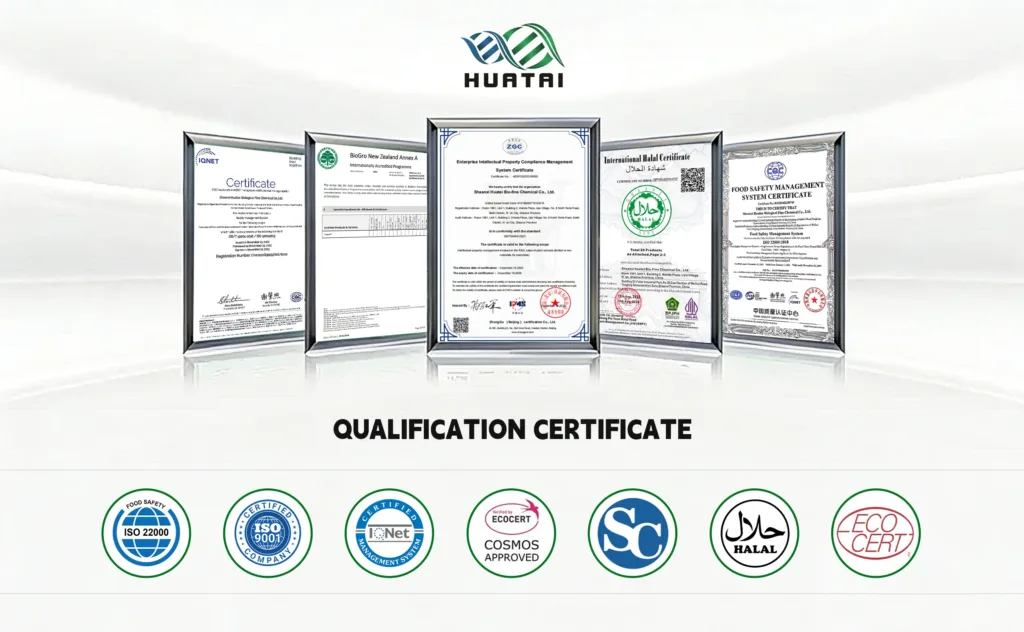
Authentic, compliant material comes exclusively from the root of Glycyrrhiza glabra L. We extract it. We purify it via HPLC. We deliver the ultra-low heavy metal profiles that compliance officers demand.
Stop arguing with brokers over pennies. Write a strict RFQ. Demand the HPLC chromatograms.
We have premium powder lab samples packed and ready for your R&D department. Do not ask for a specific weight. Just request a benchmark lab sample for your chemists to test on the bench. Let the raw chemistry prove its financial viability in your own beaker. Reach out directly to our technical quoting desk to secure your production sample today.
References Used in Preparation:
- Yokota, T., et al. (1998). The inhibitory effect of glabridin from licorice extracts on melanogenesis and inflammation. Pigment Cell Research.
- Nerya, O., et al. (2003). Glabridin experiments on tyrosinase inhibition and skin lightening activity. Journal of Agricultural and Food Chemistry.
- Guo, L., et al. (2022). Comparative study on the tyrosinase inhibition kinetics of natural stilbenes and flavonoids. Cosmetics and Toiletries Magazine.
- SCCS (Scientific Committee on Consumer Safety). (2021). Expert Opinion Papers on Plant-Derived Phenolic Compounds in Cosmetics. European Commission.

 English
 German
 Italian
 French
 Spanish
 Japanese
 Korean
 Russian