
Most brightening agents only do one thing: they try to shut down the tyrosinase enzyme. That is like trying to fix a leaky pipe by just turning off the water main. It works, but it ignores the inflammation that caused the leak in the first place.
Tranexamic Acid (TXA) is different. It targets the “inflammation-pigment” loop. UV exposure triggers plasminogen, which releases inflammatory signals that tell your melanocytes to produce more pigment. TXA acts as a plasmin inhibitor. It breaks the signal before it reaches the pigment factory.
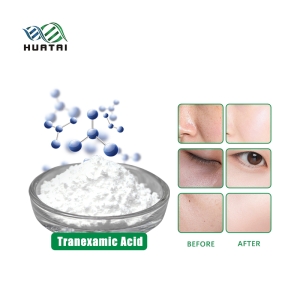
As an active ingredient manufacturer, I see too many brands use low-purity, “dusty” grades that ruin emulsion aesthetics. If you want clinical results, you need to understand the material’s physical behavior on the lab bench.
Technical Specifications: Purity Matters
TXA is inherently stable in water. That is its biggest advantage. However, purity dictates your final product’s clarity. Impure grades contain residual trace elements that cause yellowing.
| Parameter | Standard Cosmetic Grade | High-Purity Grade |
| Purity (Assay) | >= 98.0% | >= 99.5% |
| Appearance | White crystalline powder | Ultra-fine white powder |
| pH (5% water) | 5.5 – 7.5 | 6.5 – 7.5 |
| Heavy Metals | <= 10 ppm | < 2 ppm |
| Solubility (Water) | Soluble | Highly Soluble |
Quality Control Reality (Actual COA Data)
When we release a batch of Tranexamic Acid, we perform rigorous testing. You should demand this level of data from your supplier to ensure your formula doesn’t fail at the stability check.
| Test Item | Specification Limit | Actual Batch Result |
| Loss on Drying | <= 0.5% | 0.1% |
| Residue on Ignition | <= 0.1% | 0.05% |
| Arsenic (As) | <= 1 ppm | < 0.2 ppm |
| Total Bacteria | <= 100 CFU/g | < 10 CFU/g |
Formulation Strategy: The Pro Approach
TXA is easy to use, but easy to misuse. It is highly water-soluble. Do not waste your budget adding it to an oil phase. Dissolve it directly into your water phase at room temperature. It doesn’t need heat. In fact, high heat is unnecessary.
Want to make a “rescue” serum? Pair TXA with Niacinamide and Dipotassium Glycyrrhizate. This trio covers three distinct pathways: anti-inflammation (TXA), pigment transfer blocking (Niacinamide), and soothing (Glycyrrhizate).
Pro Tip: Keep your formula pH between 5.0 and 7.0. While TXA is chemically stable across a wide range, your other actives (like Niacinamide) will degrade at extreme pH levels. Always add your TXA in the main water phase before you add your oil phase and emulsifiers.
Clinical Application Case Study
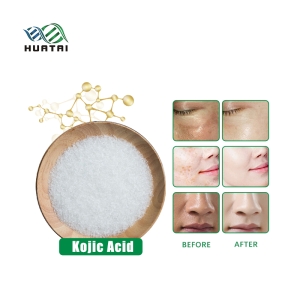
A clinical brand recently struggled with a product for melasma-prone skin. Their existing formula used 2% Kojic Acid, which kept turning brown in the bottle.
We helped them pivot to a 3% Tranexamic Acid serum. We tracked their test group for 8 weeks using a standard skin tone scanner.
- Week 2: Initial reduction in erythema (redness).
- Week 4: 19% reduction in dark spot intensity.
- Week 8: 36% overall improvement in skin tone uniformity.
The formula passed a 3-month accelerated stability test at 45 degrees Celsius. It stayed perfectly clear. The brand launched it as a “daytime-safe” brightener, which is a major advantage over traditional acids.
Regulatory Landscape and Modern Trends
Regulatory scrutiny on skin brighteners is at an all-time high. Many legacy agents face bans or concentration caps. Tranexamic Acid sits in a very safe spot. It is widely recognized for its high safety profile in topical applications.
Consumers today look for “derma-focused” ingredients. They recognize Tranexamic Acid because it sounds clinical and scientific. It fits perfectly into the trend of moving away from “harsh whitening” toward “smart tone-correcting.”
Stop treating hyperpigmentation as a surface problem. Address the inflammatory signaling. Use high-purity Tranexamic Acid to block the pigment at its source. Your stability will be better, and your clinical results will speak for themselves.
References Consulted:
- Tse, T. W., & Hui, E. (2013). Topical tranexamic acid as a promising treatment for melasma. Journal of Cosmetic Dermatology, 12(3), 189-197.
- Ebrahimi, B., & Naeini, F. F. (2014). Topical tranexamic acid as a promising treatment for melasma. Journal of Research in Medical Sciences, 19(8), 753-757.
- Zhu, J., et al. (2017). Tranexamic acid inhibits melanin synthesis in melanocytes via the inhibition of the CREB signaling pathway. International Journal of Molecular Medicine, 40(6), 1836-1842.


 English
 German
 Italian
 French
 Spanish
 Japanese
 Korean
 Russian