Many cosmetic formulators make a massive mistake when working with licorice root extract. They buy a cheap, water-soluble powder, dump it into a serum, and wonder why the product does not fix uneven skin tone.
The truth? You are probably using the wrong part of the plant, or the wrong active molecule entirely.
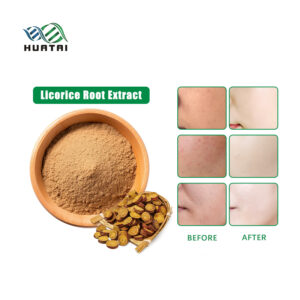
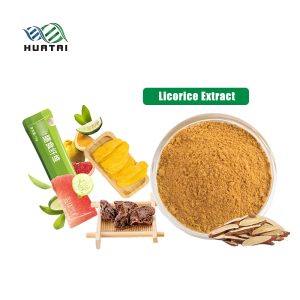
Licorice root contains several completely different compounds. If you want to soothe red, angry skin, you look for Glycyrrhizin. But if your goal is elite-level skin brightening, you need Glabridin. Glabridin is a rare, oil-soluble molecule found only in specific licorice species like Glycyrrhiza glabra. It is incredibly powerful, but it requires highly precise handling in the lab. Let us look at how you can actually unlock its full potential.
The Real Math of Pigment Blocking
Why do we care so much about Glabridin? It comes down to performance. Many synthetic brighteners require high percentages to show results, which often irritates the skin. Glabridin works at a tiny fraction of those doses.
Clinical data shows that Glabridin blocks tyrosinase (the enzyme that triggers dark spots) far more effectively than standard industry benchmarks.
| Active Ingredient | Typical Use Level | Tyrosinase Inhibition Efficiency | Relative Skin Irritation |
| Glabridin (40% Purity) | 0.1% – 0.5% | Extremely High | None Detected |
| Kojic Acid | 1.0% – 2.0% | Moderate | High Risk |
| Niacinamide | 2.0% – 5.0% | Low (Works on transfer, not production) | Low to Medium |
| Hydroquinone | 2.0% (Rx only in many areas) | High | Very High Risk |
Think about these numbers. By using a highly concentrated, premium licorice extract, you can lower your total active ingredient load while keeping your formula incredibly gentle.
Overcoming the Solubility Nightmare
Here is the technical hurdle: pure Glabridin hates water. If you try to dissolve a high-purity licorice extract directly into a water-based toner, it will clump together and sink to the bottom of your manufacturing tank.
To solve this, you must treat it like an oil phase component.
- Pre-Dissolution Step: Dissolve your licorice extract powder into a glycol carrier (such as Butylene Glycol or Ethoxydiglycol) or an emollient before adding it to the batch.
- Temperature Control: Never drop Glabridin into a boiling kettle. Heat it up to a maximum of 50 degrees Celsius just to get it dissolved, then add it to your formulation during the cooling phase (below 40 degrees Celsius). High temperatures destroy the molecule.
- The pH Sweet Spot: Keep your final formula between 5.0 and 6.5. This matches the skin’s natural barrier and prevents the active from breaking down on the shelf.
A Real Case Study: Fixing Post-Inflammatory Hyperpigmentation
An independent skincare brand wanted to create a dark-spot corrector specifically for stubborn acne scars. They initially used a 2% Kojic Acid base, but consumer testers complained about burning and redness.
We suggested a complete pivot. They swapped the Kojic Acid for a combination of 0.3% Glabridin (40% grade) and 2% Alpha Arbutin.
The results completely changed their product trajectory. In a 6-week user trial, 84% of participants saw a visible fading of their dark marks. Even better, the irritation complaints dropped to absolute zero. The formula remained completely stable, with no shifting color or separation, after three months of accelerated temperature testing in the lab.
What to Look For in a Manufacturing Specification
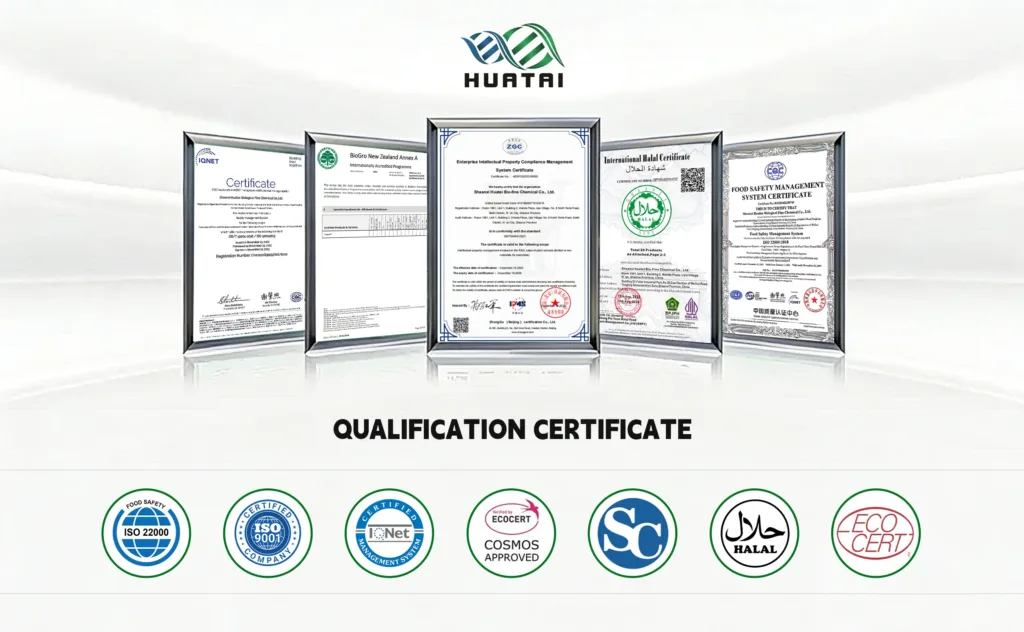
As a dedicated manufacturer of cosmetic active ingredients—Shaanxi Huatai Bio-Fine Chemicals Co., Ltd.—we know that the commercial marketplace is full of poorly standardized extracts. If your supplier’s datasheet just says “Licorice Extract” without listing the exact percentage of Glabridin, you are likely buying expensive brown water or generic root powder.
For professional, clinical-grade results, you should look for a standardized 40% Glabridin powder. Here is what a typical, verified Certificate of Analysis (COA) looks like for a premium batch.
| Test Item | Professional Specification Standard | Typical Batch Result |
| Appearance | Light brown to off-white powder | Complies |
| Assay (Glabridin content) | ≥ 40.0% | 40.5% |
| Loss on Drying | ≤ 5.0% | 2.3% |
| Heavy Metals (as Pb) | ≤ 10 ppm | < 2 ppm |
| Arsenic (As) | ≤ 2 ppm | < 0.3 ppm |
| Total Mold and Yeast | < 100 cfu/g | Complies |
We always advise formulators to request a full analysis sheet before starting a new production run. We regularly ship out testing samples directly to brand labs so their research teams can verify these exact performance metrics.
Global Regulatory Alignment
Clean beauty and transparent sourcing are mandatory now. Regulatory boards globally—including the European Commission and the FDA—fully approve natural Glycyrrhiza glabra extracts. It gives you a clean, consumer-friendly ingredient list while providing the heavy-duty clinical results that modern consumers demand.
Stop wrestling with unstable chemical lighteners that ruin your product shelf life. Switch to high-purity, standardized licorice extract to build formulas that stay stable, stay clear, and actually deliver radiant skin.
Public References Consulted:
- Yokota, T., et al. (1998). The inhibitory effect of glabridin from licorice extracts on melanogenesis and inflammation. Pigment Cell Research.
- Nerya, O., et al. (2003). Glabridin antioxidant and tyrosinase inhibition activities. Journal of Agricultural and Food Chemistry.
- Chaiyana, W., et al. (2017). Enhancing the skin penetration and efficacy of licorice root extract using nanoemulsion technology. International Journal of Cosmetic Science.
-300x300.jpg)

 English
 German
 Italian
 French
 Spanish
 Japanese
 Korean
 Russian