
Formulators often treat Dipotassium Glycyrrhizate (DPG) as a foolproof powder for sensitive skin. They throw it in the water phase and claim anti-inflammatory benefits. Does it always work that smoothly? What happens when a serum’s pH drops below 4.0? Why do clear toners sometimes turn slightly yellow?
We are a manufacturer of cosmetic active ingredients. We test these materials daily. Here is what the lab data actually shows. We bypass marketing fluff to examine the physical chemistry behind this licorice derivative.
The Crystallization and Coloration Reality
DPG is highly water-soluble. However, this solubility is strictly pH-dependent. If your formula pH dips below 4.0, DPG undergoes a chemical shift. The salt converts back into glycyrrhizic acid. Glycyrrhizic acid has terrible water solubility. This shift causes immediate micro-crystallization. You will see a cloudy precipitate at the bottom of your mixing tanks. You must keep your pH between 5.0 and 7.0 for optimal stability.
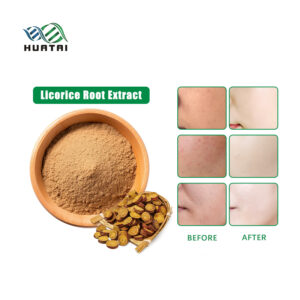
Coloration is another biological reality. High-purity DPG (98%+) is a white to pale yellow powder. When dissolved in water and exposed to prolonged UV light or heavy metal ions, a slight yellow shift occurs. This is a natural characteristic of licorice derivatives. We do not need to hide it. Adding heavy chelating agents to mask this shift often introduces unnecessary irritation risks.
Objective Product Specifications (Manufacturer Data)
Here is a realistic Certificate of Analysis (COA) benchmark for high-grade DPG.
| Parameter | Specification Limit | Typical Test Result | Testing Method |
|---|---|---|---|
| Appearance | White to pale yellow powder | Complies | Visual |
| Purity (HPLC) | ≥ 98.0% | 98.7% | HPLC |
| pH (1% aqueous) | 4.5 – 6.0 | 5.6 | pH Meter |
| Loss on Drying | ≤ 8.0% | 4.2% | 105°C, 2 hours |
| Heavy Metals (Pb) | ≤ 10 ppm | < 2 ppm | AAS |
| Solubility (Water) | Clear, colorless to pale yellow | Complies | 1g in 10ml H2O |
The Modification Myth: Do You Need Liposomal DPG?
Some suppliers push nano-encapsulated DPG at a steep price markup. Are these modified technologies necessary? Look at the hard data. Standard DPG has a molecular weight of 899.11 g/mol. While large, its amphiphilic nature allows it to interact effectively with the stratum corneum. Pair it with standard glycols like pentylene glycol for excellent penetration. It performs its primary function perfectly well in its raw form. The extra cost of modified delivery systems rarely translates to proportional clinical gains.
Efficacy Benchmarks: How It Actually Works
DPG does not work by magic. It works by blocking specific inflammatory pathways.
- Hyaluronidase Inhibition: This enzyme breaks down hyaluronic acid in the skin. In vitro testing shows glycyrrhizin derivatives inhibit hyaluronidase activity with an IC50 of approximately 3 μM. It actively preserves the skin’s natural hydration machinery.
- HMGB1 and NF-kB Suppression: DPG acts as a direct HMGB1 inhibitor. It suppresses the NF-kB pathway, which halts the release of interleukins and histamine.
How does it compare to Bisabolol? Bisabolol is a fantastic soothing agent, but it is oil-soluble. DPG is water-soluble. They do not compete. A formula utilizing 0.1% DPG in the water phase and 0.1% Bisabolol in the oil phase provides multi-pathway soothing.
Application Case: Rescuing a Niacinamide Serum
A client recently formulated a 10% Niacinamide serum. During consumer trials, 15% of testers reported mild flushing. Instead of reformulating the entire base, they incorporated 0.2% DPG into the water phase. The flushing complaints dropped to zero in the second trial phase. The DPG mitigated the localized vasodilation caused by high-dose Niacinamide. It achieved this without altering the serum’s viscosity.
Formulation Advice & Guidelines
0.1% to 1.0%. 0.1% is usually sufficient for daily care.
Add directly to the water phase.
Highly heat stable. Tolerates standard emulsification temperatures of 75°C to 80°C.
Avoid highly acidic environments (pH < 4.0). Avoid cationic surfactants to prevent precipitation.
8 High-Frequency FAQ for Sourcing Dipotassium Glycyrrhizate
- 1. Where to buy wholesale Dipotassium Glycyrrhizate powder for cosmetics?
- Source directly from primary manufacturers who extract and synthesize licorice derivatives. This ensures you get HPLC-verified purity rather than diluted blends.
- 2. What is the minimum order quantity (MOQ) for cosmetic grade DPG?
- MOQs vary. Reliable manufacturers provide flexible sample sizes for R&D trials before requiring standard bulk drum orders.
- 3. How do you dissolve Dipotassium Glycyrrhizate in skin care formulations?
- It is highly water-soluble. Sprinkle it into room temperature or warm water with gentle stirring. It dissolves into a clear solution within minutes.
- 4. Dipotassium Glycyrrhizate vs. Licorice Root Extract: Which is better?
- Standard licorice extract is dark brown and varies in active concentration. DPG is a purified salt (98%+) that is nearly white. It offers exact dosing and prevents unexpected formula discoloration.
- 5. What is the stable pH range for Dipotassium Glycyrrhizate?
- The optimal range is pH 5.0 to 7.0. Dropping below pH 4.0 risks turning the salt back into an insoluble acid. This causes crystals in your product.
- 6. Can Dipotassium Glycyrrhizate cause crystallization in serums?
- Yes, if formulated incorrectly. Acidic pH levels trigger precipitation. Proper buffering prevents this issue completely.
- 7. Is bulk Dipotassium Glycyrrhizate compliant with EU regulations?
- Yes. DPG is widely approved for cosmetic use globally. It complies with EU regulations provided heavy metal and pesticide limits meet monograph standards.
- 8. How do you verify the purity of Dipotassium Glycyrrhizate?
- Always request a batch-specific Certificate of Analysis (COA). Ensure the testing methodology explicitly states High-Performance Liquid Chromatography (HPLC). UV spectrophotometry can inflate purity numbers.
Reference Literature & Data Sources
- Glycyrrhizic Acid NH4 CAS 53956-04-0 | Sweetener | SMolecule. (Study on Hyaluronidase Inhibition).
- Ascent Petrochem. Dipotassium Glycyrrhizate-cas-68797-35-3 Specifications.
- SCBT. Dipotassium Glycyrrhizinate | CAS 68797-35-3.
- MedChemExpress. Dipotassium glycyrrhizinate (HMGB1 inhibitor data).

 English
 German
 Italian
 French
 Spanish
 Japanese
 Korean
 Russian