You blend a perfect, snow-white skin-brightening cream. You put it in the incubator. Two weeks later, your beautiful formula turns the color of a rusted penny. Sound familiar? We see this formulation nightmare constantly.
Brands love to promise flawless skin. They rarely talk about the chemistry required to keep those promises stable. Forget the glossy brochure descriptions. We look at this active ingredient from the perspective of the factory floor. We deal with the harsh realities of stability, solubility, and batch consistency every single day.
The Chemistry, Minus the Jargon
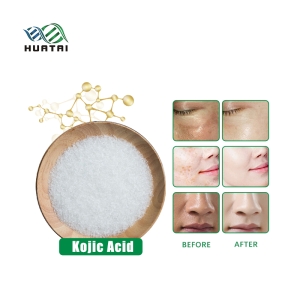
What exactly is Kojic Acid? It is a natural metabolite. Fungi, primarily Aspergillus oryzae, produce it during fermentation. Yes, this is the exact same fungus used to brew soy sauce.
How does it erase dark spots? Think of the enzyme responsible for pigmentation, tyrosinase, as a running engine. This engine needs a specific key to start. That key is a copper ion. Kojic Acid acts as a molecular thief. It grabs that copper ion through a process called chelation. Without copper, the engine stalls. Melanin production shuts down immediately. The biological pathway is straightforward. Keeping the molecule stable in a bottle is the real war.
Manufacturer Quality Data: What Your COA Should Actually Say
Buying subpar raw materials guarantees formula failure. When you audit a supplier, examine the Certificate of Analysis closely. Kojic Acid is not always perfectly white. A pale yellow tint is normal and acceptable. However, strict heavy metal control is non-negotiable.
Here is the standard product specification data you should demand before purchasing raw powder.
| Parameter | Standard Specification | Testing Method |
|---|---|---|
| Appearance | White to pale yellow crystalline powder | Visual Inspection |
| Assay (Purity) | ≥ 99.0% | HPLC |
| Melting Point | 152.0°C – 156.0°C | Capillary method |
| Loss on Drying | ≤ 1.0% | 105°C, 2 hours |
| Residue on Ignition | ≤ 0.1% | Muffle furnace |
| Heavy Metals (Pb) | ≤ 10 ppm | AAS |
| Iron (Fe) | ≤ 10 ppm | AAS |
Why do we test for iron so aggressively? Kojic Acid loves metal ions. If your raw material has trace iron, your final cosmetic product will turn red or brown on the shelf. Purity dictates shelf life.
The IC50 Trap: Why Most R&D Data is Flawed
Here is a dirty secret in the cosmetic raw material industry. Most suppliers test skin-brightening ingredients against mushroom tyrosinase because it is cheap. They use this data to claim one ingredient is better than another. This is scientifically lazy. Look at the real data breakdown and the inherent flaws in standard testing.
| Active Ingredient | Target Enzyme | IC50 Value | Efficacy Reality Check |
|---|---|---|---|
| Kojic Acid | Mushroom Tyrosinase | ~ 14.0 µM | Highly accurate. Inhibits both mushroom and human enzymes effectively. |
| Alpha-Arbutin | Mushroom Tyrosinase | > 1000 µM | Misleading. Weak against mushroom enzymes but highly potent against human enzymes. |
| Ascorbic Acid | Target Enzyme | Highly Variable | Unreliable assay. Vitamin C degrades so fast in the test tube that standard IC50 values are often meaningless. |
A Real Formulation Case Study: The pH Conflict
Early last year, an independent skincare brand approached us. They wanted to launch a 1% Kojic Acid and 4% Niacinamide serum. Their prototypes oxidized within four days. They also reported instances of severe skin flushing during panel testing. They immediately blamed our Kojic Acid powder.
We brought their formula into our lab. They made a classic chemical error. They ignored the pH conflict between the two active ingredients.
Kojic acid degrades rapidly in alkaline environments. It needs a low pH, ideally around 3.5 to 4.0, to stay stable. However, when you drop Niacinamide into a pH below 4.0, it slowly hydrolyzes into nicotinic acid. Nicotinic acid causes intense skin redness and flushing.
We tweaked their process to find the exact chemical sweet spot. We adjusted their final pH to exactly 4.8. This is low enough to keep the Kojic Acid relatively stable, but high enough to prevent the Niacinamide from breaking down.
We also added 0.2% Disodium EDTA to bind trace metals and 0.2% Sodium Metabisulfite as a sacrificial antioxidant. Finally, we forced them to switch from clear glass dropper bottles to opaque airless pumps. Light destroys Kojic Acid just as fast as oxygen. The raw material was never the problem. The chemical environment was the problem.
The Formulation Survival Guide
Want to avoid the brown-serum disaster? Pin this cheat sheet to your lab wall.
| Formulation Rule | Practical Application | Why It Matters |
|---|---|---|
| Control the pH | Target exactly 4.5 to 5.0 if using Niacinamide. | Balances Kojic acid stability with Niacinamide safety. |
| Always Chelate | Add 0.1% to 0.2% Disodium EDTA. | Binds free metal ions in the water phase before they react with the active. |
| Use Antioxidants | Pair with Sodium Metabisulfite or Vitamin E. | Sacrificial antioxidants take the oxidative damage instead of the active ingredient. |
| Watch the Heat | Add Kojic Acid during the cool-down phase below 40°C. | Sustained high heat during emulsification will permanently destroy the molecule. |
| Block the Light | Mandate opaque, airless packaging. | UV light degrades Kojic Acid and accelerates the color shift to brown. |
Industry Limits and Global Compliance
Regulatory bodies change their minds constantly. You cannot just dump 4% into a lotion to get faster results. High doses cause severe contact dermatitis and compromise the skin barrier.
The European Commission Scientific Committee on Consumer Safety issued a strict mandate in 2022. The maximum safe concentration in the EU is exactly 1% for face and hand products. Most global regulatory bodies are adopting this standard.
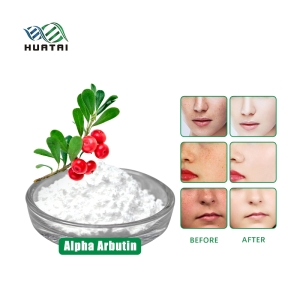
Formulate smart. If you need extreme efficacy, do not increase the Kojic Acid percentage. Build a synergy matrix instead. Combine 1% Kojic Acid with a tyrosinase competitor like Alpha-Arbutin. You achieve superior clinical brightening without triggering skin sensitization or violating regulatory limits.
Master the chemistry. Control the manufacturing environment. Your formulations will survive the shelf and actually perform on the skin.
References and Scientific Literature Cited:
- Scientific Committee on Consumer Safety (SCCS). (2022). Opinion on Kojic Acid (SCCS/1637/21). European Commission Directorate-General for Health and Food Safety.
- Cabanes, J., Chazarra, S., & Garcia-Carmona, F. (1994). Kojic acid, a cosmetic skin whitening agent, is a slow-binding inhibitor of catecholase activity of tyrosinase. Journal of Pharmacy and Pharmacology, 46(12), 982-985.
- Garcia-Jimenez, A., Teruel-Puche, J. A., Berna, J., et al. (2012). Action of tyrosinase on alpha and beta-arbutin: A kinetic study. PLoS One, 7(5), e37322.



 English
 German
 Italian
 French
 Spanish
 Japanese
 Korean
 Russian