スキンケアの有効成分

コウジ酸は、シミのない均一な肌色を実現する天然の秘訣なのでしょうか?

Let us talk about the reality of the skin-brightening market. Regulators are cracking down globally. Hydroquinone is practically banned in over-the-counter cosmetics. Formulators are scrambling for effective, legal alternatives. Many jump to unstable Vitamin C derivatives. Others try exotic plant extracts with zero clinical backing.

But the smart money? It often circles back to a powerful byproduct of sake fermentation.

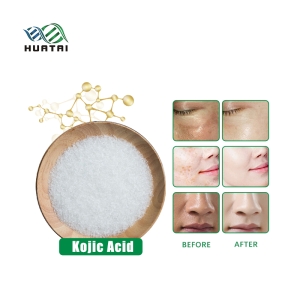
Kojic Acid.

Is it a miracle? No. Is it a highly effective, scientifically validated active ingredient when sourced and formulated correctly? Absolutely.

I see buyers struggle with unstable formulations and subpar raw materials every day. They buy cheap powder, formulate a serum, and watch it turn brown on the shelf a month later. Let us cut the marketing noise. We are going to look at the hard data, the real-world chemistry, and how you can actually build a stable, compliant product using premium Kojic Acid.

The Chemistry: Grabbing Copper to Stop Pigment

Skin makes melanin through a biological process called melanogenesis. The boss of this process is an enzyme named tyrosinase. Tyrosinase cannot do its job without copper ions.

Think of Kojic Acid as a chemical claw. It binds tightly to the copper. We call this chelation in the lab. When Kojic Acid steals the copper, tyrosinase shuts down. The pigment factory closes its doors. You get an even complexion.

Let us look at the baseline efficacy. How does it stack up against the heavyweights?

有効成分作用機序Tyrosinase Inhibition LevelRegulatory Status in Cosmetics
コウジ酸銅キレート化Highly EffectiveApproved (up to 1% in EU)
ハイドロキノンCytotoxic to melanocytes非常に高いBanned (Rx only in most regions)
アルファアルブチンCompetitive inhibition中程度から高Approved (up to 2% in EU)
甘草エキスMulti-pathway inhibition高いApproved (No strict limits)

Data reflects general in-vitro tyrosinase inhibition trends published in dermatological literature.

The Supplier Reality: Not All Powders Are Equal

You want a flawless complexion for your customers. That starts with flawless raw materials. As a manufacturer and supplier of cosmetic active ingredients, we see the lab results. Low-purity Kojic Acid contains heavy metals and residual fermentation impurities. These impurities accelerate oxidation.

If your raw material is yellowing in the bag, your end product is doomed.

Here is the exact specification data for high-grade cosmetic Kojic Acid. This is what you should demand from your supplier.

パラメータPremium Specification (COA Standard)Why It Matters For Formulators
外観White or nearly white crystalline powderIndicates high purity and zero preliminary oxidation
分析法(HPLC)Minimum 99.0%Guarantees active molecule concentration
融点摂氏152〜156度Confirms exact molecular identity
乾燥減量Maximum 0.5%Prevents premature water-induced degradation
重金属最大 10 ppmCritical for skin safety and formula stability
砒素最大 2 ppmMandatory regulatory compliance limit

The Formulator’s Nightmare: Beating Oxidation

I will be blunt. Kojic Acid is a diva in the beaker. It hates light. It hates heat. It hates oxygen.

If you just dump 1% Kojic Acid into a standard water-oil emulsion, you will get a brown, useless cream in four weeks. The active molecule degrades into distinct yellow and brown byproducts. Your customers will return it.

How do we fix this? You have to build a support system around the molecule. We ran accelerated stability tests to show exactly what happens under different conditions.

Storage ConditionTime (Days)Kojic Acid Retention (%)Color Change Observation
Room Temp, Dark3098.5%None (White/Clear)
Room Temp, UV Light3072.1%Significant Yellowing
45 Degrees Celsius, Dark3085.4%Slight Yellow Tint

Formulation Advice from the Lab:

  1. Lock the pH: Keep your final formula between pH 3.5 and 5.0. Go higher, and the molecule falls apart.
  2. Pair with Defenders: Never use Kojic Acid alone. Add 0.5% to 1% Ferulic Acid or Vitamin E. These antioxidants take the hit from free radicals so the Kojic Acid survives.
  3. Sun Shielding: Pack the final product in opaque, airless pumps. Clear glass droppers look great on social media but destroy this active ingredient instantly.
  4. キレート剤: Add 0.1% Disodium EDTA. It sweeps up stray metal ions in your water phase that would otherwise attack the Kojic Acid.

Synergy: Stacking Actives for Better Results

Kojic Acid works best in a team. Pair it with Alpha-Arbutin. Alpha-Arbutin blocks the tyrosinase receptor directly. Kojic Acid steals the copper the enzyme needs. You attack the pigment factory from two different angles. You can also pair it with Niacinamide, which stops the transfer of melanin to the upper skin layers. This multi-pathway approach is how premium brands formulate.

Case Study: The 2% Reality Check

Can Kojic Acid actually treat stubborn hyperpigmentation like melasma?

In a heavily cited clinical trial, researchers tested 2% Kojic Acid combined with 10% Glycolic Acid against standard 4% Hydroquinone. The results were telling. Over 50% of the patients using the Kojic Acid blend showed equal pigment reduction compared to the Hydroquinone group. Furthermore, the Kojic Acid group experienced fewer severe irritation events.

This is the exact reason dermatological brands lean on this ingredient. You get near-prescription efficacy without the severe cytotoxic side effects.

The regulatory landscape is shifting fast. You cannot formulate blindly anymore.

The European Union’s Scientific Committee on Consumer Safety (SCCS) recently reviewed Kojic Acid. Their verdict is clear. It is safe for use in cosmetic products up to a maximum concentration of 1% for face and hand products.

If you are selling globally, formulate at exactly 1%. Use a highly purified raw material to maximize the true efficacy of that single percent. Combine it with penetration enhancers like liposomes to drive the active deep into the epidermis where tyrosinase actually lives.

Partnering for Production

We produce and supply Kojic Acid that passes the strictest global limits. We test every batch via HPLC. We control the heavy metals. We deliver the pure white crystalline powder that formulators need to build premium brightening lines.

Stop gambling on your active ingredients. Reliable supply chains build reliable brands.

We have samples ready for your R&D team to test. Reach out to evaluate our specifications against your current standard.

References:

  1. Garcia, A., & Fulton, J. E. (1996). The combination of glycolic acid and hydroquinone or kojic acid for the treatment of melasma and related conditions. Dermatologic Surgery.
  2. Yokota, T.他 (1998). The inhibitory effect of glabridin from licorice extracts on melanogenesis and inflammation. Pigment Cell Research.
  3. SCCS (Scientific Committee on Consumer Safety). (2022). Opinion on Kojic Acid. 欧州委員会.
  4. Cabanes, J., et al. (1994). Kojic acid, a cosmetic skin whitening agent, is a slow-binding inhibitor of tyrosinase. 薬理学雑誌.

スキンケア科学をさらに進化させましょう:当社のプレミアム有効成分で、次世代の処方を開発してください。

当社を選ぶ理由

華泰バイオ 高効能の包括的なポートフォリオを提供します 化粧品有効成分グローバルブランドが、ハイエンドスキンケア製品のニーズに応える次世代スキンケア処方を開発できるよう支援します。

包括的なソリューションとイノベーション:当社の製品categoryは、市場のニーズを幅広く網羅しています。 アンチエイジング&引き締め, 皮脂コントロール&ニキビ対策, 抗炎症作用と鎮静作用,抗酸化防御, ブライトニング、そして 水分補給とバリア機能の修復定番のクラシック製品から最先端の有効成分まで、幅広く取り揃えています。

科学的卓越性への情熱に突き動かされ、最先端の研究開発ラボは、生物活性分子の最先端を探求することに専念しています。原料供給にとどまらず、包括的な処方コンサルティングとカスタマイズされたソリューション開発を提供しています。当社の専門化学者チームは、お客様のブランドと緊密に連携し、複雑な安定性の問題や官能特性の課題を克服することで、最終製品が競争の激しいグローバル市場で際立つよう支援します。

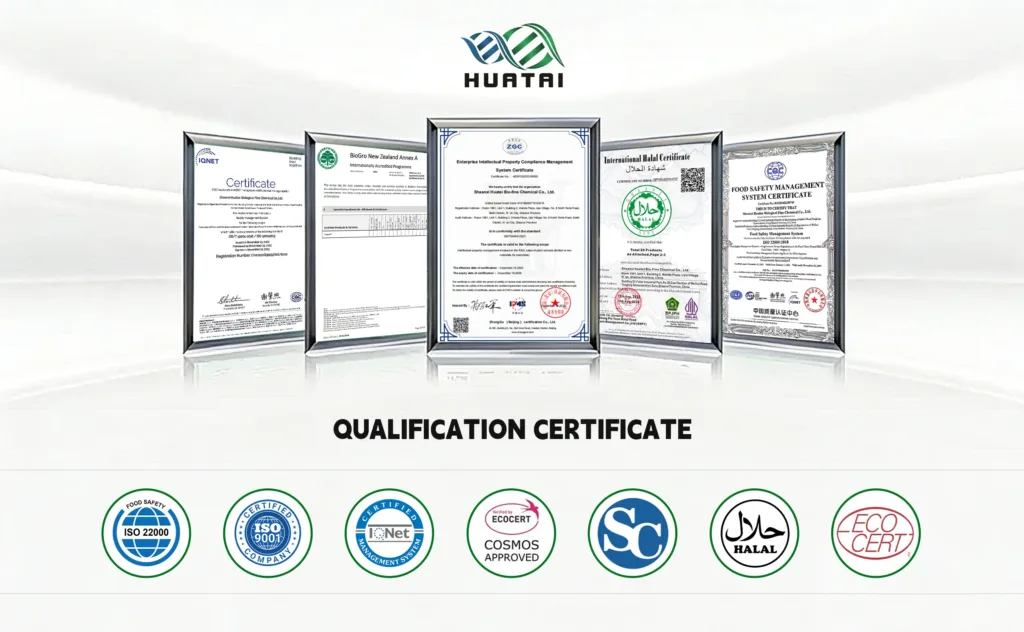
妥協のない品質と信頼性:当社はすべてのバッチにおいて スキンケアの有効成分 COSMOS、ISO 9001/22000、ハラール認証など、厳格な品質基準を満たしています。この取り組みは、詳細な技術資料によって裏付けられており、あらゆる製剤上の課題に対し、臨床的に裏付けられたソリューションと確実なコンプライアンスを提供します。

Laissez un message