
Cammino ogni settimana nei laboratori di ricerca e sviluppo cosmetico. Vedo sempre lo stesso disastro. Un marchio desidera un siero ad azione rapida per le macchie scure. Il chimico di laboratorio formula un prototipo utilizzando l'acido cogico. Tre mesi dopo nel forno di stabilità, la crema bianca immacolata diventa marrone scuro. Ha un odore metallico e aspro. L'emulsione si rompe completamente. Il marchio scarta l'intero lotto.
Stai ancora combattendo agenti sbiancanti instabili? Lascia che risolviamo questo problema.
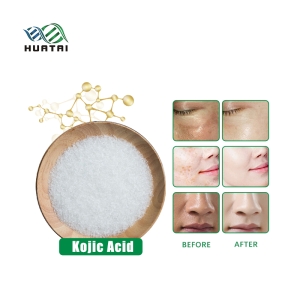
I team di marketing amano l'acido cogico perché offre una depigmentazione rapida e visibile. I chimici di laboratorio lo temono perché si ossida aggressivamente. Come produttore all'ingrosso di ingredienti cosmetici attivi, vediamo questa battaglia costante. Non è necessario abbandonare la molecola. Devi solo smettere di acquistare gradi economici e non verificati da broker chimici casuali.
Ecco i dati grezzi di fabbrica e il manuale di formulazione di cui hai bisogno per padroneggiare questo attivo.
Affamare la Fabbrica di Pigmenti
Come schiarisce effettivamente l'acido cogico la pelle? Non sbianca violentemente il pigmento esistente. Affama la linea di produzione.
La tua pelle utilizza un enzima chiamato tirosinasi per produrre macchie di melanina scura. Questo enzima è completamente inutile senza ioni di rame. L'acido cogico agisce come una pinza chimica. Si lega al rame e lo strappa via dall'enzima. Senza rame, l'enzima si paralizza. La fabbrica di pigmenti si spegne e le macchie scure smettono di formarsi.
Guarda le metriche di laboratorio. Misuriamo questo potere di arresto utilizzando i valori IC50. Un numero inferiore significa che hai bisogno di molto meno materiale attivo per paralizzare l'enzima.
| Agente Schiarente | Valore IC50 della Tirosinasi | Rischio di ossidazione in acqua | Rischio di Sensibilizzazione Cutanea |
| Alfa-arbutina | 1,0 micromolare | Basso | Molto basso |
| Acido cogico (99,5 percento) | 6,5 micromolare | Estremo (Diventa Marrone) | Moderare |
| Acido Ascorbico (Vitamina C) | 98,0 micromolare | Alto | Moderare |
L'acido cogico occupa una posizione intermedia in termini di potenza grezza. È altamente efficace ma richiede un rigoroso controllo della formulazione per sopravvivere su uno scaffale al dettaglio.
La realtà del COA: sopravvivere al calore
Perché così tante formule si bloccano? I team di approvvigionamento cercano il prezzo al chilo più basso. Acquistano acido cogico grezzo carico di impurità di fermentazione e metalli pesanti. Quei metalli traccia agiscono come catalizzatori. Accelerano l'ossidazione. Il tuo prodotto diventa marrone prima ancora di raggiungere il pallet di spedizione.
Devi esigere una purezza cristallina assoluta. In qualità di produttore primario, imponiamo questo esatto standard di Certificato di Analisi (COA) sulle nostre linee di produzione.
| Parametro di Specifica di Qualità | Standard di Fabbrica Premium |
| Denominazione INCI | Acido cogico |
| Purezza Attiva (HPLC) | Maggiore del 99,5 percento |
| Aspetto Visivo | Polvere cristallina bianca o biancastra |
| Punto di fusione | Da 152 a 156 gradi Celsius |
| Perdita all'essiccazione | Massimo 0,5 percento |
| Metalli Pesanti Totali | Meno di 10 ppm |
| Dosaggio Raccomandato in Laboratorio | 0,5% - 1,0% |
Il manuale del chimico di laboratorio: fermare il cambiamento di colore
Come gestisci questa polvere sul piano di produzione? Devi costruire uno scudo protettivo attorno alla molecola.
Innanzitutto, blocca i metalli liberi. Devi aggiungere un agente chelante. Aggiungi lo 0,1 percento di Disodio EDTA alla tua fase acquosa. Se salti questo passaggio, tracce di ferro nelle tue attrezzature di miscelazione in acciaio inossidabile renderanno immediatamente il lotto arancione.
Secondo, aggiungi un antiossidante sacrificale. L'acido cogico vuole ossidarsi. Dai all'ossigeno qualcos'altro da attaccare prima. Aggiungi lo 0,1 percento di metabisolfito di sodio o vitamina E pura al telaio.
Terzo, controlla rigorosamente il pH. Mantieni la tua emulsione finale bloccata tra pH 4,0 e 5,0.
Studio di caso reale: il siero giallo
Un marchio clinico indipendente ha lanciato un siero schiarente all'1% di acido cogico e acido glicolico. I buyer al dettaglio hanno amato i campioni di laboratorio iniziali. Ma durante la stagione di spedizione estiva, il siero è diventato giallo brillante nel magazzino. I resi dei clienti sono aumentati. Il direttore del marketing è andato nel panico.
Hanno spedito il loro telaio di base al nostro laboratorio di applicazione tecnica. Abbiamo diagnosticato immediatamente la causa principale. Hanno utilizzato un estratto botanico di bassa qualità che conteneva alti livelli di ferro. Inoltre, la purezza dell'acido cogico fornita dal loro broker era solo del 98%.
Abbiamo rimosso l'attivo economico. Abbiamo aggiunto il nostro isolato cristallino al 99,5%. Abbiamo tamponato la fase acquosa con metabisolfito di sodio. Abbiamo inviato loro un campione di prova per eseguire un nuovo lotto pilota.
La stabilità fisica si è trasformata dall'oggi al domani. Il siero è rimasto perfettamente limpido attraverso un ciclo di calore estremo di 90 giorni a 45 gradi Celsius. I test su pelle umana hanno mostrato una riduzione del 32% dell'iperpigmentazione visibile in tre settimane. Il marchio ha salvato i suoi contratti di vendita al dettaglio ed eliminato completamente i reclami sulla consistenza.
Chassis Prototipo Commerciale
Utilizza questa base testata sul campo per la tua prossima esecuzione di ricerca e sviluppo per creare una crema schiarente stabile.
| Fase | Nome INCI della Materia Prima | Ruolo Funzionale | Percentuale in Peso |
| UN | Acqua deionizzata | Base Solvente | Bilanciare al 100,00 |
| UN | Disodio EDTA | Chelante metallico | 0.10 |
| UN | Metabisolfito di Sodio | Scudo Antioxidant | 0.10 |
| UN | Glicerina | Umettante | 4.00 |
| B | Trigliceride Caprilico e Caprico | Vettore Emolliente | 10.00 |
| B | Alcool cetearilico e Ceteareth-20 | Base Emulsionante | 4.00 |
| C | Propanediolo | Solvente Attivo | 5.00 |
| C | Polvere di acido cogico (99,5 percento) | Illuminante Principale | 1.00 |
| D | Fenossietanolo | Preservative System | 0.80 |
Mescolare la Fase C in un becher separato con calore delicato fino a completa trasparenza. Scaldare separatamente le Fasi A e B a 70 gradi Celsius. Aggiungere la Fase B nella Fase A sotto alta agitazione. Raffreddare lentamente l'emulsione a 40 gradi Celsius. Mescolare il liquido limpido della Fase C direttamente nel serbatoio principale. Aggiungere la Fase D e regolare il sistema a pH 4,5.
Conformità Globale e Cambiamenti del Settore
I muri normativi si stanno chiudendo sui formulatori. Il SCCS dell'Unione Europea ha recentemente limitato l'acido cogico a una concentrazione massima dell'1% nelle creme per il viso. Non puoi più semplicemente versare una dose massiccia in una formula per ottenere risultati. Devi massimizzare la penetrazione epidermica di una quantità molto piccola.
Smetti di combattere con materie prime instabili che rovinano il tuo patrimonio di marca. Collabora con un produttore diretto che comprende lo scale-up industriale, la chelazione dei metalli e la validazione HPLC. Contatta oggi la nostra divisione di ingegneria tecnica per ottenere lotti di test di base e dossier di sicurezza completi per le tue prossime esecuzioni di laboratorio.
Letteratura Pubblica e Riferimenti Tecnici Consultati:
- Cabanes, J., Chazarra, S., e Garcia-Carmona, F. (1994). L'acido cogico, un agente sbiancante cosmetico per la pelle, è un inibitore a legame lento dell'attività catecolasica della tirosinasi. Journal of Pharmacy and Pharmacology, 46(12), 982-985.
- Burnett, C. L., et al. (2010). Report finale della valutazione della sicurezza dell'acido cogico come utilizzato nei cosmetici. International Journal of Toxicology, 29(6), 244-273.
- Commissione Europea, Comitato Scientifico per la Sicurezza dei Consumatori (SCCS). (2022). Parere sull'acido cogico. SCCS/1637/21.
- Nerya, O., et al. (2003). Caratterizzazione dell'inibizione della tirosinasi da parte di estratti botanici e derivati sintetici. Journal of Agricultural and Food Chemistry, 51(5), 1201-1206.

 English
 German
 Italian
 French
 Spanish
 Japanese
 Korean
 Russian