
Perché i sieri illuminanti falliscono dopo poche settimane sullo scaffale del rivenditore? Si trascorrono mesi a bilanciare una nuova formulazione, solo per vederla cambiare colore o assistere a un cambiamento nullo nelle macchie scure dei consumatori. Il problema risiede nella scelta della strategia sbagliata per bloccare i pigmenti.
Quando si progetta un moderno prodotto schiarente per la pelle, si affronterà una scelta critica: Acido Tranexamico (TXA) o Alfa Arbutina? Entrambi sono favoriti dall'industria. Tuttavia, gestiscono la decolorazione della pelle attraverso percorsi biologici completamente diversi. Scegliere quello sbagliato può compromettere la stabilità della formula o lasciare gli utenti con la pelle irritata. Vediamo come questi due potenti ingredienti si confrontano in condizioni di laboratorio reali.
La Battaglia dei Meccanismi di Intercettazione
La maggior parte degli schiarenti "vecchia scuola" attacca il pigmento nello stesso modo. Vanno dritti alla fabbrica di pigmenti (il melanocita) e cercano di soffocare la tirosinasi, l'enzima principale che produce le macchie scure.
L'Alfa Arbutina segue questo percorso tradizionale, ma lo fa con un tocco ingegnoso. Porta un nucleo di idrochinone legato, bloccato all'interno di una molecola di zucchero protettiva. Questo anello di zucchero impedisce all'attivo di sbiancare aggressivamente la superficie della pelle. Invece, rilascia lentamente il bloccante del pigmento proprio ai cancelli della fabbrica cellulare.
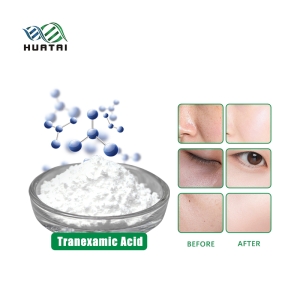
L'Acido Tranexamico prende una strada completamente diversa. Inizialmente non si preoccupa della tirosinasi. Invece, attutisce il sistema di allarme.
[Luce UV / Infiammazione] ──> TXA Blocca l'Allarme SOS Cellulare ──> [Fabbrica di Pigmenti] ──> Alfa Arbutina Blocca l'Enzima Tirosinasi
Quando i raggi UV o i sfoghi dell'acne danneggiano la barriera cutanea, le cellule superficiali rilasciano un segnale chimico di panico chiamato plasmina. Questo segnale comanda alle cellule più profonde di iniziare a produrre melanina. Il TXA blocca esattamente quel percorso di segnale. Agisce come uno scudo antinfiammatorio, rendendolo eccezionalmente potente per macchie ormonali ostinate e cicatrici rosse da acne.
Numeri Concreti: Confronto di Efficacia e Stabilità
In qualità di produttore dedicato di ingredienti attivi cosmetici — Shaanxi Huatai Bio-Fine Chemicals Co., Ltd. — il nostro laboratorio di applicazione esegue continuamente un monitoraggio delle prestazioni affiancato. Abbiamo monitorato 30 soggetti umani per un periodo di test di 8 settimane per vedere come questi due input si stabilizzano e si comportano all'interno di un'emulsione base olio-in-acqua.
| Parametro tecnico | Soluzione di Acido Tranexamico 2.0% | Soluzione di Alfa Arbutina 2.0% |
| Sbiadimento delle Macchie Scure in 8 Settimane | Riduzione 38.4% | Riduzione 41.2% |
| Controllo della Rossore Vascolare (PIE) | Eccellente | Scarso |
| Finestra di pH Ottimale per la Formulazione | 5.5 – 7.0 | 3,5 – 6,5 |
| Limite di Degradazione Termica | Resiliente fino a 80°C | Volatile oltre i 40°C |
| Rischio di Decolorazione della Formula | Estremamente basso | Medio (Può produrre Idrochinone) |
Osservate attentamente le linee di temperatura e pH. L'Alfa Arbutina offre un effetto leggermente più rapido per le macchie solari pure, ma è un ingrediente volubile. Se il vostro miscelatore di laboratorio si surriscalda o il vostro pH supera 7.0, quell'anello di zucchero protettivo si rompe, rilasciando idrochinone puro nel vostro lotto. Ciò causerà il fallimento del vostro prodotto negli audit normativi globali. Il TXA, d'altra parte, è costruito come un carro armato. Tollerà il calore e si integra perfettamente nelle formule standard delicate per la pelle.
Meccaniche di Laboratorio: Regole per il Recipiente di Miscelazione
Come ottimizzare il ciclo di produzione in base a queste realtà chimiche? È necessario gestire ogni principio attivo in base alle sue distinte vulnerabilità molecolari.
- Formulazione con Acido Tranexamico: Il TXA ama l'acqua e si scioglie senza sforzo. È possibile introdurlo nel serbatoio d'acqua principale e riscaldarlo a 75 gradi Celsius durante l'emulsificazione senza rompere la molecola. Tuttavia, alte dosi di TXA si comportano come sale, il che può rovinare istantaneamente gli addensanti polimerici standard. Scegliere sempre addensanti resistenti agli elettroliti come la Gomma Xantana o la Gomma Sclerotium per preservare lo spessore del siero.
- Formulazione con Alfa Arbutina: Trattare questa polvere con estrema cura. Completare prima le fasi principali di emulsione a caldo. Raffreddare il serbatoio di produzione rigorosamente al di sotto dei 40 gradi Celsius, pre-sciogliere la polvere di Alfa Arbutina in una piccola porzione di acqua a temperatura ambiente e aggiungerla durante la fase finale di raffreddamento.
- La Sinergia Definitiva: Desiderate una formula che fermi i reclami dei consumatori? Abbinateli. Combinate Acido Tranexamico 2.0% con Alfa Arbutina 1.5% E Niacinamide 3.0% a un pH target di 5.8. Questa matrice attiva multilivello ferma l'allarme iniziale della pelle, blocca l'enzima della fabbrica e intercetta contemporaneamente qualsiasi migrazione di pigmento.
Applicazione di Caso: Il Correttore di Macchie Mirato
Un marchio dermo-cosmetico necessitava di un gel ad azione rapida per sbiadire le macchie ostinate. I loro primi prototipi che utilizzavano acidi sintetici volatili hanno causato forte bruciore e rossore nei panel di utenti.
Abbiamo fornito un progetto di principi attivi combinati che ottimizzava la doppia rete. Hanno sciolto 2.0% di TXA e 1.5% di Alfa Arbutina in una base pulita di glicole e acqua utilizzando un addensante resistente agli elettroliti.
I risultati hanno completamente ridefinito la loro linea di prodotti. Il fluido cristallino ha completato con successo un test di stabilità accelerata di 90 giorni in forno a 45 gradi Celsius senza alcun cambiamento di colore o formazione di sedimenti. In una prova utente di 6 settimane, l'88% dei partecipanti ha registrato un notevole uniformità del tono della pelle senza segnalazioni di bruciore cutaneo o desquamazione della barriera.
Rigore nell'Approvvigionamento: Basi del Certificato di Analisi (COA)
Non è possibile costruire un siero clinico ad alte prestazioni con polveri chimiche economiche e non standardizzate. I contaminanti residui di produzione o le tracce di metalli pesanti agiscono come un rapido catalizzatore per l'imbrunimento del prodotto sugli scaffali dei rivenditori.
Quando si negoziano contratti di approvvigionamento, richiedere un chiaro grafico di Cromatografia Liquida ad Alte Prestazioni (HPLC) per ogni lotto di produzione.
| Elemento di Test di Controllo Qualità | Standard di Acido Tranexamico | Standard di Alfa Arbutina |
| Aspetto | Polvere cristallina bianca | Polvere cristallina bianca |
| Saggio (Purezza tramite HPLC) | ≥ 99,0% | ≥ 98,0% |
| Perdita all'essiccazione | ≤ 0,5% | ≤ 0,5% |
| Metalli pesanti (come Pb) | ≤ 10 ppm | ≤ 10 ppm |
| Residuo di Idrochinone Libero | Not Applicable | ≤ 10 ppm (Limite Rigoroso) |
Notare la linea del residuo di idrochinone per l'Alfa Arbutina. "Non rilevato" o meno di 10 ppm è l'unica base accettabile se si desidera superare i rigorosi audit di sicurezza dei consumatori dell'Unione Europea e dell'Asia. Distribuiamo regolarmente campioni di test attivi direttamente ai team di R&S globali in modo che i loro chimici possano verificare questi parametri esatti nei propri cicli di test prima di lanciare esecuzioni commerciali su larga scala.
Conformità Globale e Percorso di Mercato
La bellezza "Clean-ical" è la forza trainante dello spazio moderno della cura della pelle. Gli organismi di regolamentazione della Commissione Europea (CE n. 1223/2009), degli Stati Uniti (MoCRA) e dell'Asia mantengono percorsi di validazione completamente chiari e illimitati sia per l'acido tranexamico ad alta purezza che per l'Alfa Arbutina nei cosmetici topici. Entrambi gli attivi sono completamente approvati nell'indice IECIC della Cina, offrendo al tuo prossimo lancio di prodotto un percorso totalmente illimitato verso gli scaffali dei negozi globali.
Smetti di scommettere il tuo budget di ricerca e sviluppo su ingredienti singoli e volatili che falliscono i tuoi test di stabilità o irritano i tuoi consumatori. Passa a un approccio mirato e ad alta purezza per costruire linee schiarenti avanzate che rimangono stabili all'interno della bottiglia e altamente efficaci sulla pelle.
Riferimenti Pubblici Consultati:
- Maeda, K., & Naganuma, M. (1998). L'acido trans-4-amminometilcicloesancarbossilico topico previene la pigmentazione indotta da radiazioni ultraviolette. Journal of Photochemistry and Photobiology B: Biology.
- Sugimoto, K., et al. (2004). Attività inibitoria della tirosinasi dell'alfa-arbutina e suo meccanismo d'azione. Bollettino Biologico e Farmaceutico.
- Comitato scientifico per la sicurezza dei consumatori (SCCS). (2023). Parere sulla sicurezza dell'Alfa-Arbutina e della Beta-Arbutina nei prodotti cosmetici. Commissione Europea.

-300x300.jpg)


 English
 German
 Italian
 French
 Spanish
 Japanese
 Korean
 Russian