
¿Por qué los sueros iluminadores fallan después de unas semanas en el estante de venta? Pasas meses equilibrando una nueva formulación, solo para ver cómo cambia de color o presenciar cero cambios en las manchas oscuras de los consumidores. El problema radica en elegir la estrategia incorrecta para bloquear el pigmento.
Cuando diseñas un producto moderno para aclarar la piel, eventualmente te enfrentarás a una elección crítica: ¿Ácido Tranexámico (TXA) o Alfa Arbutina? Ambos son favoritos masivos en la industria. Sin embargo, manejan la decoloración de la piel a través de vías biológicas completamente diferentes. Elegir el incorrecto puede romper la estabilidad de tu fórmula o dejar a tus usuarios con piel irritada. Veamos cómo se comparan estos dos potentes ingredientes en condiciones de laboratorio reales.
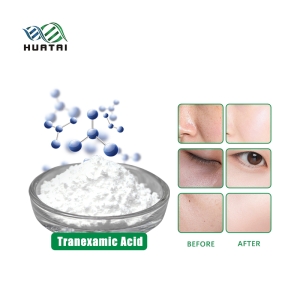
La Batalla de los Mecanismos de Intercepción
La mayoría de los iluminadores de la vieja escuela atacan el pigmento de la misma manera. Van directamente a la fábrica de pigmentos (el melanocito) e intentan ahogar la tirosinasa, la enzima principal que produce las manchas oscuras.
La Alfa Arbutina sigue esta ruta tradicional, pero lo hace con un giro ingenioso. Lleva un núcleo de hidroquinona unido dentro de una molécula de azúcar protectora. Este anillo de azúcar evita que el activo blanquee agresivamente la superficie de la piel. En cambio, libera lentamente el bloqueador de pigmentos justo en las puertas de la fábrica celular.
El Ácido Tranexámico toma un camino completamente diferente. Inicialmente no le importa la tirosinasa. En cambio, silencia el sistema de alarma.
[Luz UV / Inflamación] ──> El TXA Bloquea la Alarma SOS Celular ──> [Fábrica de Pigmentos] ──> La Alfa Arbutina Bloquea la Enzima Tirosinasa
Cuando los rayos UV o los brotes de acné dañan la barrera cutánea, las células de la superficie liberan una señal química de pánico llamada plasmina. Esta señal ordena a las células más profundas que comiencen a producir melanina. El TXA bloquea esa vía de señalización exacta. Actúa como un escudo antiinflamatorio, lo que lo hace excepcionalmente potente para parches hormonales rebeldes y cicatrices de acné rojas.
Números Duros: Comparando Eficacia y Estabilidad
Como fabricante dedicado de ingredientes activos cosméticos —Shaanxi Huatai Bio-Fine Chemicals Co., Ltd.— nuestro laboratorio de aplicaciones realiza continuamente un seguimiento del rendimiento comparativo. Monitorizamos a 30 sujetos humanos durante un período de prueba de 8 semanas para ver cómo estos dos ingredientes se estabilizan y se desempeñan dentro de una emulsión básica de aceite en agua.
| Parámetro técnico | 0% Solución de Ácido Tranexámico | 0% Solución de Alfa Arbutina |
| Desvanecimiento de Manchas Oscuras de 8 Semanas | 4% Reducción | 2% Reducción |
| Control de Enrojecimiento Vascular (PIE) | Excelente | Pobre |
| Ventana de pH Óptima de Formulación | 5.5 – 7.0 | 3,5 – 6,5 |
| Límite de Degradación por Calor | Resistente hasta 80 °C | Volátil después de 40 °C |
| Riesgo de Decoloración de la Fórmula | Extremadamente bajo | Medio (Puede producir Hidroquinona) |
Mire de cerca las líneas de calor y pH. La Alfa Arbutina ofrece un golpe ligeramente más rápido para las manchas solares puras, pero es un ingrediente temperamental. Si su mezclador de laboratorio se calienta demasiado o su pH supera los 7.0, ese anillo de azúcar protector se rompe, liberando hidroquinona pura en su lote. Eso hará que su producto falle las auditorías regulatorias globales. El TXA, por otro lado, está construido como un tanque. Tolera el calor y se integra perfectamente en fórmulas estándar con pH amigable para la piel.
Mecánica de Laboratorio: Reglas para el Recipiente de Mezcla
¿Cómo optimiza su ciclo de fabricación basándose en estas realidades químicas? Debe manipular cada activo de acuerdo con sus distintas vulnerabilidades moleculares.
- Formulación con Ácido Tranexámico: El TXA ama el agua y se disuelve sin esfuerzo. Puede introducirlo en su tanque de agua principal y calentarlo a 75 grados Celsius durante la emulsificación sin romper la molécula. Sin embargo, las altas dosis de TXA se comportan como sal, lo que puede arruinar instantáneamente los espesantes poliméricos estándar. Elija siempre espesantes resistentes a electrolitos como la Goma Xantana o la Goma de Esclerocio para preservar el grosor de su suero.
- Formulación con Alfa Arbutina: Trate este polvo con extremo cuidado. Complete primero los pasos principales de emulsión en caliente. Enfríe su tanque de fabricación estrictamente por debajo de 40 grados Celsius, pre-disuelva su polvo de Alfa Arbutina en una pequeña porción de agua a temperatura ambiente y agréguelo durante la fase final de enfriamiento.
- La Sinergia Definitiva: ¿Quiere una fórmula que detenga las quejas de los consumidores? Combínelos. Combine 0% Ácido Tranexámico con 5% Alfa Arbutina y 0% Niacinamida a un pH objetivo de 5.8. Esta matriz activa multinivel detiene la alarma inicial de la piel, bloquea la enzima de la fábrica e intercepta cualquier migración de pigmento simultáneamente.
Aplicación de Caso: El Corrector de Manchas Específicas
Una marca dermo-cosmética necesitaba un gel de acción rápida para desvanecer parches rebeldes. Sus primeros prototipos que utilizaban ácidos sintéticos volátiles causaron fuertes escozores y enrojecimiento en los paneles de usuarios.
Proporcionamos un plano de activos combinados que optimizaba la red dual. Disolvieron 2.0% de TXA y 1.5% de Alfa Arbutina en una base limpia de glicol y agua utilizando un espesante resistente a electrolitos.
Los resultados redefinieron por completo su línea de productos. El fluido cristalino completó con éxito una prueba de horno de estabilidad acelerada de 90 días a 45 grados Celsius sin cambios de color ni formación de sedimentos. En un ensayo de usuario de 6 semanas, el 88% de los participantes registró una igualación dramática del tono de la piel sin informes de quemaduras en la piel ni descamación de la barrera.
Rigor de Abastecimiento: Líneas Base del Certificado de Análisis (COA)
No se puede construir un suero clínico de alto rendimiento con polvos químicos baratos y no estandarizados. Los contaminantes residuales de fabricación o los metales pesados traza actúan como un catalizador rápido para el pardeamiento del producto en los estantes de venta.
Cuando negocie contratos de adquisición, exija un gráfico claro de Cromatografía Líquida de Alta Resolución (HPLC) para cada lote de producción.
| Artículo de Prueba de Control de Calidad | Estándar de Ácido Tranexámico | Estándar de Alfa Arbutina |
| Apariencia | Polvo cristalino blanco | Polvo cristalino blanco |
| Ensayo (Pureza por HPLC) | ≥ 99,0% | ≥ 98,0% |
| Pérdida por secado | ≤ 0,5% | ≤ 0,5% |
| Metales pesados (como el plomo) | ≤ 10 ppm | ≤ 10 ppm |
| Residuo de Hidroquinona Libre | No aplicable | ≤ 10 ppm (Límite Estricto) |
Observe la línea de residuo de hidroquinona para la Alfa Arbutina. "No Detectado" o menos de 10 ppm es la única línea base aceptable si desea pasar las estrictas auditorías de seguridad del consumidor de la Unión Europea y Asia. Distribuimos regularmente muestras de prueba de activos directamente a los equipos globales de I+D para que sus químicos puedan verificar estos parámetros exactos en sus propios ciclos de prueba antes de lanzar ejecuciones comerciales a gran escala.
Cumplimiento Global y Camino al Mercado
La belleza "Clean-ical" es la fuerza impulsora del espacio moderno del cuidado de la piel. Los organismos reguladores de la Comisión Europea (CE nº 1223/2009), Estados Unidos (MoCRA) y Asia mantienen vías de validación completamente claras y sin restricciones tanto para el Ácido Tranexámico de alta pureza como para la Alfa Arbutina en cosméticos tópicos. Ambos activos están completamente autorizados en el índice IECIC de China, lo que brinda a su próximo lanzamiento de producto una vía totalmente desinhibida hacia los estantes de las tiendas a nivel mundial.
Deje de apostar su presupuesto de I+D en ingredientes singulares y volátiles que fallan en sus pruebas de estabilidad o irritan a sus consumidores. Transición a un enfoque específico y de alta pureza para construir líneas de brillo avanzadas que permanezcan estables dentro de la botella y sean altamente efectivas en la piel.
Referencias Públicas Consultadas:
- Maeda, K., y Naganuma, M. (1998). El ácido trans-4-aminometilciclohexanocarboxílico tópico previene la pigmentación inducida por la radiación ultravioleta. Journal of Photochemistry and Photobiology B: Biology.
- Sugimoto, K., et al. (2004). Actividad inhibidora de la tirosinasa de la alfa-arbutina y su mecanismo de acción. Boletín Biológico y Farmacéutico.
- Comité Científico de Seguridad de los Consumidores (SCCS). (2023). Opinión sobre la seguridad de la Alfa-Arbutina y la Beta-Arbutina en productos cosméticos. Comisión Europea.


 English
 German
 Italian
 French
 Spanish
 Japanese
 Korean
 Russian