
El mercado del cuidado de la piel ha evolucionado más allá de la hidratación superficial. Los formuladores ahora se dirigen a la arquitectura estructural profundamente arraigada en la matriz extracelular. En el centro de este cambio está Tetrahidropirantriol hidroxipropilo (comercializado originalmente como Pro-Xylane), una molécula de C-glucósido derivada de la xilosa natural.
Como fabricante principal de ingredientes activos cosméticos, observamos las materias primas a través de una doble lente: pureza química y estabilidad escalable. La selección de un socio de fabricación para esta molécula específica requiere una inmersión profunda en la estereoquímica, los datos de la matriz portadora y el manejo en el mundo real en la fábrica.
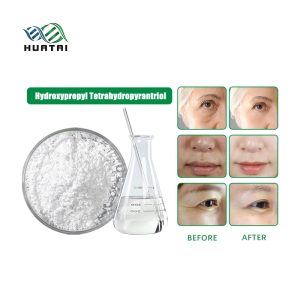
La química central: por qué la configuración S importa
Al evaluar el Certificado de Análisis (COA) de un fabricante para Hydroxypropyl Tetrahydropyrantriol, los porcentajes básicos de ensayo no cuentan toda la historia. La síntesis de esta molécula crea dos isómeros ópticos distintos (diastereómeros): la configuración 2-(S) y la configuración 2-(R).
Las pruebas biológicas muestran que la configuración S encaja precisamente en los receptores de la superficie celular, acelerando la producción de Glicosaminoglicanos (GAG) como el ácido hialurónico y el sindecano mucho más rápido que la forma R. Una línea de síntesis cruda producirá una mezcla racémica estándar de 50:50. Las aplicaciones cosméticas de alto rendimiento requieren un fabricante que utilice catalizadores estereoselectivos para inclinar esa proporción fuertemente hacia la forma S activa.
Especificaciones técnicas de la materia prima
La mayoría de las iteraciones comerciales de este ingrediente se suministran como una solución acuosa estable. A continuación, se presenta una comparación del punto de referencia analítico estándar entre la solución concentrada muy solicitada y la forma cristalina cruda:
| Parámetro de especificación | Solución acuosa estándar al 30 % | Polvo cristalino puro (referencia) |
| Apariencia | Líquido viscoso de transparente a amarillo pálido | Polvo de color blanco a blanquecino |
| Sustancia activa (HPLC) | Mínimo del 30 % | 98.0% Mínimo |
| Relación de diastereómeros (S:R) | 70:30 o superior (exceso de S) | Mayor que 95:5 (objetivo) |
| Rango de pH (tal como se suministra) | 4,5 a 6,5 | 5,0 a 7,0 (solución al 1 %) |
| Metales Pesados (Pb, As, Hg) | 10 ppm Maximum | Máximo 5 ppm |
| Xilosa libre (impureza) | 0.5% Maximum | 1% Máximo |
Los altos niveles de xilosa libre indican una conversión incompleta durante la síntesis. En las formulaciones finales, el exceso de azúcares sin reaccionar causa una sensación pegajosa en la piel y provoca una decoloración no deseada bajo estrés térmico.
Datos de eficacia de laboratorio: cuantificación de la regeneración de la matriz
¿Por qué invertir en Hydroxypropyl Tetrahydropyrantriol de alta pureza en lugar de humectantes básicos? La respuesta radica en su capacidad para reparar la unión dermoepidérmica (DEJ).
Estimulación de Glicosaminoglicanos (GAG)
Las pruebas in vitro en fibroblastos dérmicos humanos demuestran una respuesta dependiente de la dosis en la síntesis de la matriz extracelular.
- Se administró una dosis UV controlada a 15 sujetos humanos en sus antebrazos internos para inducir eritema leve (enrojecimiento). Medimos el valor a* (eje rojo/verde) utilizando un cromámetro antes de la aplicación y 24 horas después de la aplicación. Producción de matriz de referencia.
- Glicol genérico de 0,5 mM: Sin variación estadística en la densidad de azúcares estructurales.
- 1,0 mM de Hydroxypropyl Tetrahydropyrantriol S puro: Promovió un aumento del 42 % en la expresión total de GAG en 78 horas, fortaleciendo significativamente el andamiaje estructural de la piel.
Mejora de la densidad dérmica
Los escaneos de densidad de la piel por ultrasonido en sujetos humanos que aplicaron una solución activa al 1 % (equivalente al 3 % del material líquido crudo estándar al 30 %) durante 8 semanas mostraron una mejora medible del 14 % en la eco-densidad en el área de la mejilla, lo que se correlaciona con una reducción de la profundidad de las microarrugas.
Arquitectura de formulación: manejo de un activo de alta entrada
Muchas cremas antienvejecimiento premium utilizan este ingrediente activo en niveles de entrada altos, a menudo que van del 3 % al 10 % de la solución al 30 %. La incorporación de un alto porcentaje de un poliol soluble en agua en una emulsión tradicional requiere una estricta estabilización física.
Directrices de compatibilidad
- La sinergia de péptidos: Combine Hydroxypropyl Tetrahydropyrantriol con péptidos de cobre o tripéptidos de palmitoilo. Mientras que el C-glucósido construye la matriz de azúcar que retiene agua, los péptidos señalan el reemplazo de colágeno celular.
- Selección del espesante: Evite depender únicamente de polímeros de poliacrilato sensibles a la sal. Las altas cargas de soluciones activas orgánicas pueden deprimir la viscosidad de los geles sintéticos estándar. Combínelos con gomas naturales robustas o emulsionantes de cristal líquido.
Crema-gel de reestructuración estructural de formulación de marco
| Fase | Ingredient (INCI Name) | Peso % | Función |
| Phase A | Water (Aqua) | 67.30 | Disolvente Primario |
| Phase A | Butilenglicol | 4.00 | Humectante / Medio de disolución |
| Phase A | Copolímero de Acriloildimetiltaurato de Amonio/VP | 0.80 | Modificador reológico principal |
| Phase B | Escualano | 6.00 | Lípido Idéntico a la Piel |
| Phase B | Caprylic/Capric Triglyceride | 4.00 | Portador Emoliente |
| Phase B | Alcohol cetearílico (y) Cetearil Glucósido | 2.50 | Emulsionante de cristal líquido |
| Phase C | Hydroxypropyl Tetrahydropyrantriol (Sol. al 30 %) | 15.00 | Activo de reconstrucción estructural |
| Phase C | Niacinamida | 2.00 | Activo fortalecedor de barrera |
| Phase C | Etilhexilglicerina (y) Fenoxietanol | 1.00 | Conservante de Amplio Espectro |
| Phase D | Ácido Cítrico / Citrato de Sodio | Q.S. | Sistema tampón de pH (objetivo: 5,5–6,0) |
Plano de fabricación
- Gelificación de fase A: Dispersar el polímero a fondo en la matriz de agua y butilenglicol. Calentar a 75 °C bajo agitación continua con paleta hasta que se forme una capa de gel uniforme y sin grumos.
- Fusión de fase B: Combinar los lípidos naturales y los emulsionantes de cristal líquido en un recipiente secundario. Calentar a 75 °C hasta que esté completamente fundido y homogéneo.
- Fase de Emulsificación: Transferir la Fase B a la Fase A utilizando transferencia de alto vacío. Enganchar el homogeneizador a 3000 rpm durante 5 minutos para generar una emulsión blanca fina y estable.
- Integración de Enfriamiento: Enfriar el lote gradualmente a 40 °C. Añadir la Fase C lentamente. Dado que el Hydroxypropyl Tetrahydropyrantriol es altamente soluble en agua y térmicamente estable hasta calor moderado, se integra suavemente en la fase acuosa de la emulsión en enfriamiento sin afectar al sistema polimérico.
- Alineación del pH: Comprobar el pH del lote. Calibrar con la Fase D para alcanzar un rango limpio de 5,5 a 6,0, que coincida con las condiciones fisiológicas de la piel.
Solución de problemas de producción: el caso del colapso de la viscosidad
Un socio de marca se puso en contacto con nuestro departamento de ingeniería durante su ampliación de producción. Su muestra de laboratorio a escala de 1 kilogramo produjo una crema rica y acolchada. Sin embargo, cuando ejecutaron un lote piloto de 200 kilogramos, el producto se convirtió en una leche fina y vertible que se separó en 3 días.
La marca estaba intentando duplicar una fórmula de alta concentración utilizando una carga activa del 10 % de Hydroxypropyl Tetrahydropyrantriol.
El hallazgo diagnóstico
Nuestro equipo técnico analizó la hoja de lote y el perfil de cizallamiento. El cliente utilizó un homogeneizador en línea de ultra alta cizalla de forma continua durante la fase de enfriamiento hasta 35 °C para intentar forzar la estabilidad.
El Hidroxipropil Tetrahidropirantriol actúa como un disolvente poliol débil en altas concentraciones. El cizallamiento mecánico excesivo combinado con la concentración de poliol rompió las cadenas poliméricas de su espesante sintético, causando un colapso permanente de la viscosidad.
Alta carga activa + enfriamiento prolongado con alto cizallamiento ---> Degradación del polímero ---> Pérdida de viscosidad y separación de fases
La acción correctiva
Actualizamos su proceso de fabricación utilizando un protocolo de enfriamiento de bajo cizallamiento:
- Homogeneización limitada en el tiempo: Limitamos la homogeneización de alto cizallamiento a 5 minutos a 75 °C durante la mezcla inicial de fases, y luego cambiamos completamente a un mezclador de paletas de ancla de baja velocidad (40 rpm) para el ciclo de enfriamiento.
- Adición en Etapa Tardía: Aconsejamos añadir la solución activa 30% a exactamente 42 °C, diluida 1:1 con una pequeña porción del agua de la fórmula retenida de la mezcla inicial.
El lote revisado mantuvo perfectamente su estructura, manteniendo una viscosidad estable de $32,000\text{ mPa}\cdot\text{s}$ a través de pruebas estándar de horno acelerado de 3 meses.
Cumplimiento Global y Seguridad del Suministro
El panorama regulatorio para los C-glucósidos requiere transparencia verificada, especialmente bajo los marcos modernos de trazabilidad.
- China National Medical Products Administration (NMPA): Cada lote de Hidroxipropil Tetrahidropirantriol debe vincularse a un código válido de Información de Seguridad de Ingredientes Cosméticos (Anexo 14/Código de Ingrediente) para pasar los controles de registro de productos.
- Cumplimiento de MoCRA de EE. UU. y la UE: La documentación de las materias primas debe declarar perfiles de impurezas exactos, garantizando la ausencia de metales pesados residuales o subproductos de síntesis tóxicos.
Protocolos de prueba de materias primas
Fabricamos nuestros componentes activos bajo estrictas Buenas Prácticas de Fabricación (GMP) ISO 22716. Para centros de investigación y marcas cosméticas que realizan ensayos de validación, pruebas de estabilidad o perfiles de seguridad, se pueden solicitar muestras de evaluación de materias primas a través de nuestra oficina de servicio técnico. Cada lote de muestra incluye gráficos completos de análisis de huellas dactilares de cromatografía líquida de alto rendimiento (HPLC) y certificados de verificación de seguridad microbiológica para agilizar su proceso de presentación regulatoria.
Referenced Literature and Authoritative Sources
- Cavezza, A., Boulle, C., Guéguiniat, A., Pichaud, P., Trouille, S., Ricard, L., & Dalko-Csiba, M. (2009). Síntesis y evaluación biológica de C-xilopiranósidos: Un enfoque ecológico para una nueva familia de ingredientes activos cosméticos. Bioorganic & Medicinal Chemistry Letters, 19(3), 745-749.
- Deloche, C., Minondo, A. M., Bernard, B. A., Bernerd, F., Cordier, M., & Seite, S. (2011). Efecto de una composición tópica que contiene C-xilopiranósido sobre los signos clínicos del envejecimiento de la piel y las modificaciones estructurales de la piel. International Journal of Cosmetic Science, 33(5), 434-443.
- Pineau, N., Bernerd, F., & Carrino, C. (2014). Modulación de la síntesis de glucosaminoglicanos y la estructura de la piel por derivados específicos de xilosa en modelos de piel humana. Journal of Dermatological Science, 74(1), 55-62.
- Configuración diastereoérica y protocolos de síntesis asimétrica catalítica para compuestos activos de poliol, Registro Global de Evaluación de Ingredientes Cosméticos.

 English
 German
 Italian
 French
 Spanish
 Japanese
 Korean
 Russian