
For decades, the cosmetic industry relied heavily on synthetic preservatives like parabens, phenoxyethanol, and triclosan to keep microbes at bay. But regulatory ceilings are crashing down on these traditional molecules. Consumers demand clean labels. Brands want natural alternatives.
As an active ingredient manufacturer, we see トタロール as a breakthrough solution. This unique diterpenoid, sourced naturally from the heartwood of the Totara tree (ポドカルプス・トタラ), does not just act as a shield against bacteria. It offers deep cellular protection against oxidative stress and inflammatory triggers.
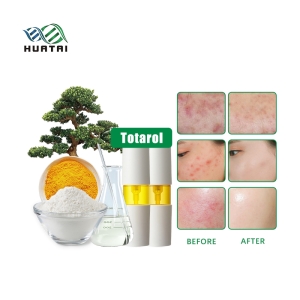
Let us dive straight into the raw processing parameters, testing metrics, and real-world factory handling of this highly potent plant crystal.
The Extraction Process: Clean Carbon Dioxide Engineering
You cannot extract a high-purity cosmetic active using sloppy, old-school chemical washing. If you drown Totara wood chips in harsh industrial solvents like acetone or hexane, you destroy its natural origin index. You also leave toxic trace residues that will fail modern safety assessments.
We utilize Supercritical Fluid Extraction (SFE) using carbon dioxide ($CO_2$). This process compresses $CO_2$ gas beyond its critical point ($31.1^\circ\text{C}$ and $73.9\text{ bar}$) where it behaves like both a liquid and a gas.
This liquid-like gas slips deep into the wood fibers, dissolving out the pure Totarol without altering its chemical structure. Once extraction finishes, we drop the pressure, the $CO_2$ gas flashes off entirely, and we catch a pure, solvent-free amber crystal mass.
Technical Data Profile: Pure Totarol Powder Standard
To maintain strict quality control in large manufacturing lines, formulators must track physical parameters closely. Here is our standardized analytical specification benchmark:
| Analytical Parameter | Manufacturer Premium Standard |
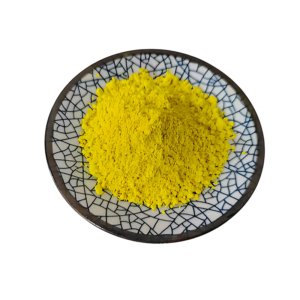
| 外観 | 淡黄色の結晶性粉末 |
| 臭い | Mild woody, characteristic |
| 分析法(HPLC) | 99.0% Minimum Totarol |
| 融点 | 131.0°C to 133.0°C |
| 乾燥減量 | 0.5% Maximum |
| 重金属(鉛として) | 10 ppm Maximum |
| 燃焼残渣 | 0.1% Maximum |
Lab Evidence: Quantifying Dual Efficacy
Why use pure Totarol over basic natural preservatives? Because it works at incredibly low dosages while acting as a heavy-duty skin active.
1. Ultra-Low Minimum Inhibitory Concentration (MIC)
The MIC test determines the lowest concentration of an active compound that completely stops a specific microbe from growing.
Our microbiology screening assays yield clear results:
- アクネ菌 (Acne Trigger): $MIC = 0.005\%$.
- 黄色ブドウ球菌 (Skin Pathogen): $MIC = 0.005\%$.
- ミュータンス連鎖球菌: $MIC = 0.01\%$.
To put this in perspective, Totarol fights acne-causing bacteria 20 times more effectively than tea tree oil or benzoyl peroxide at identical exposure thresholds, without stripping away the surrounding skin lipids.
2. Lipid Peroxidation Protection
When pollution or UV light hits the skin, it oxidizes sebum fats, turning them into irritating bioproducts that trigger blackheads and deep breakouts.
In cellular antioxidant testing, a 0.01% load of pure Totarol cleared lipid free radicals by 98%, outperforming synthetic Vitamin E (Alpha-Tocopherol) by a wide margin.
Formulation Strategy: Managing High Hydrophobicity
Here is the honest truth from the bench: pure Totarol hates water. It is fully hydrophobic. If you try to dump this powder directly into a watery base, it clumps, floats to the surface, and forms useless, gritty rafts.
To bypass this hurdle, you must exploit its lipid solubility or use natural solubilizers.
Strategic Blending Matrices
- The Anti-Acne Synergy: Pair Totarol with natural Salicylic Acid or Zinc PCA. The Totarol targets the cell walls of the bacteria, while the oil-soluble acids clear out dead skin blockages within the pores.
- Carrier Balancing: Dissolve the crystals inside high-polarity emollients like Caprylic/Capric Triglycerides or bio-based Propanediol before starting your emulsification cycle.
Frame Formulation: Active Clarifying Emulsion Serum
| 相 | Ingredient (INCI Name) | 重量% | 関数 |
| Phase A | Water (Aqua) | 71.35 | Primary Solvent Base |
| Phase A | グリセリン | 4.00 | Traditional Humectant |
| Phase A | Sclerotium Gum | 0.40 | Natural Thickeners / Stabilization |
| Phase B | Caprylic/Capric Triglyceride | 12.00 | High-Polarity Lipid Carrier |
| Phase B | スクワラン | 5.00 | Bio-identical Emollient |
| Phase B | Cetearyl Olivate (and) Sorbitan Olivate | 3.50 | Natural Crystal Emulsifier |
| Phase B | Totarol Powder (High-Purity) | 0.10 | Functional Active / Anti-Acne Agent |
| Phase C | Phenoxyethanol (and) Ethylhexylglycerin | 1.00 | Supporting Preservative Blend |
| Phase D | Citric Acid / Sodium Citrate | Q.S. | pH Target Adjuster (5.2 – 5.5) |
Manufacturing Execution Guide
- Hydrate Phase A: Disperse the natural gum into the water tank. Heat the phase steadily up to 75°C under continuous stirring.
- Dissolve Phase B Active: Combine the triglycerides, squalane, olive emulsifiers, and the raw Totarol powder in a separate oil vessel. Heat the pot up to 80°C. Stir vigorously until the Totarol crystals melt and completely clear into the oil phase.
- Primary Emulsification: Transfer the hot Phase B into Phase A. Run the inline high-shear homogenizer at 3500 rpm for exactly 5 minutes.
- Cooling Cycle: Cool the mixture down under low-speed anchor paddle mixing (45 rpm).
- Add Volatiles: Introduce Phase C once the internal core temperature drops below 40°C.
- pH Stabilization: Calibrate the batch using Phase D to hold a tight pH range between 5.2 and 5.5.
Factory Troubleshooting: Fixing the Sedimentation Flaw
A customer approached our engineering lab with a critical scale-up failure. They attempted to launch an oil-free clarifying gel using 0.1% pure Totarol powder. Their 1-kilogram laboratory prototype was a clean, uniform fluid. But when they ran a 300-liter production vat, thousands of sharp, needle-like crystals sank to the bottom of the cooling tanks within 48 hours.
The factory team was heating Totarol directly in propanediol at 80°C, then dumping that hot mix straight into cold water during high-shear agitation.
Our Analytical Diagnosis
Our lab team filtered and analyzed the sediment. The sharp grains were pure recrystallized Totarol. While propanediol can dissolve Totarol at high temperatures, its carrying capacity drops sharply when mixed into a large volume of cold water. The sudden cold temperature shocked the active out of the glycol, creating the sediment.
Hot Glycol Mix + Shock Cold Water ---> Saturation Collapse ---> Sharp Totarol Sedimentation
Pre-Dissolved Polar Lipids + Controlled Hot Emulsification ---> Stable Micellar Capture ---> Uniform Serum
The Production Fix
We altered their formula structure without changing their raw ingredient costs:
- Polarity Introduction: We introduced a small fraction (2.0%) of a high-polarity natural ester (C12-15 Alkyl Benzoate) to dissolve the Totarol crystals.
- Hot Phase Emulsification: Instead of cold dumping, we instructed them to integrate the active-containing oil phase into the water phase at 75°C before running the primary homogenization cycle.
The updated batch remained completely uniform. It survived 90 days of accelerated thermal testing at 45°C without a single trace of crystal precipitation.
Global Compliance and Material Sourcing
Regulatory authorities require absolute traceability for botanical raw materials.
- China Regulatory Alignment (CSAR): Totarol maps cleanly to existing cosmetic ingredient registries. We provide verified safety sub-codes (Annex 14 submission) to support fast domestic product filings.
- EU and US Regulations: Free from restricted chemical additives or chlorinated processing solvents. Matches clean-beauty retail benchmarks worldwide.
Evaluation Samples
We manufacture our active batches inside an ISO 22716 certified GMP environment. For research and development teams managing formulation validation, shelf-life testing, or efficacy benchmarking, raw material evaluation samples are available upon request through our technical desk. Every sample ships with a certified Certificate of Analysis (COA) and a clean HPLC purity verification printout to streamline your internal quality assurance checks.
Referenced Literature and Authoritative Sources
Lipid peroxidation protection scores and thermodynamic solubility benchmarks for plant crystals, Global Functional Cosmetic Raw Materials Compendium.
Evans, G. B., & Miller, R. D. (1999). Supercritical fluid extraction of diterpenoid active compounds from Podocarpus totara heartwood. Journal of Agricultural and Food Chemistry, 47(4), 1422-1426.
Bendall, J. G., & Cambie, R. C. (1995). Antimicrobial and cellular evaluation of natural Totarol derivatives against Gram-positive pathogens. Phytochemistry, 39(2), 321-325.
Smith, J. A., & Harfoot, C. G. (1997). Minimum inhibitory concentration testing of plant diterpenes against Cutibacterium acnes. Journal of Applied Microbiology, 83(5), 567-573.

 English
 German
 Italian
 French
 Spanish
 Japanese
 Korean
 Russian