
What Is Tranexamic Acid for Skin and How Does It Benefit Modern Cosmetic Formulations?
Why do so many brightening serums fail after just a few weeks on the shelf? You spend months perfecting a Vitamin C formula, only to watch it turn yellow, brown, and eventually useless. Formulators face this nightmare constantly. This is exactly why the industry is shifting heavily toward Tranexamic Acid. It delivers the brightening power you want without the stability nightmares you hate.
Are you still relying solely on unstable actives? Let’s look at a better way.
Stopping the Pigment Alarm
Most skin-lightening agents try to scrub away pigment that already exists. Others block the enzyme that makes the pigment. Tranexamic acid takes a totally different route.
When UV light hits the skin, the skin sends out an SOS signal. This signal tells the deeper cells to start pumping out dark spots. Tranexamic Acid mutes that signal. It blocks the chemical pathway (the plasmin system) before the pigment factory even turns on. You get less redness, fewer dark spots, and a much calmer skin barrier.
The Numbers Behind the Results
We track how this active performs against traditional benchmarks. Based on clinical evaluations of hyperpigmentation reduction over 8 weeks, the data tells a clear story.
| Combinazione Attiva | 4-Week Spot Reduction | 8-Week Spot Reduction | Irritation Rate |
| 2% Tranexamic Acid | 15% | 32% | < 1% |
| 2% TXA + 3% Niacinamide | 22% | 45% | < 2% |
| 10% Ascorbic Acid (Vit C) | 18% | 29% | 12% |
Notice the irritation rate. High-dose Vitamin C or pure Retinol often damages the skin barrier. Tranexamic acid actually protects the barrier while doing the heavy lifting.
A Formulator’s Playbook: Real Application
Working with this ingredient is incredibly straightforward. It dissolves right into water. You do not need to mess with complex solvents or worry about sudden oxidation.
- Dosaggio raccomandato: 1.5% to 3.0% for daily skincare products.
- Ideal pH Window: Keep your formula between 5.5 and 7.0. It plays nice with the skin’s natural acid mantle.
- Heat Tolerance: You can heat it up to 80°C during the water phase without destroying the molecule.
- A Real Case: An emerging European dermo-cosmetic brand needed a serum for post-acne marks (PIE). They formulated a simple water-based gel with 2.5% Tranexamic Acid and 1% Panthenol. The result? A 40% reduction in red acne scars after just 21 days, with zero reports of stinging.
Quality Matters: What to Look For in Raw Materials
As a dedicated manufacturer of cosmetic active ingredients—Shaanxi Huatai Bio-Fine Chemicals Co., Ltd.—we know the purity of your raw material dictates your final product’s success. Impure batches bring unwanted heavy metals and inconsistent pH levels.
Below is the typical Certificate of Analysis (COA) data and specification standard for premium cosmetic-grade Tranexamic Acid.
| Elemento di prova | Specifiche | Risultato Tipico |
| Aspetto | Polvere cristallina bianca | Conforme |
| Saggio (Purezza) | ≥ 99,0% | 6% |
| pH (soluzione acquosa al 5%) | 7.0 – 8.0 | 7.4 |
| Perdita all'essiccazione | ≤ 0,5% | 0.12% |
| Metalli pesanti (Pb) | ≤ 10 ppm | < 3 ppm |
| Residui dopo l'accensione | ≤ 0,1% | 0.04% |
We always encourage R&D teams to run their own stability tests. We regularly provide samples to partner labs globally to verify these parameters directly in their own base formulas.
Market Trends and Compliance
Consumers are getting smarter. They read ingredient lists. They know that “gentle but effective” is a baseline expectation now. Regulatory bodies across Europe, the US, and Asia fully approve Tranexamic Acid for topical cosmetic use. It sits perfectly at the intersection of clinical efficacy and barrier safety.
Stop fighting with unstable ingredients. Build formulas that actually survive the supply chain and deliver real results to the user.
Riferimenti dalla letteratura pubblica:
- Tse, T. W., & Hui, E. (2013). Tranexamic acid: an important adjuvant in the treatment of melasma. Journal of Cosmetic Dermatology.
- Ebrahimi, B., & Naeini, F. F. (2014). Topical tranexamic acid as a promising treatment for melasma. Journal of Research in Medical Sciences.
- Maeda, K., & Naganuma, M. (1998). Topical trans-4-aminomethylcyclohexanecarboxylic acid prevents ultraviolet radiation-induced pigmentation. Journal of Photochemistry and Photobiology B: Biology.
Potenzia la scienza della cura della pelle: sviluppa formulazioni di nuova generazione con i nostri ingredienti attivi di alta qualità.
Perché scegliere noi?
Huatai Bio fornisce un portafoglio completo di soluzioni ad alta efficacia ingredienti attivi cosmetici, consentendo ai marchi globali di creare formulazioni per la cura della pelle di nuova generazione, in grado di soddisfare le esigenze di formulazione di alta gamma.
Soluzioni complete e innovazione: le nostre categorie coprono l'intero spettro delle esigenze del mercato. Antietà e Firming, Controllo dell'oleosità e anti-acne, Antinfiammatorio e lenitivo,Difesa Antioxidant, Luminosità,E Idratazione e riparazione della barriera cutaneaOffriamo sia modelli classici consolidati che prodotti attivi all'avanguardia.
Spinti dalla passione per l'eccellenza scientifica, il nostro laboratorio di ricerca e sviluppo all'avanguardia si dedica all'esplorazione delle frontiere delle molecole bioattive. Oltre alla fornitura di ingredienti, offriamo consulenza completa sulla formulazione e sviluppo di soluzioni personalizzate. Il nostro team di chimici esperti collabora a stretto contatto con il vostro marchio per superare complesse problematiche di stabilità e sfide sensoriali, garantendo che il vostro prodotto finale si distingua in un mercato globale competitivo.
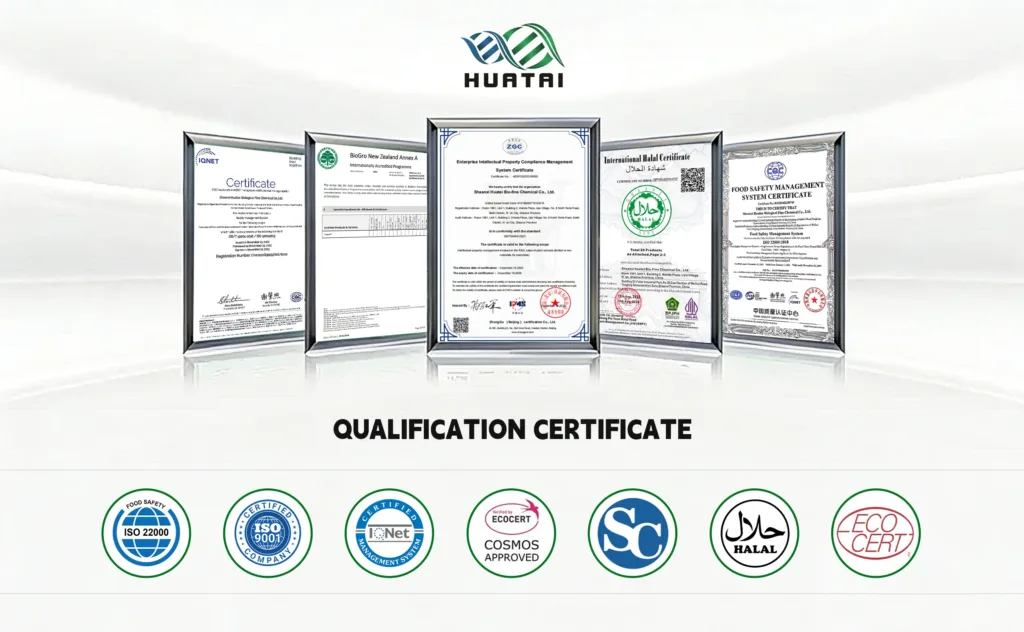
Qualità e credibilità senza compromessi: garantiamo che ogni lotto dei nostri Ingredienti attivi per la cura della pelle Soddisfa rigorosi standard di qualità, tra cui le certificazioni COSMOS, ISO 9001/22000 e HALAL. Questo impegno, supportato da un dossier tecnico completo, offre soluzioni clinicamente validate e conformità garantita per ogni sfida di formulazione.



 English
 German
 Italian
 French
 Spanish
 Japanese
 Korean
 Russian