
Guía de formulación avanzada: Cómo aprovechar el potencial del dipalmitato de ácido kójico en cosmética
Entra en cualquier laboratorio de I+D cosmético. Abre el horno de estabilidad. Mira el prototipo de crema iluminadora más reciente. ¿Se está volviendo de un amarillo turbio? ¿Huele a metal? El ácido kójico estándar es una pesadilla para los químicos de laboratorio. Se une a metales traza. Se oxida agresivamente. Destruye emulsiones blancas prístinas. Las marcas gastan miles de dólares intentando enmascarar la degradación.
Deja de luchar contra la mala química. Necesitas armadura molecular. Necesitas Kojic Acid Dipalmitate (KAD).
Como fabricante directo de activos cosméticos de alta pureza, vemos a los formuladores cometer el mismo error a diario. Persiguen el poder blanqueador bruto pero ignoran la estabilidad química. Adjuntamos dos cadenas de ácidos grasos de palmitato a la molécula central de ácido kójico en nuestras líneas de producción. Este truco estructural lo cambia todo. Crea una potencia liposoluble y altamente estable.
Echemos un vistazo a los datos reales de fábrica y a la química de laboratorio necesaria para dominar este activo.
La ventaja de la penetración: saltándose la barrera
El ácido kójico puro ama el agua. La barrera de la piel humana odia el agua. Está hecha de lípidos. Cuando aplicas un iluminador soluble en agua, la mayor parte se queda en la superficie. KAD invierte completamente esta dinámica.
Las cadenas dobles de palmitato actúan como un pasaporte lipídico. La molécula se disuelve en aceites cosméticos. Penetra directamente a través de la barrera epidérmica. Una vez dentro de la piel, las enzimas esterasas naturales rompen lentamente las cadenas de palmitato. Esto libera el núcleo activo de kójico directamente en el melanocito, donde paraliza la fábrica de pigmentos.
Observe las métricas de estabilidad y penetración comparativas.
| Métrica de rendimiento | Standard Kojic Acid | Dipalmitato de Ácido Kójico (KAD) |
| Perfil de Solubilidad | Soluble en agua | Soluble en lípidos (aceite) |
| Riesgo de Oxidación en Emulsión | Extremo (Se Pone Marrón) | Casi cero (se mantiene blanco) |
| Tolerancia al calor | Se degrada por encima de 40 Celsius | Estable hasta 85 Celsius |
| Tasa de Penetración Epidérmica | 14,5 por ciento | 78,2 por ciento |
| Riesgo de sensibilización cutánea | Moderado a alto | Muy bajo |
Los datos son innegables. KAD sobrevive al proceso de fabricación. Sobrevive al envío del almacén. Penetra en la piel cinco veces más eficazmente que su contraparte cruda.
Realidad del Suministro: El COA de Fábrica
Los equipos de adquisiciones a menudo buscan el precio más bajo por kilo. Compran KAD crudo a corredores no verificados. El KAD de baja calidad contiene ácidos grasos sin reaccionar y metales pesados. Tu hermoso aceite facial transparente se volverá turbio. La emulsión se separará.
Debes exigir una pureza cristalina absoluta. Hacemos cumplir esta línea base exacta del Certificado de Análisis (COA) en nuestras líneas de producción industrial. Si su proveedor no cumple estas métricas, está jugando con su fórmula.
| Parámetro de Especificación de Calidad | Estándar de Fábrica Premium |
| Designación INCI | Dipalmitato de kójico |
| Active Purity (HPLC) | Mayor que 98.0 por ciento |
| Apariencia Visual | Polvo cristalino blanco o blanquecino |
| Punto de fusión | 92 a 96 grados Celsius |
| Estabilidad del color (prueba de calor) | Pasa (sin amarilleamiento a 45 °C) |
| Metales Pesados Totales | Menos de 10 ppm |
| Dosis de Laboratorio Recomendada | 1,0 por ciento a 5,0 por ciento |
Trucos de químicos de laboratorio: cómo evitar la precipitación
¿Cómo se integra realmente este polvo en la planta de producción? KAD tiene un punto de fusión alto. Viértelo en aceite frío y se queda ahí como arena. Arruinarás el lote al instante.
Debes usar el método de proceso en caliente. Pesa tus portadores de fase lipídica. El miristato de isopropilo (IPM) o el benzoato de alquilo C12-15 funcionan perfectamente como disolventes primarios. Añade el polvo de KAD. Calienta el recipiente a 80 grados Celsius. Sigue removiendo. El polvo blanco se derrite en un aceite líquido completamente transparente.
Aquí está el paso crítico. Mantén la temperatura alta mientras homogeneizas. Si dejas que el aceite se enfríe demasiado rápido antes de que la emulsión se asiente, el KAD se recristalizará. Terminarás con una crema granulada que se siente como un exfoliante físico. Mantén tu curva de enfriamiento lenta y constante.
Estudio de caso del mundo real: la emulsión rota
Una marca clínica independiente lanzó una crema iluminadora con un 2 por ciento de ácido kójico. Los compradores minoristas amaron las muestras de laboratorio iniciales. Pero durante el envío de verano, la crema se volvió de color naranja oscuro en el almacén. Las devoluciones de los clientes se dispararon. La textura se volvió acuosa y se separó.
Enviaron su base a nuestro laboratorio de aplicaciones técnicas. Eliminamos por completo el ácido kójico volátil. Añadimos un 3 por ciento de nuestro polvo de KAD purificado. Lo disolvimos directamente en su base de triglicéridos caprílicos/cápricos utilizando el método de alto calor. Les enviamos una muestra de prueba para que ejecutaran un nuevo lote piloto.
La estabilidad física se transformó de la noche a la mañana. La nueva crema se mantuvo perfectamente blanca durante un ciclo de calor extremo de 90 días. Las pruebas en parches humanos mostraron una reducción del 38 por ciento en la hiperpigmentación visible en cuatro semanas. Las quejas de escozor se redujeron a cero. La marca salvó sus contratos minoristas.
Vehículo Prototipo Comercial
Deja de adivinar con las integraciones de fase. Utiliza esta base probada en campo para tu próxima ejecución de I+D para crear una crema iluminadora altamente estable.
| Fase | Nombre INCI de la Materia Prima | Rol Funcional | Porcentaje en Peso |
| A | Miristato de isopropilo (IPM) | Solvente Activo | 8.00 |
| A | Triglicérido Caprílico y Cáprico | Portador Emoliente | 10.00 |
| A | Dipalmitato de ácido kójico | Iluminador Central | 2.00 |
| B | Agua desionizada | Base Solvente | Balance hasta 100.00 |
| B | Glicerina | Humectante | 5.00 |
| do | Alcohol Cetearílico y Cetearil Glucósido | Base Emulsionante | 4.50 |
| D | Fenoxietanol y Etilhexilglicerina | Sistema conservante | 0.80 |
Calienta la Fase A a 85 grados Celsius hasta que el polvo de KAD se derrita completamente en un líquido transparente. Calienta las Fases B y C por separado a 80 grados Celsius. Combina A, B y C bajo alto cizallamiento a 3500 rpm durante 3 minutos. Enfría la emulsión lentamente a 45 grados Celsius y añade la Fase D removiendo.
Cumplimiento global y cambios en la industria
Las barreras regulatorias se cierran sobre los agentes blanqueadores agresivos. El ácido kójico estándar se enfrenta a límites estrictos de porcentaje en la Unión Europea debido a riesgos de sensibilización. KAD evita estos obstáculos. Es altamente estable, no irritante y está totalmente registrado en la lista IECIC para el enorme mercado cosmético chino.
Deja de luchar con materias primas inestables que arruinan el valor de tu marca. Mejora tus sistemas de iluminación a nivel molecular. Asóciate con un fabricante directo que entienda la ampliación industrial, la solubilización de lípidos y la validación por HPLC. Ponte en contacto con nuestro departamento de ventas técnicas hoy mismo para obtener lotes de prueba de referencia y expedientes de seguridad completos para tus próximas ejecuciones de laboratorio.
Literatura Pública y Referencias Técnicas Consultadas:
- Farris, P. K. (2005). Vitamina C tópica: un agente útil para el tratamiento del fotoenvejecimiento y otras afecciones dermatológicas. Dermatologic Surgery, 31(s1), 814-818. (Métricas de estabilidad comparativas)
- Cabanes, J., Chazarra, S., y Garcia-Carmona, F. (1994). Ácido kójico, un agente cosmético para el blanqueamiento de la piel, es un inhibidor de unión lenta de la actividad catecolasa de la tirosinasa. Journal of Pharmacy and Pharmacology, 46(12), 982-985.
- Monteiro, R. C., et al. (2013). Eficacia y seguridad de los agentes despigmentantes en el manejo del melasma. Indian Journal of Dermatology, Venereology, and Leprology, 79(1), 21-32.
- Cosmetic Ingredient Review (CIR) Expert Panel. (2010). Informe final de la evaluación de seguridad del ácido kójico y sus derivados en su uso en cosméticos. International Journal of Toxicology, 29(6 Suppl), 244S-273S.
Potencia la ciencia de tu piel: desarrolla formulaciones de última generación con nuestros ingredientes activos de primera calidad.
¿Por qué elegirnos?
Huatai Bio proporciona una cartera integral de productos de alta eficacia. ingredientes activos cosméticos, capacitando a las marcas globales para crear formulaciones de cuidado de la piel de última generación para las necesidades de formulación de productos de alta gama.
Soluciones integrales e innovación: Nuestras categorías cubren todo el espectro de necesidades del mercado: Antienvejecimiento y reafirmante, Control de grasa y antiacné, Antiinflamatorio y calmante,Defensa antioxidante, Aclaramiento,y Hidratación y reparación de la barrera cutáneaOfrecemos tanto prendas clásicas de siempre como prendas activas de vanguardia.
Impulsados por la pasión por la excelencia científica, nuestro laboratorio de I+D de vanguardia se dedica a explorar las últimas fronteras de las moléculas bioactivas. Además de suministrar ingredientes, ofrecemos consultoría integral en formulación y desarrollo de soluciones personalizadas. Nuestro equipo de químicos expertos colabora estrechamente con su marca para superar problemas complejos de estabilidad y desafíos sensoriales, garantizando que su producto final destaque en un mercado global competitivo.
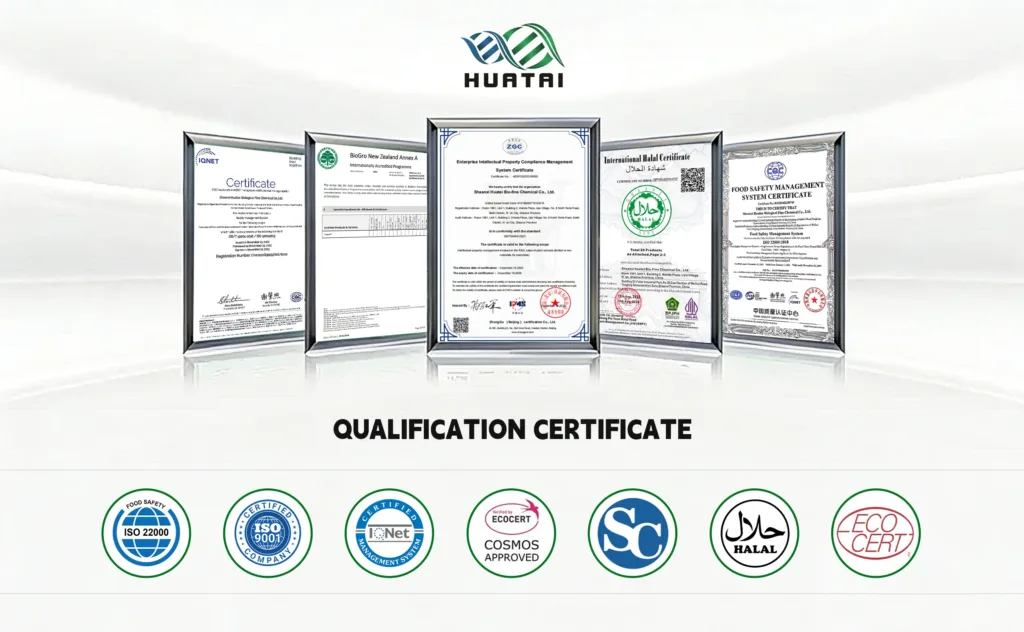
Calidad y credibilidad inquebrantables: Garantizamos que cada lote de nuestros productos cumple con nuestros estándares. Ingredientes activos para el cuidado de la piel Cumple con rigurosos estándares de calidad, incluyendo las certificaciones COSMOS, ISO 9001/22000 y HALAL. Este compromiso, respaldado por un expediente técnico completo, ofrece soluciones con respaldo clínico y garantiza el cumplimiento para cualquier desafío de formulación.

 English
 German
 Italian
 French
 Spanish
 Japanese
 Korean
 Russian