
Hydroquinone has dominated prescription and OTC hyperpigmentation treatment for decades — and its efficacy is well-documented. But the regulatory landscape has shifted decisively: the EU has prohibited hydroquinone in cosmetics (Regulation (EC) No 1223/2009, Annex II, Entry 1339). The US FDA has proposed restricting it in OTC drug products. Several Southeast Asian regulatory bodies have followed with concentration caps or limitations.
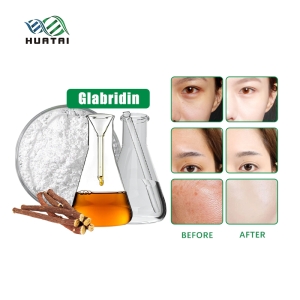
For cosmetic formulators, this is not a future problem — it is a current one. Global brands with cross-border distribution cannot maintain separate HQ formulations for different markets. The practical question is not whether to find an alternative but how to design a replacement system that delivers meaningful clinical outcomes without the safety and regulatory concerns.
Glabridin is not a drop-in substitute. Its mechanism is different, its application parameters differ, and the formulation approach requires rethinking the active system rather than a simple swap. This article provides the technical framework for that rethinking.
Mechanism: Why These Two Actives Work in Fundamentally Different Ways
Hydroquinone — Multi-Mechanistic Melanocyte Activity
Hydroquinone works through multiple mechanisms that collectively produce its pronounced depigmentation effect. It inhibits tyrosinase as a substrate analogue that competes with L-tyrosine at the active site. Beyond enzymatic inhibition, it has been reported to affect melanosome structure, inhibit DNA synthesis within melanocytes, and degrade melanocyte-specific organelles — effects that are collectively described as cytotoxic activity toward melanocytes at effective concentrations.
The consequence of this broad mechanism is that HQ produces rapid, pronounced depigmentation in clinical settings. It is also associated with the adverse effects for which it is known: ochronosis (paradoxical darkening with prolonged use, documented in clinical literature), post-inflammatory rebound hyperpigmentation on cessation in some cases, and genotoxicity concerns at certain concentrations that have driven its regulatory restriction.
Glabridin — Selective, Primarily Non-Cytotoxic Enzyme Modulation
Glabridin acts through a mechanistically distinct approach. It has been reported to inhibit tyrosinase through a predominantly non-competitive or mixed-type inhibition pattern in enzyme kinetic studies, suggesting that its inhibitory effect may not rely solely on competition with L-tyrosine at the substrate site, and may involve conformational modulation of enzyme function (Yokota et al., 1998). This reduces the enzyme's catalytic efficiency without the cytotoxic effects on melanocyte viability described for HQ.
Glabridin also modulates inflammatory pathways associated with melanogenesis, including COX-related prostaglandin signaling, providing additional upstream activity relevant for inflammation-driven pigmentation such as PIH. More recent research has further shown that glabridin suppresses both PKA/MITF and MAPK/MITF signaling pathways, downregulating the transcription and expression of MITF, TYR, TRP-1, and TRP-2 (Pan et al., 2023).
The melanocyte survives the glabridin encounter with reduced activity, rather than being structurally affected. This mechanistic distinction is central to understanding why the safety and regulatory profiles of the two actives differ so substantially.
Mechanismusvergleich im Überblick
| Parameter | Glabridin | Hydrochinon |
|---|---|---|
| Primärer Mechanismus | Non-competitive or mixed-type tyrosinase inhibition | Melanocyte cytotoxic activity + substrate-competitive tyrosinase inhibition |
| Sekundärer Mechanismus | COX/PGE₂ modulation (anti-inflammatory); MITF pathway suppression | Melanosome structural disruption; DNA synthesis inhibition in melanocytes |
| Melanocyte viability | Maintained — enzyme-selective; melanocyte survives with reduced activity | May be affected — cytotoxic mechanism at effective concentrations |
| Rebound risk on cessation | Not reported in current literature | Known risk — rebound PIH documented in clinical use |
| Ochronosis risk | Not reported in current literature | Documented with chronic HQ use |
| Anti-inflammatory component | Yes — COX/PGE₂ modulation + MITF pathway | Nicht gut etabliert |
| EU cosmetic status | Zugelassen | Prohibited (Regulation (EC) No 1223/2009, Annex II, Entry 1339) |
| US FDA status | Verwendet in kosmetischen und Körperpflegeformulierungen | Proposed restriction (OTC drug category; Category III insufficient data classification) |
| COSMOS-Kompatibilität | Yes — certified grades available | NEIN |
Efficacy Data: What the Numbers Show
Direct head-to-head clinical comparison of glabridin and hydroquinone in a controlled study format is not available in the published literature — this is an honest limitation that any serious technical assessment must acknowledge.
What is available is Huatai's own human clinical study.
Huatai Human Clinical Study (4-Week, 0.03% Glabridin)
Huatai commissioned a third-party human clinical study (Guangdong Weipu Testing Technology Co., Ltd., CMA accredited, Report No. GZA01-23080632-JC-01) using a skincare water formulation containing 0.03% glabridin active.
Key results over 4 weeks (35 subjects, age 28–60):
| Zeitpunkt | MI — Test Product | MI — Negative Control |
|---|---|---|
| Ausgangswert | 183,10 | 186,61 |
| Woche 1 | 177,90 | 189,94 |
| Woche 2 | 165,05 | 186,70 |
| Woche 3 | 157,46 | 182,85 |
| Woche 4 | 152,35 | 175,98 |
MI reduction was statistically significant from Week 1 (P<0.05) and reached 16.8% reduction over 4 weeks at 0.03% active concentration. Skin brightness (ITA°) showed improvement from Week 2 onward.
For formulators designing a replacement system: this clinical data was generated at 0.03% active — below the recommended use level of 0.1–0.5% active in finished products. Higher concentrations within the recommended range may offer enhanced efficacy potential, subject to formulation and stability requirements.
Safety and Regulatory Profile
Hydroquinone: The Regulatory Context
The EU's prohibition of hydroquinone in cosmetics is codified under Regulation (EC) No 1223/2009, Annex II (List of Substances Prohibited in Cosmetic Products), Entry 1339. This prohibition applies to all cosmetic products marketed in the EU.
In the US, hydroquinone occupies a complex regulatory position. The FDA classified it as a Category III (insufficient data to classify as safe and effective) OTC drug ingredient in 2006, effectively halting new OTC drug applications. Prescription HQ products remain legal under physician supervision. Consumer cosmetic products in the US continue to exist in a regulatory grey zone that carries increasing compliance exposure for brands seeking global distribution.
Additional jurisdictions with restrictions include Japan, Canada (prescription-only in many contexts), and several ASEAN markets with concentration caps.
Glabridin: Available Safety Data
Human patch test (Report No. GZA01-23080632-JC-01, Guangdong Weipu Testing Technology Co., Ltd., CMA accredited): 30 subjects, closed patch protocol with observations at 0.5h, 24h, and 48h post-removal. Result: zero adverse reactions across all subjects and all timepoints at the tested concentration and formulation.
Ochronosis: No cases of ochronosis associated with glabridin use have been reported in the available published literature or post-market communications.
Rebound pigmentation: Rebound hyperpigmentation on cessation has not been reported in the available literature for glabridin.
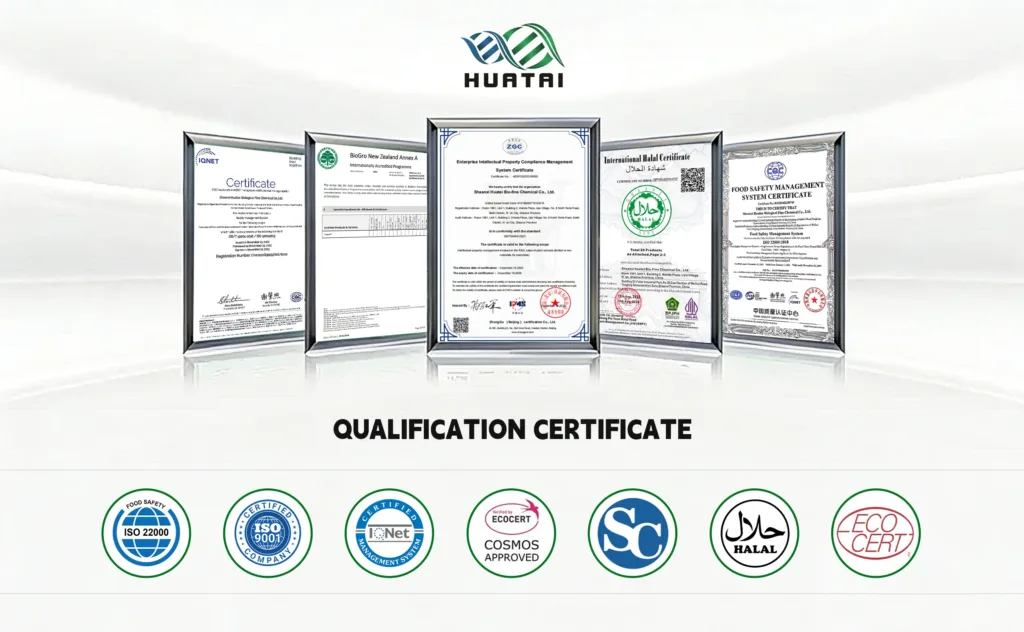
COSMOS v4 certification: Huatai's 40%, 90%, and 98% glabridin grades carry COSMOS v4 natural certification (Ecocert Greenlife SAS, Certificate N°277614-20251216_0226, valid through 31 December 2026), supporting use in certified natural and organic formulations.
Formulation Replacement Strategy: Designing a Glabridin-Based HQ Alternative System
A direct substitution — removing HQ and adding glabridin at equivalent concentration — is unlikely to produce equivalent clinical results. The mechanism difference requires a multi-active system that provides coverage across the melanogenesis pathway.
The recommended approach is a three-active system that provides layered coverage across complementary, independent mechanisms:
System Architecture
| Aktiv | Mechanismus | Role in HQ-Replacement System |
|---|---|---|
| Glabridin (0.1–0.5% active) | Non-competitive or mixed-type tyrosinase inhibition + anti-inflammatory activity (COX/PGE₂ modulation) + MITF pathway modulation | Primary enzymatic and signaling intercept; also addresses PIH signaling upstream |
| Tranexamsäure (TXA) (2–5%) | Modulation of keratinocyte–melanocyte signaling via the plasminogen pathway | Upstream signaling intercept; documented clinical activity in melasma-related pigmentation |
| Niacinamid (2–5%) | Melanosome transfer reduction | Downstream coverage; reduces visible pigmentation accumulation in keratinocytes |
Each active operates at a distinct point in the melanogenesis pathway, providing layered coverage that a single-active system may not deliver. Glabridin + TXA together help suppress upstream inflammatory and signaling activity; glabridin's enzymatic inhibition reduces synthesis efficiency; niacinamide reduces transfer of already-synthesized melanosomes to visible skin layers.
Grade Selection for the Replacement System
| Formulation Format | Empfohlene Glabridin-Qualität |
|---|---|
| Water-based brightening serum or essence | 10% water-soluble powder (HP-β-CD inclusion complex, COSMOS-certified) |
| O/W emulsion / cream | 40% white powder or 90% alcohol-soluble (pre-dissolved in propylene glycol or butylene glycol at cool-down) |
| Anhydrous serum / oil treatment | 90% oil-soluble white powder (~0.2% in oil phase) |
| Clinical-grade / prestige positioning | 98% alcohol-soluble white powder |
The 40% reddish-brown powder is cost-effective but introduces a warm color tone into the formulation. For brightening products where formula aesthetics are a priority, the 40% white powder or 90%/98% grades are recommended. White and reddish-brown 40% grades share identical purity and solubility profiles; the white grade undergoes additional purification to remove chromogenic botanical matrix components.
Formulation Parameters
pH-Wert: Target 4.5–5.5 for optimal glabridin stability; acceptable up to pH 6.5. TXA is stable across pH 4.5–6.5. Niacinamide is stable from pH 4.0 to 7.0. All three actives are compatible within the same pH window.
Processing temperature: Add glabridin at cool-down (preferably ≤60°C). TXA can be added to the water phase at any processing stage. Niacinamide is heat-stable and can be added at any stage.
Antioxidant and chelation protection: Tocopherol (0.2–0.5% in oil phase) and a chelating agent (disodium EDTA 0.05–0.1%, or sodium phytate for clean-label formulations) are recommended to protect glabridin's phenolic hydroxyl groups from metal-catalyzed oxidative degradation during storage.
Verpackung: Airless pump or opaque UV-blocking container is strongly recommended. Glabridin has been shown to degrade 20–27% under light exposure over 8 hours (Ao et al., 2010). UV-protective or opaque packaging significantly reduces this degradation risk.
Positioning and Label Considerations
The regulatory restriction on HQ creates a communications challenge: brands that previously communicated clinical depigmentation efficacy cannot simply replace the active and maintain the same language without substantiation data for the new system.
- Claims for the glabridin-based system should be grounded in its specific mechanism (brightening, melanin reduction, even skin tone) rather than direct comparison to HQ
- "Hydroquinone-free" or "without hydroquinone" is a legitimate claim in markets where HQ was previously in use, provided the claim is not misleading about the mechanism of action
- Clinical substantiation for the replacement system — ideally a controlled use test — is advisable before making comparative efficacy claims
This article does not constitute regulatory advice. Regulatory counsel should be consulted for specific claims in specific jurisdictions.
Summary: When to Use Glabridin as an HQ Alternative
Glabridin is not identical to hydroquinone in mechanism, speed of action, or clinical profile. Formulations that previously relied on HQ for rapid, aggressive depigmentation should not expect identical timelines or clinical outcomes from a glabridin-based system without additional active support.
What glabridin offers that hydroquinone cannot:
- Full regulatory acceptance in the EU, US cosmetic market, and major global markets
- COSMOS v4 natural certification — applicable for certified clean beauty formulations
- No reported ochronosis or rebound pigmentation risk on cessation in available literature
- Anti-inflammatory and MITF pathway modulation activity — relevant for PIH-associated and reactive skin applications
- Favorable skin tolerance profile supported by patch test data
When combined with TXA and niacinamide in a three-active system, glabridin provides layered coverage across the melanogenesis pathway that may approach the breadth of effect that made HQ clinically useful — without the regulatory and safety concerns that have increasingly restricted its use.
Jede Charge wird mit COA, TDS und SDS/MSDS geliefert. Zusätzliche Tests auf Anfrage erhältlich.
Referenzen
- Yokota T, Nishio H, Kubota Y, Mizoguchi M. Die hemmende Wirkung von Glabridin aus Süßholzwurzelextrakten auf Melanogenese und Entzündungen. Pigment Cell Research, 11(6), 355–361, 1998. DOI: 10.1111/j.1600-0749.1998.tb00494.x. — Non-competitive inhibition mechanism and anti-inflammatory activity.
- Nerya O, Vaya J, Musa R, Izrael S, Ben-Arie R, Tamir S. Glabren und Isoliquiritigenin als Tyrosinase-Inhibitoren aus Süßholzwurzeln. Journal für Agrar- und Lebensmittelchemie, 51(5), 1201–1207, 2003. DOI: 10.1021/jf020935u. — IC₅₀ = 0.09 μmol/L for glabridin.
- Pan C, Liu X, Zheng Y, et al. Die Mechanismen der Melanogenese-Hemmung durch Glabridin: Molekulardocking, PKA/MITF- und MAPK/MITF-Wege. Lebensmittelwissenschaft und menschliches Wohlbefinden, 12(1), 212–222, 2023. DOI: 10.1016/j.fshw.2022.07.011.
- Solano F, Briganti S, Picardo M, Ghanem G. Hypopigmenting agents: an updated review on biological, chemical and clinical aspects. Pigment Cell Research, 19(6), 550–571, 2006. DOI: 10.1111/j.1600-0749.2006.00334.x. — HQ mechanism and regulatory review.
- Ao M, Li X, Hu Q, Li L, Hu X. Stability of glabridin in solution. Natural Product Communications, 5(12), 1907–1912, 2010. DOI: 10.1177/1934578X1000501214. PMID: 21299118.
- European Commission. Regulation (EC) No 1223/2009 of the European Parliament and of the Council on cosmetic products, Annex II (List of Substances Prohibited in Cosmetic Products), Entry 1339. Official Journal of the European Union, 2009.
- US Food and Drug Administration. Skin Bleaching Drug Products for Over-the-Counter Human Use: Proposed Rule. 21 CFR Parts 310 and 352. Federal Register, Vol. 71, No. 102, May 26, 2006.
- Maeda K, Nishino H. Mechanismus der hemmenden Wirkung von Tranexamsäure auf die Melanogenese in kultivierten menschlichen Melanozyten in Gegenwart von Keratinozyten-konditioniertem Medium. Zeitschrift für Gesundheitswissenschaften, 53(4), 389–396, 2007. DOI: 10.1248/jhs.53.389.
- Guangdong Weipu Testing Technology Co., Ltd. (CMA accredited, No. 202119135666). Report No. GZA01-23080632-JC-01. Human skin brightening efficacy study + patch test, 0.03% Glabridin. Commissioned by Huatai Bio-Fine Chemical.

 English
 German
 Italian
 French
 Spanish
 Japanese
 Korean
 Russian