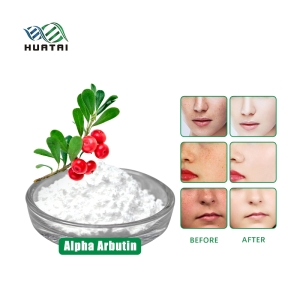
Walk into any cosmetics manufacturing lab and ask the head chemist to mix Alpha Arbutin with Kojic Acid. Watch their face drop.
Brands love this combination on paper. Both ingredients target hyperpigmentation aggressively. Formulators usually hate working with them together. I watched a client dump an entire production run of premium brightening serum last month. The liquid turned the color of an old, oxidized penny after just three weeks in a warm warehouse.
Worse than the color change? The serum became technically illegal. You cannot simply mix two powerful active ingredients in a water base and hope for the best. Let us look at the actual chemical battlefield inside the mixing tank.
기계적 충돌
알파 알부틴과 코직산은 멜라닌 생성을 동일한 부위에서 공격합니다: 티로시나아제 효소. 코직산은 발톱처럼 작용합니다. 효소가 기능하는 데 필요한 구리 이온을 킬레이트화하여 기계를 효과적으로 파괴합니다. 알파 알부틴은 미끼 역할을 합니다. 멜라닌의 천연 빌딩 블록을 모방하여 경쟁적 억제를 통해 효소의 기어를 막습니다.
시너지는 엄청납니다. 안정성 프로필은 악몽입니다.
Kojic Acid is highly reactive. It oxidizes rapidly upon exposure to air and UV light, forming dark brown polymeric compounds. It also binds violently with trace iron (Fe3+) in your water, turning the solution blood-red or dark brown almost instantly.
pH 위협 및 하이드로퀴논 위험
하지만 가장 큰 위협은 pH 충돌입니다. 코직산은 본질적으로 산성입니다. 물에 첨가하면 pH가 낮아집니다. 알파 알부틴은 배당체입니다. 안정적인 pH 환경이 필요합니다. 5 ~ 6.5.
코직산이 포뮬러 pH를 4.0 미만으로 떨어뜨리면 알파 알부틴의 배당 결합이 끊어지기 시작합니다. 이 가수분해 반응은 하이드로퀴논 세럼으로 방출됩니다. 하이드로퀴논은 엄격히 금지됩니다 대부분의 글로벌 시장에서 화장품에 사용됩니다. 완충되지 않은 코직산 및 알파 알부틴 세럼은 단순히 갈색으로 변하는 것이 아닙니다. 독성이 있고 규정을 준수하지 않는 위험 물질로 분해됩니다.
Raw Material Quality Specifications (COA Benchmark)
톤 단위로 이러한 원료를 생산하는 제조업체로서 우리는 철저한 분석 테스트를 수행합니다. 우리는 정제되지 않고 저렴한 분말을 구매하기 때문에 브랜드가 반복적으로 실패하는 것을 봅니다. 공급업체로부터 엄격한 사양을 요구해야 합니다. 다음은 우리가 시행하는 벤치마크입니다.
*알파 알부틴의 비선광도에 주의하십시오. 이것은 저렴하고 덜 안정적인 "베타" 이성질체가 아닌 매우 효과적인 "알파" 이성질체를 얻고 있음을 증명합니다. 코직산의 철분 한도를 살펴보십시오. 코직산에 철분이 높으면 충전 라인에 도달하기도 전에 제형이 변색됩니다.
듀오 안정화: 45일 가속 분석(45°C + UV)
표준 2% 알파 알부틴 및 1% 코직산 수성 베이스의 분해를 추적했습니다. 색상 변화, 활성 유지율, 그리고 가장 중요한 하이드로퀴논 생성을 모니터링했습니다.
| 프로토콜 | Buffer / Protective System | pH 드리프트(0일차 ➔ 45일차) | 코직산 유지율 | Hydroquinone Detected |
|---|---|---|---|---|
| 제어 | 없음 | 4.8 ➔ 3.6 | 31% (Dark Brown) | 145 ppm (Fail) |
| Protocol A | 0.1% EDTA | 4.8 ➔ 4.1 | 68% (Yellow) | 35 ppm (Fail) |
| Protocol B | 0.1% EDTA + 0.2% Sodium Metabisulfite | 4.8 ➔ 4.3 | 89% (Light Yellow) | 12 ppm (Borderline) |
| Optimized Protocol | EDTA + Metabisulfite + Citric Acid/Sodium Citrate Buffer | 5.2 ➔ 5.1 | 97% (Clear) | Undetected (Pass) |
원시 데이터는 제형의 현실을 드러냅니다. 킬레이트제(EDTA)를 추가하는 것만으로는 충분하지 않습니다. 항산화제(아황산수소나트륨)를 추가하는 것만으로는 충분하지 않습니다. pH를 고정해야 합니다. 최적화된 프로토콜은 코직산이 물을 산성화하는 것을 방지하여 알파 알부틴이 가수분해되는 것을 방지합니다.
3가지 절대 배합 규칙
- Lock the pH. 활성 성분을 추가하기 전에 완충 시스템을 만듭니다. 엄격한 pH를 목표로 합니다. 0 ~ 5.5.
- Cage the metals. Use 0.1% Disodium EDTA in the heated water phase. You must scavenge every trace metal before introducing Kojic Acid.
- Use an oxygen scavenger. 아황산수소나트륨(0.1% – 0.2%)을 추가합니다. 산화 손상을 흡수하여 코직산이 손상되지 않도록 합니다. (참고: 약간의 황 냄새를 지능적으로 마스킹하지 않으면 제품이 미적으로 실패할 수 있습니다.)
- Cold processing only. 두 성분 모두 열에 매우 불안정합니다. 절대 35. 이상의 온도에 노출시키지 마십시오. 실온 물에 미리 녹여 최종 냉각 단계에서 첨가합니다. 40°C.
규제 환경
규제 환경은 전 세계적으로 강화되고 있습니다. 유럽 SCCS(소비자 안전 과학 위원회)는 안전 마진을 최종 확정했습니다.
- 코직산: 얼굴 및 손 제품의 경우 1%로 엄격하게 제한됩니다.
- 알파 알부틴: 안면 크림에 최대 2%까지 허용됩니다.
더 이상 4% 코직산으로 피부 미백을 강제로 할 수 없습니다. 법으로 금지되어 있습니다. 정밀하고 계산된 시너지에 의존해야 합니다. 2% 알파 알부틴 및 1% 코직산이는 전달 시스템, 완충 프로토콜 및 원료 순도가 완벽해야 함을 의미합니다. 고성능 스킨케어는 타협하지 않는 원료에서 시작됩니다. 저렴하고 불안정한 분말로 화학적으로 훌륭한 제형을 망치지 마십시오.
- SCCS (Scientific Committee on Consumer Safety), Opinion on the safety of Kojic Acid (SCCS/1637/21). Final version adopted March 2022.
- SCCS, Opinion on the safety of alpha-arbutin (SCCS/1642/22). Final version adopted March 2023.
- Burnett, C. L. 등. "화장품에 사용되는 코직산의 안전성 평가 최종 보고서." 국제 독성학 저널 29.6 (2010): 244S-273S.
- Smit, N., Vicanova, J., & Pavel, S. "천연 피부 미백제 찾기." 국제 분자 과학 저널 10.12 (2009): 5326-5349.

 English
 German
 Italian
 French
 Spanish
 Japanese
 Korean
 Russian