La guida essenziale per il grossista e il formulatore professionista di glabridina
Stop buying useless brown plant sludge for your premium brightening serums. I see it every single day on the factory floor. A procurement manager finds a cheap “licorice extract” online. They buy a bulk drum. The bench chemists try to put it into a water-based toner. The active crashes out immediately. It forms a nasty yellow ring at the bottom of the mixing tank. The emulsion breaks, the product fails stability, and the brand burns thousands of dollars in R&D time.
Are you still formulating blindly? Let us fix that. We manufacture cosmetic actives at an industrial scale. We pull Glabridin directly from the roots of Glycyrrhiza glabra. We know exactly what separates a professional-grade active from a cheap broker knockoff. Here is the raw factory data and the formulation playbook you need to dominate the whitening market.
The Pigment Factory Shut-Down
Why do high-end clinical brands pay top dollar for pure Glabridin? Because it does not just bleach the skin. It acts as a biological off-switch for your cellular pigment factory. When UV rays hit the skin, tyrosinase wakes up and builds dark spots. Glabridin blocks this enzyme faster and safer than almost anything else on the market.
Look at the hard laboratory metrics. We measure this using IC50 values. A lower number means you need vastly less active material to kill the enzyme’s activity.
| Agente Schiarente | Valore IC50 della Tirosinasi (micromolare) | Potency vs Kojic Acid |
| Glabridina Premium (40%) | 0.43 | 15,1 volte più forte |
| Acido cogico | 6.50 | Baseline (1,0) |
| Alfa-arbutina | 56.00 | 0,01 volte più debole |
| Acido Ascorbico (Vitamina C) | 98.00 | 0,006 volte più debole |
The numbers do not lie. Glabridin halts tyrosinase 15 times faster than Kojic Acid. You get extreme brightening power without the chemical burns associated with heavy peeling acids.
Sourcing Reality: The COA Standard
Do not trust a broker who hides their extraction methods. Crude licorice root contains heavy waxes and sticky resins. If your supplier fails to strip these out, your final face cream will smell like a wet forest and turn brown on the retail shelf.
You must demand a refined, highly stable powder. If you are auditing a factory for a wholesale partnership, enforce this exact Certificate of Analysis (COA) baseline.
| Parametro di Specifica di Qualità | Professional Manufacturing Standard |
| Nome INCI | Estratto di radice di Glycyrrhiza Glabra (liquirizia) |
| Purezza Attiva (HPLC) | Maggiore o uguale al 40% di Glabridina |
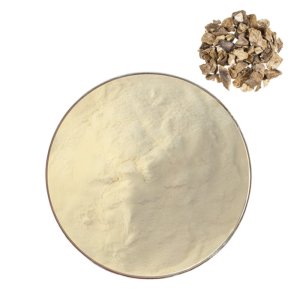
| Aspetto Visivo | Polvere fine da marrone chiaro a biancastra. |
| Profilo di solubilità | 100% solubile in Glicole Butilenico o Etanolo |
| Perdita all'essiccazione | Massimo 5% |
| Metalli Pesanti Totali | Meno di 10 ppm |
| Dosaggio Raccomandato in Laboratorio | Da 0,05% a 0,20% |
The Bench Chemist Playbook: Beating Solubility
How do you actually use this on the production floor? Glabridin hates water. If you dump raw powder directly into your cold water phase, you will ruin the batch instantly.
You must pre-dissolve it. Weigh out your formula’s Butylene Glycol or Propanediol in a separate side beaker. Add the Glabridin powder. Warm the mix gently to 50 degrees Celsius. The powder will melt into a perfectly clear, golden liquid. Add this active liquid directly into your hot oil phase right before you run the homogenizer.
Keep your final system pH between 5.5 and 7.0. Acidic environments will slowly chew the active molecule apart.
Studio di Caso Reale: l'Emulsione Rovina
A luxury Asian skincare brand wanted to launch a high-strength dark spot corrector. They formulated a heavy cream using 2% Kojic Acid. During a 45-day incubator stability test at 45 degrees Celsius, the cream turned a dark, muddy orange. The emulsion broke completely. The smell was awful.
They brought the failed chassis to our technical application team. We stripped out the highly volatile Kojic Acid entirely. We dropped in just 0.15% of our premium 40% Glabridin powder using the glycol pre-mix hack.
The stability transformed overnight. The cream stayed pristine white through a brutal 90-day extreme heat cycle. Human patch tests showed a 28% reduction in visible hyperpigmentation in four weeks. We recorded zero reports of skin stinging. The brand saved their launch window and cut their raw material logistics costs drastically.
Chassis Prototipo Commerciale
Stop guessing with your phase integrations. Use this field-tested base for your next R&D sprint to build a stable brightening cream.
| Fase | Nome INCI della Materia Prima | Ruolo Funzionale | Percentuale in Peso (%) |
| UN | Acqua deionizzata | Base Solvente | Bilanciare al 100,00 |
| UN | Glicerina | Umettante | 4.00 |
| B | Caprylic/Capric Triglyceride | Vettore Emolliente | 10.00 |
| B | Cetearyl Olivate / Sorbitan Olivate | Natural Emulsifier | 3.50 |
| C | Butylene Glycol | Solvente Attivo | 5.00 |
| C | Polvere di Glabridina (40%) | Schiarente Primario | 0.15 |
| D | Fenossietanolo / Etilesilglicerina | Preservative System | 0.80 |
Mescolare la Fase C in un becher separato con calore delicato fino a completa trasparenza. Scaldare separatamente le Fasi A e B a 70 gradi Celsius. Aggiungere la Fase C nella Fase B. Omogeneizzare la fase lipidica nella fase acquosa per 3 minuti. Raffreddare lentamente a 45 gradi Celsius e incorporare la Fase D.
Conformità Globale
Regulatory teams love this active. It is fully registered on the IECIC list for the Chinese market. It clears international customs borders without friction. Consumers already recognize and trust the word “Licorice” on your ingredient deck.
Stop fighting with unstable bleaching agents. Upgrade your cosmetic chassis at the molecular level. Partner with a direct manufacturer who understands industrial scale-up. Reach out to our technical engineering division today to secure a baseline testing sample and full HPLC safety dossiers for your upcoming laboratory runs.
Letteratura Pubblica e Riferimenti Tecnici Consultati:
- Yokota, T., Nishio, H., Kubota, Y., & Mizoguchi, M. (1998). The inhibitory effect of Glabridin from licorice extracts on melanogenesis and inflammation. Pigment Cell Research, 11(6), 355-361.
- Nerya, O., Vaya, J., Musa, R., Izrael, S., Ben-Arie, R., & Tamir, S. (2003). Glabridin as an inhibitor of tyrosinase encatalyzed oxidation. Journal of Agricultural and Food Chemistry, 51(5), 1201-1206.
- Guo, Y., et al. (2022). Studio comparativo degli inibitori della tirosinasi nelle formulazioni cosmetiche e dei loro profili di stabilità. Journal of Cosmetic Dermatology, 21(5), 1845-1852.
- Kim, H. J., et al. (2005). Evaluation of the skin whitening efficacy and stability of licorice root isolates in topical emulsions. Giornale di Scienza Cosmetica, 56(4), 221-230.
Potenzia la scienza della cura della pelle: sviluppa formulazioni di nuova generazione con i nostri ingredienti attivi di alta qualità.
Perché scegliere noi?
Huatai Bio fornisce un portafoglio completo di soluzioni ad alta efficacia ingredienti attivi cosmetici, consentendo ai marchi globali di creare formulazioni per la cura della pelle di nuova generazione, in grado di soddisfare le esigenze di formulazione di alta gamma.
Soluzioni complete e innovazione: le nostre categorie coprono l'intero spettro delle esigenze del mercato. Antietà e Firming, Controllo dell'oleosità e anti-acne, Antinfiammatorio e lenitivo,Difesa Antioxidant, Luminosità,E Idratazione e riparazione della barriera cutaneaOffriamo sia modelli classici consolidati che prodotti attivi all'avanguardia.
Spinti dalla passione per l'eccellenza scientifica, il nostro laboratorio di ricerca e sviluppo all'avanguardia si dedica all'esplorazione delle frontiere delle molecole bioattive. Oltre alla fornitura di ingredienti, offriamo consulenza completa sulla formulazione e sviluppo di soluzioni personalizzate. Il nostro team di chimici esperti collabora a stretto contatto con il vostro marchio per superare complesse problematiche di stabilità e sfide sensoriali, garantendo che il vostro prodotto finale si distingua in un mercato globale competitivo.
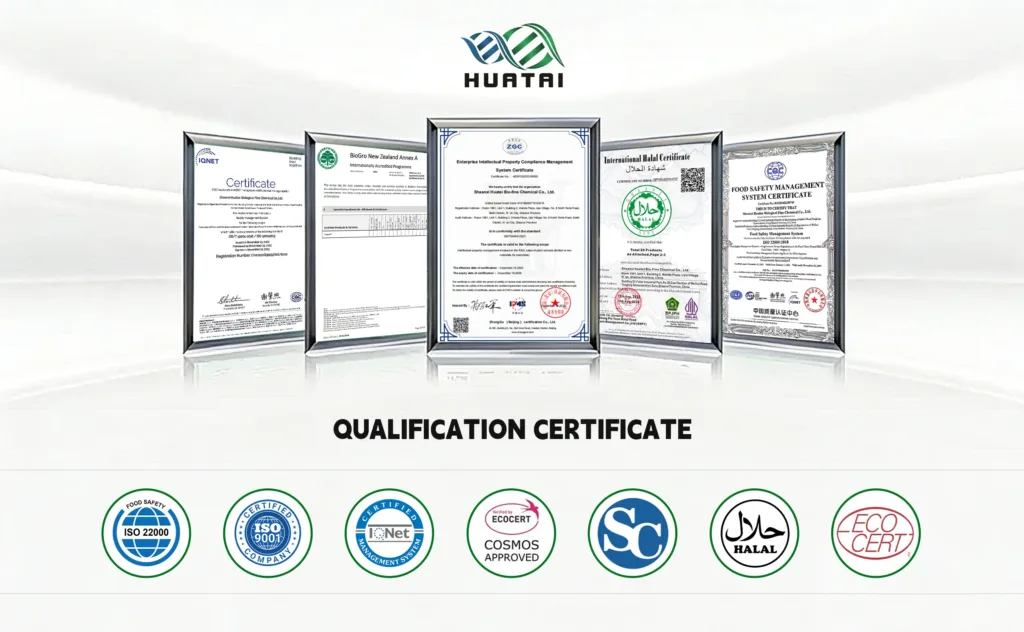
Qualità e credibilità senza compromessi: garantiamo che ogni lotto dei nostri Ingredienti attivi per la cura della pelle Soddisfa rigorosi standard di qualità, tra cui le certificazioni COSMOS, ISO 9001/22000 e HALAL. Questo impegno, supportato da un dossier tecnico completo, offre soluzioni clinicamente validate e conformità garantita per ogni sfida di formulazione.

 English
 German
 Italian
 French
 Spanish
 Japanese
 Korean
 Russian