Come può la Glabridina ad alta purezza rivoluzionare le moderne formulazioni per lo sbiancamento della pelle?
Are you still relying on Kojic Acid or Arbutin for your brightening serums? You might be falling behind. I walk through our manufacturing floors every day at Shaanxi Huatai Bio-Fine Chemicals Co., Ltd. I see exactly what top-tier skincare brands buy. They are quietly shifting to high-purity Glabridin. Why? Consumers want clinical-level results without the chemical burn.
Let us look at the reality of formulation. You mix a batch of brightening cream. It looks perfect on day one. Sixty days later, the product turns a muddy brown. Your client rejects the entire batch. We see this constantly when brands try to save pennies by using low-grade plant extracts.
Glabridin comes from the licorice root. It blocks the enzyme that makes dark spots. But purity changes everything. A 40 percent extract contains heavy plant resins. It will ruin a clear serum. You need the 98 or 99 percent pure powder to make a premium, stable product.
Here is how different purity levels dictate your final product:
| Livello di Purezza | Aspetto Fisico | Best Product Application | Formulation Risk |
| 40 Percento | Brown powder | Tinted lotions, mud masks | High color alteration |
| 90 Percento | Polvere bianco sporco | Opaque daily creams | Mild yellowing over time |
| 98% | Pure white powder | Sieri trasparenti di alta gamma | Low to none |
| 99% | Crystal white powder | Trattamenti spot clinici | Nessuno |
Let me share a recent case. A European dermocosmetic brand struggled with their hydroquinone-alternative serum. Their active ingredient degraded under UV light testing. The formula smelled awful. We moved them to a 98 percent high-purity Glabridin. We bypassed the odor completely. The serum stayed crystal clear during a 12-week accelerated stability test. Their customer retention jumped significantly.
Why does this molecule work so well? Look at the raw inhibition data. Scientists measure pigment-blocking power using an IC50 value. A smaller number means stronger performance.
| Agente Illuminante | IC50 Tyrosinase Inhibition | Rischio di irritazione cutanea |
| Glabridina ad alta purezza | 0.05 ug/ml | Molto basso |
| Acido cogico | 9.14 ug/ml | Moderare |
| Alfa-arbutina | 40.00 ug/ml | Basso |
| Vitamina C (L-AA) | 50.00 ug/ml | High (pH dependent) |
Glabridin is hundreds of times more efficient than Kojic Acid. You use less. You irritate the skin less. You get much faster results.
Quality control is your only shield against bad batches. Do not blindly trust a supplier label. Demand a strict Certificate of Analysis (COA). As a manufacturer, here are the baseline specs we enforce for cosmetic-grade Glabridin:
| COA Parameter | Strict Manufacturing Standard | Impact on Your Formula |
| HPLC Purity | Matches exact claim (90% to 99%) | Guarantees active dosage |
| Perdita all'essiccazione | Meno di 5,0% | Prevents clumping in the hopper |
| Metalli pesanti | Meno di 10 ppm | Meets EU and US regulatory rules |
| Arsenico | Meno di 2 ppm | Ensures human safety |
| Carica microbica | Meno di 100 CFU/g | Prevents formula contamination |
You must respect the chemistry to make this work. Glabridin hates water. If you dump it directly into your water phase, you will get a gritty mess.
| Fase di Formulazione | Consulenza Professionale | The Reason Why |
| Solvent Phase | Dissolve in Butylene Glycol or PEG-400 | Glabridin is oil-loving |
| Temperatura | Process below 45 Celsius | High heat breaks the molecule |
| Stabilità del pH | Lock the formula at 5.5 to 6.5 | Extreme pH causes separation |
| Sinergia | Pair with Ceramides | Enhances skin barrier penetration |
The industry is moving away from harsh synthetic lighteners. The regulatory hurdles are too high. Plant-derived, high-purity molecules are the clear future for high-performance skincare. Stop compromising your high-end formulas with low-grade extracts. We provide samples of our high-purity Glabridin for your bench trials. Run the stability tests yourself. See the color difference in your own lab.
Riferimenti utilizzati nella formulazione di questa analisi:
- Yokota, T., et al. (1998). “The inhibitory effect of glabridin from licorice extracts on melanogenesis and inflammation.” Pigment Cell Research.
- Simmler, C., et al. (2013). “Licorice root: A botanical dietary supplement and extract used in cosmetic formulations.” Fitoterapia.
- Commissione Europea (2022). “Regolamento sui cosmetici (CE) n. 1223/2009 relativo alla sicurezza degli agenti schiarenti per la pelle.”
Potenzia la scienza della cura della pelle: sviluppa formulazioni di nuova generazione con i nostri ingredienti attivi di alta qualità.
Perché scegliere noi?
Huatai Bio fornisce un portafoglio completo di soluzioni ad alta efficacia ingredienti attivi cosmetici, consentendo ai marchi globali di creare formulazioni per la cura della pelle di nuova generazione, in grado di soddisfare le esigenze di formulazione di alta gamma.
Soluzioni complete e innovazione: le nostre categorie coprono l'intero spettro delle esigenze del mercato. Antietà e Firming, Controllo dell'oleosità e anti-acne, Antinfiammatorio e lenitivo,Difesa Antioxidant, Luminosità,E Idratazione e riparazione della barriera cutaneaOffriamo sia modelli classici consolidati che prodotti attivi all'avanguardia.
Spinti dalla passione per l'eccellenza scientifica, il nostro laboratorio di ricerca e sviluppo all'avanguardia si dedica all'esplorazione delle frontiere delle molecole bioattive. Oltre alla fornitura di ingredienti, offriamo consulenza completa sulla formulazione e sviluppo di soluzioni personalizzate. Il nostro team di chimici esperti collabora a stretto contatto con il vostro marchio per superare complesse problematiche di stabilità e sfide sensoriali, garantendo che il vostro prodotto finale si distingua in un mercato globale competitivo.
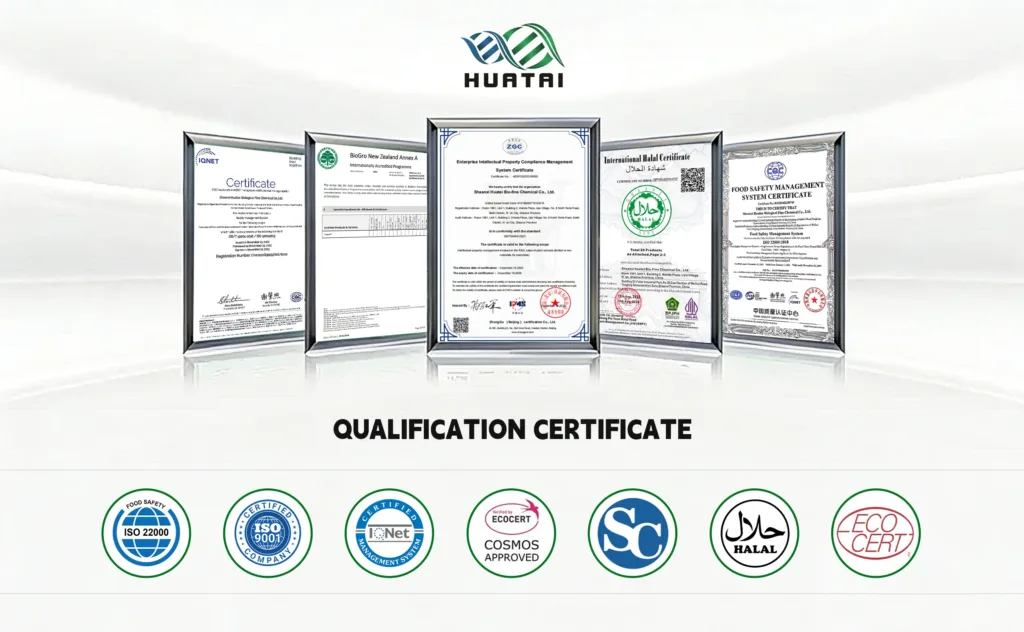
Qualità e credibilità senza compromessi: garantiamo che ogni lotto dei nostri Ingredienti attivi per la cura della pelle Soddisfa rigorosi standard di qualità, tra cui le certificazioni COSMOS, ISO 9001/22000 e HALAL. Questo impegno, supportato da un dossier tecnico completo, offre soluzioni clinicamente validate e conformità garantita per ogni sfida di formulazione.
-300x300.jpg)

 English
 German
 Italian
 French
 Spanish
 Japanese
 Korean
 Russian