Hyperpigmentation is not a single condition — it is a category that encompasses post-inflammatory hyperpigmentation (PIH), melasma, solar lentigines, and diffuse UV-induced dyschromia, each with distinct etiology and optimal treatment approach. A formulator choosing brightening actives without distinguishing between these types is working with an imprecise brief.
This guide structures the selection decision around pigmentation type first, then maps available actives to each type based on mechanism, published efficacy data, stability, and formulation compatibility. It is written for formulators who need to make defensible choices — not for consumers choosing a product.
Understanding Hyperpigmentation Types — and Why It Matters for Active Selection
Post-Inflammatory Hyperpigmentation (PIH)
PIH results from melanogenesis triggered by inflammation — acne, eczema, injury, or any condition that activates the inflammatory cascade in skin. The key mediator is prostaglandin E₂ (PGE₂), produced via the COX pathway in response to inflammatory stimuli. PGE₂ binds to EP receptors on melanocytes, elevating cAMP, upregulating MITF (microphthalmia-associated transcription factor), and driving tyrosinase expression and melanin synthesis.
Optimal active profile for PIH: an active that helps modulate the upstream inflammatory signal (COX/PGE₂) AND inhibits tyrosinase. Glabridin addresses both through a single molecule. Combining with an antimicrobial active to help reduce the inflammatory trigger further extends the system — Totarol 99% p/p (COSMOS-certified, 100% PPAI, exclusively distributed by Huatai in Mainland China) is an effective option for this role in PIH formulas targeting acne-associated pigmentation. For a full system design, see our post-acne PIH repair formulation guide.
Melasma
Melasma is a complex, hormonally influenced condition involving both melanocyte hyperactivity and keratinocyte–melanocyte crosstalk. UV exposure, hormonal signals, and keratinocyte-derived paracrine factors all contribute. The plasminogen/uPA pathway — by which keratinocytes send melanogenic signals to adjacent melanocytes — is particularly relevant.
Optimal active profile for melasma: tranexamic acid (TXA) targeting the plasminogen pathway, combined with a tyrosinase inhibitor (glabridin) and a melanosome transfer inhibitor (niacinamide). This three-intercept system addresses the multi-factorial nature of melasma.
Solar Lentigines
Solar lentigines result from focal accumulation of melanin in localized clusters of hyperactive melanocytes following cumulative UV exposure. They respond to tyrosinase inhibition and accelerated cell turnover to clear accumulated pigment from existing keratinocytes.
Optimal active profile for solar lentigines: high-potency tyrosinase inhibitor (glabridin at 0.1–0.5% active) combined with an exfoliant (AHA or BHA at appropriate concentration) to accelerate pigment clearance from the stratum corneum.
Diffuse UV-Induced Dyschromia
Generalized dullness and uneven skin tone from chronic sun exposure responds to broad-spectrum melanin reduction. Multiple actives at moderate concentrations are often more effective than a single active at a high concentration.
Active Comparison: Mechanism, Data, and Formulation Profile
The Comparison Table
| Attivo | Meccanismo primario | IC₅₀ (Tyrosinase, μmol/L) | Stabilità | Rischio di Irritazione | EU Status | COSMOS Available |
|---|---|---|---|---|---|---|
| Glabridina | Non-competitive tyrosinase inhibition + COX/PGE₂ anti-inflammatory modulation | 0.09 (Nerya et al., 2003) | Moderate — requires light/pH/antioxidant management | Low — zero adverse reactions in human closed patch test (30 subjects) | Consentito | ✅ Yes (40%, 90%, 98%) |
| Alfa Arbutina | Inibizione competitiva della tirosinasi | ~2.70 | Alto | Basso | Consentito | Some suppliers |
| Acido cogico | Copper chelation; tyrosinase inhibition (mechanism disputed in literature) | ~16.67 | Low — discolors rapidly above pH 5.5; light-sensitive | Moderate — documented sensitizer in some individuals | Permitted (max 1% in face products, EU 2023) | No |
| Estratto di radice di liquirizia | Multi-component; glabridin is primary active monomer | Variable — depends on glabridin content of extract | Moderare | Basso | Consentito | Some grades |
| Niacinamide | Inibizione del trasferimento dei melanosomi | N/A — acts downstream of synthesis | Alto | Basso | Consentito | Some suppliers |
| Acido Tranexamico (TXA) | Plasminogen/uPA pathway inhibition | N/A — acts upstream of synthesis | Alto | Basso | Consentito | — |
IC₅₀ values: published comparative tyrosinase inhibition studies. Lower = more potent enzyme inhibition. Note: IC₅₀ reflects in vitro tyrosinase inhibition only — does not capture mechanism differences or bioavailability.
Glabridin vs Alpha Arbutin for Hyperpigmentation
Alpha arbutin is a glycosylated hydroquinone derivative that inhibits tyrosinase via competitive inhibition — it competes with L-tyrosine at the enzyme's active site. It is widely used because of its high stability, low irritation, and good compatibility across formulation systems.
The key difference from glabridin is potency and mechanism breadth. At the enzymatic level, glabridin's IC₅₀ (0.09 μmol/L, Nerya et al., 2003) is approximately 30 times lower than alpha arbutin's — meaning roughly 30 times less active glabridin is needed to achieve equivalent tyrosinase inhibition in vitro. More importantly, glabridin's anti-inflammatory COX/PGE₂ pathway modulation is absent in alpha arbutin — making glabridin the preferable option for PIH, while alpha arbutin is effective for diffuse UV-induced dyschromia and general brightening maintenance.
For a dedicated mechanism and formulation comparison, see: Glabridina vs Alpha-Arbutina: Ruoli diversi nei moderni sistemi schiarenti.
Licorice Extract vs Glabridin: Understanding the Relationship
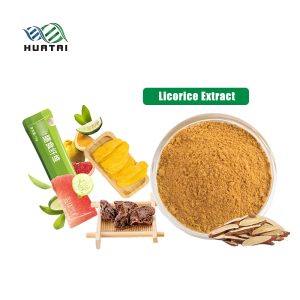
Licorice root extract is not a single compound — it is a complex botanical mixture. Within the Glicirrizina genus, several hundred compounds have been reported in the published literature. Glabridin is the most potent brightening monomer among them, accounting for the majority of the brightening activity attributed to licorice extract in cosmetic applications.
When a formula uses "licorice root extract" as a brightening active, the actual glabridin concentration delivered depends on the glabridin content of the extract — which varies significantly between suppliers, crop years, and extraction methods.
Using purified glabridin rather than crude licorice extract provides:
- Defined, verifiable active dose
- Consistent batch-to-batch potency
- Cleaner impurity profile
- COSMOS certification eligibility (for certified grades)
- Freedom from co-extractants whose effects are not individually characterized
Kojic Acid: The Stability Problem
Kojic acid's mechanism of action — copper chelation at the tyrosinase active site, with additional inhibition kinetics that remain disputed in the published literature — delivers real brightening efficacy. Its IC₅₀ is substantially weaker than glabridin's, but it has a long track record in clinical brightening formulations.
The primary challenge is stability. Kojic acid discolors rapidly in the presence of light, metal ions, or alkaline pH — turning yellow/brown in formulations that are not precisely optimized. The European Commission restricted kojic acid in face products to 1% maximum in 2023 (Commission Regulation (EU) 2023/1490). Additionally, kojic acid is a documented contact sensitizer in some individuals.
For formulas where kojic acid was previously the primary brightening active, glabridin + niacinamide at appropriate concentrations provides a mechanism-diverse replacement with comparable or improved stability characteristics and a well-tolerated safety profile.
Formulation Recommendations by Hyperpigmentation Type
PIH (Post-Inflammatory Hyperpigmentation)
| Attivo | Concentrazione | Razionale |
|---|---|---|
| Glabridina | 1–0.3% p/p di attivo | Dual action: tyrosinase inhibition + COX/PGE₂ modulation |
| Niacinamide | 4–5% | Melanosome transfer inhibition; additional anti-inflammatory |
| Totarol 99% p/p | 05–0.1% p/p | Antibacterial (helps reduce acne-related inflammatory trigger); antioxidant |
| Tocoferolo | 2–0.5% p/p | Antioxidant protection for glabridin; additional soothing |
Obiettivo pH: 4.5–5.5 | Confezione: Opaque, airless
Melasma
| Attivo | Concentrazione | Razionale |
|---|---|---|
| Glabridina | 0.1–0.5% active | Tyrosinase inhibition + upstream inflammatory signal modulation |
| Acido Tranexamico (TXA) | 2–5% | Plasminogen pathway inhibition — addresses keratinocyte–melanocyte crosstalk specific to melasma |
| Niacinamide | 2–4% | Downstream melanosome transfer inhibition |
For detailed TXA + glabridin system design, see: Glabridina e acido tranexamico: meccanismi diversi, benefici complementari.
Solar Lentigines / Diffuse UV Dyschromia
| Attivo | Concentrazione | Razionale |
|---|---|---|
| Glabridina | 0.05–0.2% active | Tyrosinase inhibition for melanin synthesis reduction |
| Alfa Arbutina | 1–2% | Additional tyrosinase inhibition; high stability; complementary to glabridin |
| Niacinamide | 2–5% | Melanosome transfer inhibition; multi-benefit (barrier, sebum, brightening) |
| AHA (lactic acid or mandelic acid) | 5–10% | Accelerates pigment clearance from existing keratinocytes |
The Licorice Family: Huatai's Full Portfolio
Huatai's licorice extraction expertise extends across the full active spectrum of Glycyrrhiza glabra — providing formulators with the option to build comprehensive licorice-derived systems:
| Ingrediente | Funzione | Key Mechanism |
|---|---|---|
| Glabridina (40% / 90% / 98%) | Attivo schiarente primario | Non-competitive tyrosinase inhibition + COX/PGE₂ anti-inflammatory modulation |
| Licochalcone A (20% / 70% / 95%) | Anti-inflammatory + supporting brightening | COX inhibition; supports acne and rosacea-associated PIH formulas |
| Dipotassio Glicirrizato (DPG) | Soothing / anti-inflammatory | Surface soothing; pH buffering; reduces irritation potential in active-heavy formulas |
A formula combining glabridin + licochalcone A + DPG delivers multi-level licorice activity: deep enzymatic brightening, surface soothing, and anti-inflammatory coverage from melanocyte signaling to surface keratinocyte response.
Formulator Decision Framework
| Priority | Approccio Raccomandato |
|---|---|
| Maximum brightening efficacy | Glabridin (0.1–0.5% active) as primary; niacinamide 4–5%; COSMOS-certified grades if clean beauty required |
| PIH-specific (acne, eczema, post-procedure) | Glabridin + Totarol 99% + niacinamide; target pH 4.5–5.5 |
| Melasma-targeted | Glabridin + TXA + niacinamide; three-intercept cascade |
| Clean beauty / COSMOS-certified | 40%, 90%, or 98% COSMOS-certified glabridin; licochalcone A COSMOS-certified grades |
| Cost-sensitive, broad market | 40% reddish-brown powder + niacinamide; cost-effective base system |
| Oil-phase serum or anhydrous system | 90% oil-soluble glabridin (approximately 0.2% in finished formulation) |
Ogni lotto viene spedito con COA, TDS e SDS/MSDS. Test aggiuntivi disponibili su richiesta.
Riferimenti
- Nerya O, Vaya J, Musa R, Izrael S, Ben-Arie R, Tamir S. Glabrene e isoliquiritigenina come inibitori della tirosinasi dalle radici di liquirizia. Journal of Agricultural and Food Chemistry, 51(5), 1201–1207, 2003. DOI: 10.1021/jf020935u.
- Yokota T, Nishio H, Kubota Y, Mizoguchi M. L'effetto inibitorio della glabridina dagli estratti di liquirizia sulla melanogenesi e l'infiammazione. Pigment Cell Research, 11(6), 355–361, 1998. DOI: 10.1111/j.1600-0749.1998.tb00494.x.
- Hakozaki T, Minwalla L, Zhuang J, et al. L'effetto della niacinamide sulla riduzione della pigmentazione cutanea e sulla soppressione del trasferimento del melanosoma. Dermatologia britannica, 147(1), 20–31, 2002. DOI: 10.1046/j.1365-2133.2002.04834.x.
- Maeda K, Nishino H. Meccanismo dell'effetto inibitorio dell'acido tranexamico sulla melanogenesi nei melanociti umani coltivati in presenza di mezzo condizionato da cheratinociti. Journal of Health Science, 53(4), 389–396, 2007. DOI: 10.1248/jhs.53.389.
- European Commission. Commission Regulation (EU) 2023/1490 of 20 July 2023 amending Regulation (EC) No 1223/2009 as regards kojic acid. Official Journal of the European Union, 2023.
- Guangdong Weipu Testing Technology Co., Ltd. (CMA accredited, No. 202119135666). Report No. GZA01-23080632-JC-01. Human patch test, 0.03% Glabridin. Commissioned by Huatai Bio-Fine Chemical.

 English
 German
 Italian
 French
 Spanish
 Japanese
 Korean
 Russian