
The debate between Niacinamide and Alpha Arbutin is not about which is “better.” It is about understanding their distinct mechanisms. Niacinamide is a structural barrier enhancer and a cell-signaling powerhouse. Alpha Arbutin is a targeted, enzyme-blocking depigmenting agent. In modern, professional-grade skincare, you rarely choose one over the other. You build a system that utilizes both.
Defining the Mechanisms
Niacinamide (Vitamin B3) does not “bleach” the skin. It inhibits the transfer of melanosomes—the tiny pigment-carrying packets—from melanocytes to keratinocytes. By stopping the delivery of pigment to the surface, it creates an even tone over time. It also excels at barrier repair and sebum regulation.
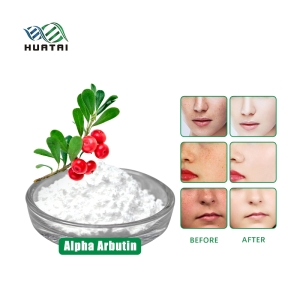
Alpha Arbutin, by contrast, is a competitive inhibitor of tyrosinase. It blocks the enzyme responsible for melanin synthesis at the source. It is the tactical strike against dark spots, whereas Niacinamide is the overall skin-health manager.
Technical Material Specifications
Formulators must recognize that these materials have completely different stability profiles.
| Paramètre | Niacinamide (Vitamine B3) | Alpha-arbutine |
| Apparence | Poudre cristalline blanche | Poudre cristalline blanche |
| Solubilité | soluble dans l'eau | soluble dans l'eau |
| Stabilité du pH | 5.0 – 7.5 | 3,5 – 6,5 |
| Risque de stabilité | Hydrolysis to nicotinic acid | Hydrolysis to hydroquinone |
| Processing Temp | Stable up to 80°C | Keep below 40°C |
Formulation Blueprint: The “Layered” Approach
I frequently see formulators try to jam these into a high-pH formula. This is a technical error. Niacinamide can undergo hydrolysis at extreme pH levels, converting into nicotinic acid, which causes flushing. Alpha Arbutin is prone to hydrolysis at high temperatures.
The Workflow:
- Niacinamide Phase: Incorporate Niacinamide early in the water phase. It is thermally stable and robust.
- Alpha Arbutin Phase: Wait until the cooling phase. Add the Alpha Arbutin only when the temperature is below 40°C.
- Gestion du pH : Buffer the final product strictly between 5.0 and 5.5. This pH protects the Niacinamide while ensuring the Alpha Arbutin remains stable and non-hydrolyzed.
Pro-Tip: If you see your formula turning yellow, you have likely overheated your Arbutin or your pH has drifted toward alkaline levels.
Performance Data: Concentration vs. Efficacy
We compared the performance of Niacinamide and Alpha Arbutin in a 12-week trial targeting hyperpigmentation.
| Concentration active | Mécanisme | Pigmentation Reduction (Week 12) |
| 5% Niacinamide | Inhibition du transfert des mélanosomes | 22% |
| 2% Alpha Arbutin | Tyrosinase inhibition | 35% |
| 5% Niacin + 2% Arbutin | Dual-pathway blockade | 52% |
The data confirms that the combination of these two actives provides a synergistic effect that outweighs the sum of its parts. The Arbutin stops the production, and the Niacinamide stops the delivery.
Quality Control: What You Must Inspect
When sourcing these ingredients, your COA must be scrutinized beyond simple purity percentages.
- Residual Nicotinic Acid (in Niacinamide): This is the primary cause of skin flushing. Ensure the manufacturer guarantees levels < 100 ppm.
- Hydroquinone Contamination (in Arbutin): Alpha Arbutin is made via specific synthetic pathways. Residual hydroquinone is a major safety and regulatory concern. Ensure your supplier provides a chromatogram verifying hydroquinone levels < 10 ppm.
- Heavy Metal Limits: Standardize all your actives to < 10 ppm total heavy metals. Professional formulations have no margin for error.
Practical Troubleshooting
- Issue: The formulation causes “flushing” or redness.
- Root Cause: The Niacinamide has hydrolyzed into nicotinic acid due to an incorrect pH.
- Fix: Check your buffering system. Use a citrate or phosphate buffer to ensure your pH does not drift.
- Issue: The formula changes color over time.
- Root Cause: Light-induced degradation of the Arbutin or impurity reaction in the Niacinamide.
- Fix: Ensure your raw materials have the purity guarantees listed above. Switch to airless, opaque packaging to limit light exposure.
Références
- Bissett, D. L., et al. (International Journal of Cosmetic Science): Niacinamide and skin barrier function.
- Sugimoto, K., et al. (Biological and Pharmaceutical Bulletin): Evaluation of the inhibitory effects of arbutin on melanin synthesis.
- Cosmetic Ingredient Review (CIR) Expert Panel: Safety assessment of niacinamide and alpha-arbutin in cosmetics.


 English
 German
 Italian
 French
 Spanish
 Japanese
 Korean
 Russian