
¿Por qué el tocoferol es la base esencial para un cuidado de la piel de alta estabilidad?
Walk into the stability testing chamber of any struggling indie brand. Open the incubator. Pull out a dropper bottle of their luxury botanical face oil. Open it. It smells like old crayons and fried fish. The liquid has shifted from pale gold to dark orange.
The compounding chemist blames the cold-pressed rosehip oil. The procurement manager blames the packaging. I blame the antioxidant strategy.
Brands load their mixing vats with fragile plant oils and highly reactive retinol. Then they forget to protect them. They skip the biological shield. The entire batch goes rancid before it ever reaches a retail shelf.
You cannot build a premium lipid matrix without a chemical foundation. You need pure, unesterified Tocopherol.
I manage the distillation columns at our active ingredient facility. I watch brands ruin expensive formulas every single week. Let us strip away the marketing fluff. We will look at the raw oxidation data, the biggest lie in cosmetic chemistry, and how you actually stabilize a lipid phase without crashing your batch.
The Great Acetate Scam
Let us talk about the biggest mistake happening on the bench right now.
Formulators know they need Vitamin E to stop their oils from going rancid. They call their broker. The broker sells them cheap Tocopheryl Acetate. The chemists dump the synthetic Acetate into the mixing vat. Thirty days later, the formula rots. Why?
Because Tocopheryl Acetate is useless inside the bottle.
The acetate molecule has a synthetic ester group. This ester group physically blocks the antioxidant mechanism. It is locked. It only unlocks when human skin enzymes cleave the ester bond. It helps the customer face, but it does absolutely nothing to protect the oils inside your compounding tank.
If you want to stop oxidative rancidity in the vat, you need free, unesterified Mixed Tocopherols.
Mixed Tocopherols act like a sacrificial bodyguard. When rogue oxygen molecules enter your serum, they try to attack the fragile plant oils. The free Tocopherol steps in the way. It absorbs the oxygen hit. It dies so your expensive active ingredients can live.
How well does it work? We measure oil rancidity using Peroxide Value (POV). A lower POV means the oil is fresh. A high POV means the oil is rotting.
| Sistema Antioxidante | Day 1 POV | Day 90 POV at 45 Celsius | Emulsion Status |
| No Antioxidant | 1.2 | 28.5 | Rancid odor |
| Synthetic Acetate | 1.2 | 25.4 | Failed stability |
| Natural Mixed Tocopherols | 1.2 | 3.1 | Perfectly fresh |
| Synthetic BHT | 1.2 | 4.5 | Consumer pushback |
Look at the raw numbers. The Acetate does nothing. The natural Mixed Tocopherols freeze the oxidation process completely.
Reading the True Manufacturer COA
Why do some natural Vitamin E raw materials turn white creams brown? Because the procurement team bought a low-grade byproduct.
Traders buy cheap soybean oil waste. They concentrate it poorly. They sell you a dark, viscous sludge. It smells like roasted beans. If you put that crude syrup into a premium face lotion, your white emulsion turns yellow. The smell overpowers your masking fragrance.
You must source high-purity cosmetic isolates directly from a primary extraction facility. We utilize advanced molecular distillation to strip away the color and the odor. Here is the exact Certificate of Analysis standard you must demand before signing a bulk purchase order.
| Parámetro de especificación | True 95 Percent Natural Isolate | Impacto en su tanque de formulación |
| Apariencia | Clear pale yellow viscous oil | Keeps your white creams pristine |
| Tocoferoles totales | Minimum 95.0 Percent | Guarantees exact dosing |
| Perfil de isómeros | High gamma and delta fractions | Maximizes antioxidant power in the vat |
| Olor | Very slight characteristic | Does not ruin your fragrance profile |
| Metales pesados | Máximo 10 ppm | Stops catalytic oxidation |
| Rotación específica | Minimum plus 20 degrees | Confirms natural biological origin |
If a supplier hands you a dark red syrup and dodges your questions about the exact isomer profile, reject the shipment. You are paying a premium price for dirty chemistry.
The Formulator Playbook: The Synergistic Shield
You secured the high-purity natural liquid from our factory. Do not ruin it on the bench.
Tocopherol is a heavy, oil-soluble liquid. It loves lipids. It completely ignores water. Here is the exact production floor protocol our R&D chemists issue to formulation partners.
- The Lipid Lock: Add the Tocopherol directly to your main oil phase. Do this before you heat the oils. It protects the fragile lipids while they sit in the hot melting tank.
- Precision Dosing: More is not better. If you use too much Vitamin E, it acts as a pro-oxidant. It will actually destroy your formula. The sweet spot is strictly between 0.1 percent and 0.5 percent for standard lipid protection.
- The Cool Down Drop: If you are protecting a cold-process facial oil, simply drop the thick liquid into the main batch at room temperature. Use a high-shear mixer to ensure it disperses evenly.
- The Synergistic Stack: Never use it alone. Pair 0.5 percent Mixed Tocopherols with 0.1 percent Ascorbyl Palmitate (oil-soluble Vitamin C). When the Tocopherol takes a hit from oxygen, the Ascorbyl Palmitate recycles it. They recharge each other. This creates an infinite antioxidant loop inside your bottle.
Application Case Study: The Squalane Rescue
A luxury clean-beauty brand came to our factory last year facing a retail disaster. Their flagship botanical face oil was failing rapidly. The base was a beautiful blend of Rosehip Seed Oil, Evening Primrose, and Squalane.
The brand used 1.0 percent Synthetic Tocopheryl Acetate to protect it. They failed their 12-week accelerated stability test. The Rosehip oil oxidized. The product smelled like paint thinner. Their retail partners threatened to pull the entire line.
We brought their failed formula into our analytical lab. We scrapped the useless Acetate entirely. We engineered a clean, protective matrix. We introduced exactly 0.3 percent of our 95 percent Natural Mixed Tocopherols. We stacked it with a trace amount of Rosemary Oleoresin.
The pivot saved their brand equity. Over the next 90-day accelerated heat challenge, the Peroxide Value barely moved. The fragile Rosehip oil stayed structurally intact. The oil maintained its pale gold color and light botanical scent.
Because they swapped a bulky 1.0 percent synthetic dose for a 0.3 percent pure natural isolate, their active ingredient cost per bottle dropped. They optimized their ledger. They fixed the rancidity.
Global Compliance and the Clean Shift
The regulatory landscape is shifting violently. European authorities and clean-beauty retailers are actively banning synthetic antioxidants like BHT and BHA. Consumers scan INCI lists for these harsh chemicals.
Natural Mixed Tocopherols bypass this red tape entirely. This molecule gives you a highly profitable, compliant path to rock-solid product stability. But you must buy it from the source. We run the distillation columns. We verify the specific biological rotation. We deliver the ultra-low heavy metal profiles that modern compliance officers demand.
Stop arguing with middlemen over pennies. Reliable primary supply chains build reliable cosmetic empires.
We have premium Mixed Tocopherol lab samples packed and ready for your R&D department. Hand the isolate to your lead chemist. Let them run a Peroxide Value challenge test on the bench. Let the raw chemistry prove its financial viability in your own beaker. Reach out directly to our technical quoting desk to secure your production sample today.
Referencias utilizadas en la preparación:
- Thiele, J. J., and Ekanayake-Mudiyanselage, S. (2007). Vitamin E in human skin: organ-specific physiology and considerations for its use in dermatology. Molecular Aspects of Medicine.
- Raederstorff, D., et al. (2015). Vitamin E function and requirements in relation to PUFA. British Journal of Nutrition.
- Koskas, J. P., et al. (2005). Antioxidant properties of tocopherols in cosmetic emulsions. International Journal of Cosmetic Science.
- SCCS (Comité Científico de Seguridad de los Consumidores). (2020). Guía sobre la evaluación de seguridad de ingredientes botánicos en productos cosméticos. Comisión Europea.
Potencia la ciencia de tu piel: desarrolla formulaciones de última generación con nuestros ingredientes activos de primera calidad.
¿Por qué elegirnos?
Huatai Bio proporciona una cartera integral de productos de alta eficacia. ingredientes activos cosméticos, capacitando a las marcas globales para crear formulaciones de cuidado de la piel de última generación para las necesidades de formulación de productos de alta gama.
Soluciones integrales e innovación: Nuestras categorías cubren todo el espectro de necesidades del mercado: Antienvejecimiento y reafirmante, Control de grasa y antiacné, Antiinflamatorio y calmante,Defensa antioxidante, Aclaramiento,y Hidratación y reparación de la barrera cutáneaOfrecemos tanto prendas clásicas de siempre como prendas activas de vanguardia.
Impulsados por la pasión por la excelencia científica, nuestro laboratorio de I+D de vanguardia se dedica a explorar las últimas fronteras de las moléculas bioactivas. Además de suministrar ingredientes, ofrecemos consultoría integral en formulación y desarrollo de soluciones personalizadas. Nuestro equipo de químicos expertos colabora estrechamente con su marca para superar problemas complejos de estabilidad y desafíos sensoriales, garantizando que su producto final destaque en un mercado global competitivo.
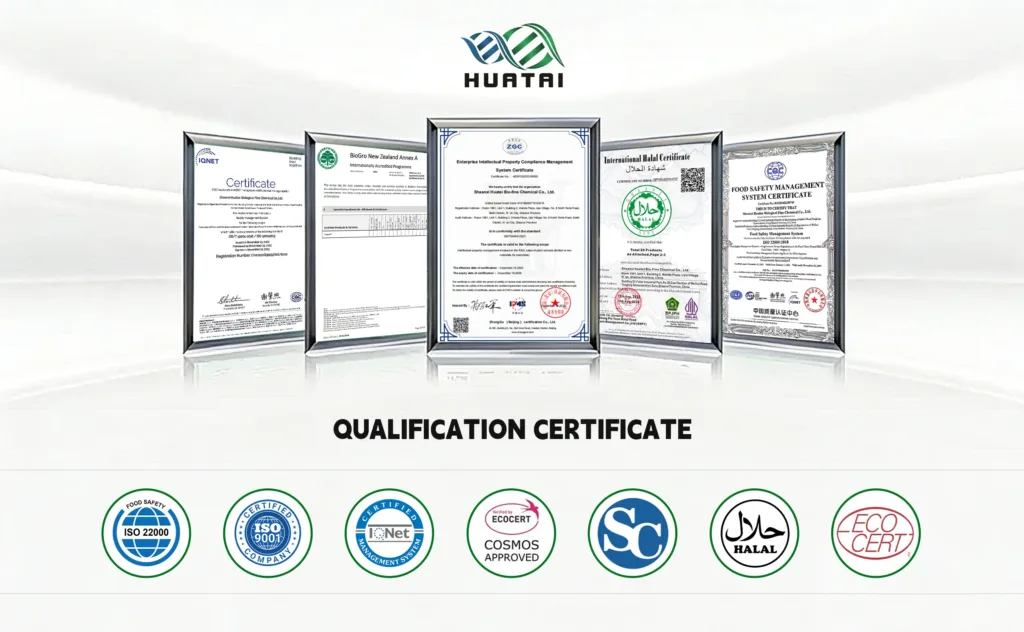
Calidad y credibilidad inquebrantables: Garantizamos que cada lote de nuestros productos cumple con nuestros estándares. Ingredientes activos para el cuidado de la piel Cumple con rigurosos estándares de calidad, incluyendo las certificaciones COSMOS, ISO 9001/22000 y HALAL. Este compromiso, respaldado por un expediente técnico completo, ofrece soluciones con respaldo clínico y garantiza el cumplimiento para cualquier desafío de formulación.



 English
 German
 Italian
 French
 Spanish
 Japanese
 Korean
 Russian