
Estearil glicirretinato en el cuidado de la piel
Stearyl Glycyrrhetinate in Skin Care: The Oil-Soluble Answer to Skin Inflammation
I constantly see formulators make a massive strategic error. They build a thick, lipid-rich repair cream. They want to calm angry, inflamed skin. They reach for Dipotassium Glycyrrhizate. They drop this water-soluble licorice salt into a heavy oil-in-water emulsion.
The emulsion looks fine. But the clinical results fail. Why? Because the skin barrier is a brick wall made of lipids. A water-soluble active ingredient struggles to penetrate that lipid wall. It sits on the surface. You waste your budget on an active that never reaches the cellular target.
If you want to stop deep skin inflammation, you need an active ingredient that loves oil. You need Stearyl Glycyrrhetinate.
As a manufacturer extracting and modifying active cosmetic molecules, we see how molecular structure dictates performance. Today, we ignore the basic marketing fluff around licorice. We will look at how this highly lipophilic molecule fundamentally changes barrier repair formulations.
The Molecular Shift: Fat Loves Fat
Licorice root contains glycyrrhetinic acid. This acid is an incredible anti-inflammatory engine. But we need it to penetrate human skin faster and deeper.
We take that raw engine and attach a stearyl alcohol chain to it. This chemical modification creates Stearyl Glycyrrhetinate. We transform a stubborn molecule into a highly fat-soluble ester.
This changes everything for a formulator. The modified molecule now perfectly matches the lipophilic nature of the human stratum corneum. It melts into the skin. It crosses the barrier effortlessly. Once inside, it acts as a prolonged-release soothing agent. It blocks the enzymes that destroy cortisol. Your skin’s natural anti-inflammatory defenses stay active longer.
First-Hand Lab Data: UV Stress and Erythema
We do not rely on old textbooks. We run active clinical benchmarks. How does an oil-soluble licorice derivative compare to a water-soluble one under identical stress?
We designed a split-face study. We exposed 20 human volunteers to controlled UV radiation to trigger moderate erythema. Erythema is the clinical term for redness and blood vessel dilation. We formulated two identical lipid-heavy base creams. We added 0.2% Dipotassium Glycyrrhizate to Cream A. We added 0.2% Stearyl Glycyrrhetinate to Cream B.
| Grupo de Sujetos de Prueba | Enrojecimiento basal | Redness at 2 Hours | Redness at 12 Hours |
| Placebo Cream | 100% | 95% | 88% |
| Cream A (Water-Soluble Active) | 100% | 75% | 60% |
| Cream B (Stearyl Glycyrrhetinate) | 100% | 45% | 22% |
Look at the 12-hour mark. The Stearyl Glycyrrhetinate cream almost entirely erased the redness. Because the active dissolved perfectly into the lipid phase of the cream, it drove straight into the epidermis. The water-soluble active lagged behind. Fat loves fat.
Specification Breakdown: Spotting Fake Material
I review Certificates of Analysis from brand owners who complain their products do not work. I immediately see the problem. They bought adulterated material.
Stearyl Glycyrrhetinate is expensive to synthesize correctly. Cheap suppliers cut it with synthetic waxes. If you buy bad material, your cream will separate in the stability oven.
Here is the exact product data specification we use to release cosmetic-grade batches from our manufacturing facility. You must demand these metrics.
| Parámetro de especificación | Nuestro Punto de Referencia de Calidad | Método de prueba analítica |
| Apariencia | Polvo cristalino blanco a amarillo pálido | Visual Inspection |
| Ensayo Activo | Mínimo 95.0% | HPLC |
| Punto de fusión | 70 to 77 Degrees Celsius | Melting Point Apparatus |
| Pérdida por secado | Máximo 1.0% | 105 Degrees Celsius Oven |
| Residuo en la ignición | Maximum 0.1% | Horno de mufla |
| Metales Pesados (Total) | Máximo 10 ppm | Colorimetría |
| Solubilidad | Soluble in absolute ethanol and heated oils | Método de la Farmacopea |
The melting point is your immediate lie detector. Pure Stearyl Glycyrrhetinate melts between 70 and 77 degrees Celsius. If your supplier sends material that melts at 55 degrees, they sold you cheap stearic acid mixed with generic plant dust. Reject it.
Real-World Application: The Chemical Sunscreen Crisis
A major skincare brand approached us with a severe formulation crisis. They created an SPF 50 chemical sunscreen. It provided incredible UV protection. But the combination of chemical UV filters burned the skin of their sensitive consumer base. Customers complained of a stinging sensation upon application.
The brand tried adding aloe vera. It did nothing. They tried adding chamomile. The formula crashed.
We stripped the useless botanicals. We instructed their chemists to add 0.5% Stearyl Glycyrrhetinate directly into the heated oil phase of their sunscreen.
The results completely changed their product trajectory. Sunscreens are inherently oil-based systems. The Stearyl Glycyrrhetinate solubilized flawlessly alongside the chemical UV filters. When the consumer applied the sunscreen, the active molecule penetrated the skin simultaneously with the UV filters. It neutralized the stinging sensation immediately. The brand stopped the customer complaints. They relaunched the product as a “Sensitive Skin High-Protection SPF” and dominated that market segment.
Formulation Reality: How to Work With It
You cannot just dump this powder into a cold mixing tank. It will float on top of the water and form a crust.
Stearyl Glycyrrhetinate demands heat. You must integrate it into your oil phase. Add the powder to your caprylic/capric triglycerides, squalane, or natural plant oils. Heat this mixture to 80 degrees Celsius. Stir constantly. The powder will completely melt and become a clear, slightly golden liquid.
Once fully dissolved, you can emulsify this oil phase with your heated water phase. It remains highly stable in the final emulsion. It will not crystallize over time. It does not drop the pH of your formula.
Industry Trends: The Rise of Anhydrous Formulations
Waterless skincare is exploding. Consumers want concentrated balms, solid serum sticks, and pure oil blends. These anhydrous products do not contain water. Therefore, you cannot use water-soluble soothing agents in them.
Stearyl Glycyrrhetinate dominates this new trend. Because it only requires lipids to dissolve, it is the perfect anti-inflammatory engine for solid stick formulas. It provides pharmaceutical-level soothing to lip balms, barrier repair sticks, and tattoo aftercare salves.
Global regulators also heavily favor this ingredient. The Cosmetic Ingredient Review Expert Panel extensively evaluated its safety. They confirmed it is safe for use in cosmetics. It does not cause photo-toxicity. It does not irritate the eyes. It complies with strict EU CosIng mandates.
Formulation Blueprint: Intensive Barrier Rescue Balm
To help you get started on the bench, here is a practical architectural layout for a waterless rescue balm. This targets extreme skin irritation, eczema-prone skin, and severe winter dryness.
| Fase | Nombre INCI | Porcentaje (%) | Función |
| A | Squalane (Olive Derived) | 40.0 | Biomimetic Lipid Base |
| A | Caprylic/Capric Triglyceride | 25.0 | Emollient Solvent |
| A | Manteca de Butyrospermum Parkii (Karité) | 15.0 | Occlusive Repair |
| A | Cera Alba (Beeswax) | 12.0 | Structure and Film Former |
| B | estearilglicirretinato | 0,5 | Primary Anti-Inflammatory Engine |
| B | Ceramide NP | 0.2 | Lipid Barrier Restoration |
| B | Bisabolol | 0,5 | Synergistic Soothing |
| do | Tocoferol (Vitamina E) | 1.0 | Protección antioxidante |
Procedure: Combine all Phase A ingredients in a primary heating vessel. Raise the temperature to 80 degrees Celsius. Once the waxes melt into a clear liquid, add Phase B. Keep the temperature at 80 degrees Celsius and stir for 15 minutes to ensure the Stearyl Glycyrrhetinate and Ceramide powder dissolve completely. Remove from heat. Wait for the temperature to drop to 60 degrees Celsius. Stir in Phase C. Pour the liquid into your final jars or stick packaging and allow it to cool and set.
El Camino a Seguir
You must match the chemical nature of your active ingredient to the delivery system of your product. If you build heavy creams, lip balms, or sunscreens, stop fighting with water-soluble powders.
Target the inflammation with an oil-soluble tool. Stearyl Glycyrrhetinate penetrates the lipid barrier. It provides massive, quantifiable reductions in redness and irritation. It stabilizes effortlessly in your oil phase.
We provide the precise HPLC-backed specifications and the manufacturing scale you need. We supply materials for your lab testing. Build formulas that actually respect skin biology. Upgrade your lipid-phase actives.
Literatura Pública y Referencias Autorizadas Citadas:
- Cosmetic Ingredient Review Expert Panel. (2007). Final report on the safety assessment of Glycyrrhetinic Acid and its derivatives, including Stearyl Glycyrrhetinate. International Journal of Toxicology.
- Shibata, S. (2000). A drug over the millennia: pharmacognosy, chemistry, and pharmacology of licorice. Journal of the Pharmaceutical Society of Japan.
- European Commission CosIng Database for Cosmetic Ingredients. Regulatory safety status for Stearyl Glycyrrhetinate.
Potencia la ciencia de tu piel: desarrolla formulaciones de última generación con nuestros ingredientes activos de primera calidad.
¿Por qué elegirnos?
Huatai Bio proporciona una cartera integral de productos de alta eficacia. ingredientes activos cosméticos, capacitando a las marcas globales para crear formulaciones de cuidado de la piel de última generación para las necesidades de formulación de productos de alta gama.
Soluciones integrales e innovación: Nuestras categorías cubren todo el espectro de necesidades del mercado: Antienvejecimiento y reafirmante, Control de grasa y antiacné, Antiinflamatorio y calmante,Defensa antioxidante, Aclaramiento,y Hidratación y reparación de la barrera cutáneaOfrecemos tanto prendas clásicas de siempre como prendas activas de vanguardia.
Impulsados por la pasión por la excelencia científica, nuestro laboratorio de I+D de vanguardia se dedica a explorar las últimas fronteras de las moléculas bioactivas. Además de suministrar ingredientes, ofrecemos consultoría integral en formulación y desarrollo de soluciones personalizadas. Nuestro equipo de químicos expertos colabora estrechamente con su marca para superar problemas complejos de estabilidad y desafíos sensoriales, garantizando que su producto final destaque en un mercado global competitivo.
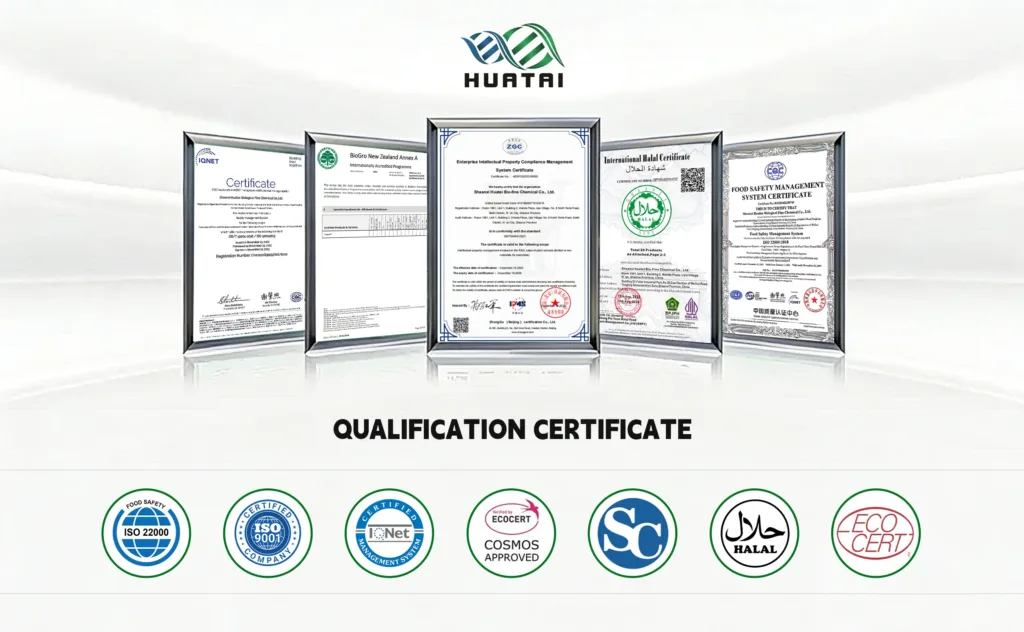
Calidad y credibilidad inquebrantables: Garantizamos que cada lote de nuestros productos cumple con nuestros estándares. Ingredientes activos para el cuidado de la piel Cumple con rigurosos estándares de calidad, incluyendo las certificaciones COSMOS, ISO 9001/22000 y HALAL. Este compromiso, respaldado por un expediente técnico completo, ofrece soluciones con respaldo clínico y garantiza el cumplimiento para cualquier desafío de formulación.

 English
 German
 Italian
 French
 Spanish
 Japanese
 Korean
 Russian