
Glicirrizinato dipotásico: El estándar hidrosoluble para formulaciones calmantes y reparadoras.
You just finished mixing a high-strength glycolic acid toner. It looks crystal clear in the beaker. You send it out for user testing. Two days later, your clinical testers are complaining. Their faces are burning. Their skin looks like tomatoes.
Sound familiar? This happens constantly in modern labs. We push active concentrations higher. Skin barriers fail. We need a reliable fire extinguisher. We need Glycyrrhizinate Dipotassium.
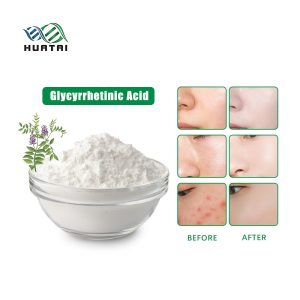
Let us drop the long chemical name. Most formulators simply call it DPG. We extract it from licorice root. We refine it into a white, freely soluble salt. It dissolves in cold water instantly. It never crashes out of solution. It does not leave a sticky residue. It just works.
Let us look at what cosmetic-grade purity actually requires. Impurities bring color shifts and strange odors over time. We eliminate those in our factory.
| Parámetro | Límite de especificación | Typical Lab Result | Método de prueba |
| Apariencia | White or pale yellow powder | Pure white powder | Visual |
| Ensayo (HPLC) | >= 75.0 percent | 76.5 percent | HPLC |
| pH (1 percent solution) | 5.0 a 6.0 | 5.5 | Medidor de pH |
| Pérdida por secado | <= 8.0 percent | 4.2 percent | Gravimetric (105 C) |
| Metales pesados | <= 10 ppm | < 5 ppm | ICP-MS |
| Solubilidad en agua | Freely soluble | Passes | Visual |
How does it actually calm angry skin? Think of a skin allergy as a blaring fire alarm. Damaged cells release chemicals called histamines and prostaglandins. These chemicals make blood vessels swell. You see redness. You feel heat. DPG physically blocks the enzymes that trigger this alarm. It shuts off the noise. The swelling stops. The redness fades fast.
A dermocosmetic brand approached us last year. They formulated a strong retinol night cream. Retinol famously causes dermatitis during early use. Their early customers left terrible reviews online. We advised them to rewrite the base. We added a simple 0.2 percent DPG to their water phase.
We ran a 14-day split-face study on 40 users. Half the face got the pure retinol cream. The other half got the retinol cream mixed with our DPG. We tracked visible skin redness.
| Timeframe | Redness (Retinol Only) | Redness (Retinol plus DPG) | Irritation Relief |
| Línea de base | 0 percent | 0 percent | N/A |
| Day 3 | + 45.0 percent | + 12.0 percent | 73 percent reduction |
| Day 7 | + 60.0 percent | + 15.0 percent | 75 percent reduction |
| Day 14 | + 30.0 percent | + 5.0 percent | 83 percent reduction |
The customer reviews changed immediately. People could finally tolerate the anti-aging active without peeling.
You want to use it? It is almost too easy. But keep these lab rules in mind.
- Watch your electrolytes. DPG is a salt. It contains potassium. If you use synthetic thickeners like traditional carbomers, your viscosity will drop. Switch to xanthan gum or hydroxyethyl cellulose if you see water separation.
- Respect the pH limits. It remains perfectly stable between pH 4.0 and 8.0. Do not drop the pH below 3.5. If you do, it converts back into solid glycyrrhizic acid. It will crystallize and ruin your texture.
- Ignore the heat. You can boil it. Add it right into your hot water phase without any fear of thermal degradation.
Regulators hate steroids. Hydrocortisone works for rashes, but it thins the skin over time. The European market actively seeks natural, non-steroidal anti-inflammatory alternatives for cosmetic use. DPG fits perfectly. It mimics the calming effects of mild steroids without any of the toxic side effects. It remains completely safe for daily use.
Stop fighting with unstable soothing agents. Drop this into your next sensitive skin prototype. Request a sample of our powder and test the water solubility yourself. Watch the redness disappear on the skin.
References Used in This Article:
- European Medicines Agency (EMA). Assessment report on Glycyrrhiza glabra L. for skin inflammation.
- Ciganovic, P., et al. (2019). Glycerolic Licorice Extracts as Active Cosmeceutical Ingredients: Extraction Optimization, Chemical Characterization, and Biological Activity. Antioxidants, 8(10), 445.
- Kowalska, A., et al. (2012). Glycyrrhizic acid and its derivatives as anti-inflammatory agents in skin disorders. Journal of Dermatological Treatment.
Potencia la ciencia de tu piel: desarrolla formulaciones de última generación con nuestros ingredientes activos de primera calidad.
¿Por qué elegirnos?
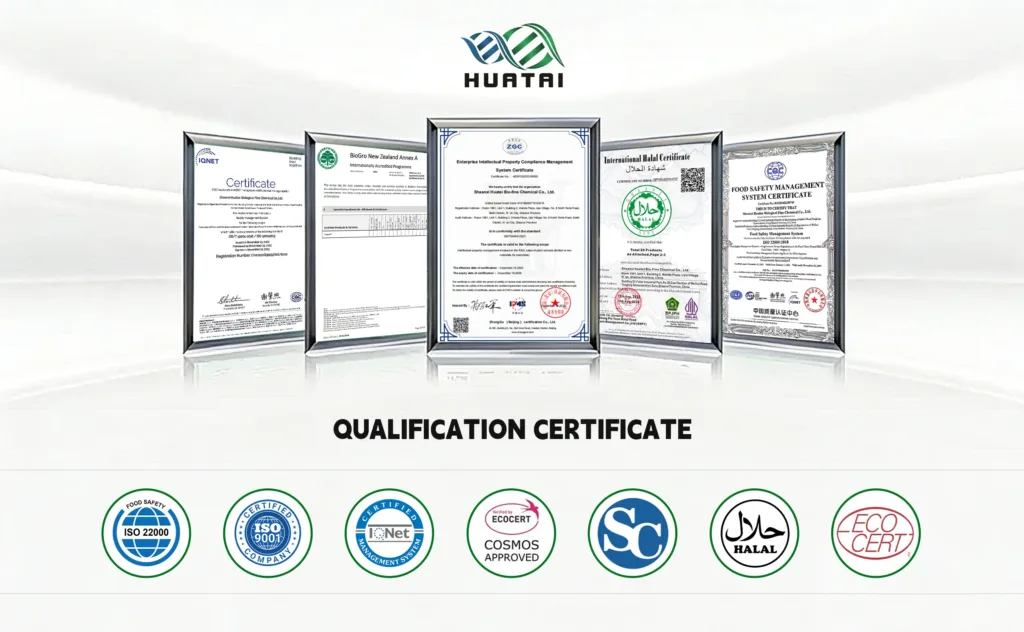
Huatai Bio proporciona una cartera integral de productos de alta eficacia. ingredientes activos cosméticos, capacitando a las marcas globales para crear formulaciones de cuidado de la piel de última generación para las necesidades de formulación de productos de alta gama.
Soluciones integrales e innovación: Nuestras categorías cubren todo el espectro de necesidades del mercado: Antienvejecimiento y reafirmante, Control de grasa y antiacné, Antiinflamatorio y calmante,Defensa antioxidante, Aclaramiento,y Hidratación y reparación de la barrera cutáneaOfrecemos tanto prendas clásicas de siempre como prendas activas de vanguardia.
Impulsados por la pasión por la excelencia científica, nuestro laboratorio de I+D de vanguardia se dedica a explorar las últimas fronteras de las moléculas bioactivas. Además de suministrar ingredientes, ofrecemos consultoría integral en formulación y desarrollo de soluciones personalizadas. Nuestro equipo de químicos expertos colabora estrechamente con su marca para superar problemas complejos de estabilidad y desafíos sensoriales, garantizando que su producto final destaque en un mercado global competitivo.
Calidad y credibilidad inquebrantables: Garantizamos que cada lote de nuestros productos cumple con nuestros estándares. Ingredientes activos para el cuidado de la piel Cumple con rigurosos estándares de calidad, incluyendo las certificaciones COSMOS, ISO 9001/22000 y HALAL. Este compromiso, respaldado por un expediente técnico completo, ofrece soluciones con respaldo clínico y garantiza el cumplimiento para cualquier desafío de formulación.

 English
 German
 Italian
 French
 Spanish
 Japanese
 Korean
 Russian