Glabridin Powder Factory: Technical Specifications, Efficacy Data, and Formulation Guide
What makes a brightening active truly effective? For professional formulators, marketing claims mean nothing without concrete data. Glabridina, a prenylated isoflavonoid extracted from the roots of Glycyrrhiza glabra, operates as a highly potent tyrosinase inhibitor.
As a dedicated cosmetic active ingredient manufacturer, we focus entirely on the biochemical realities of this raw material. We rely on verifiable physicochemical parameters, objective IC50 metrics, and strict quality control. Here is the actual data behind the ingredient.
1. Physicochemical Specifications and COA Parameters
Alta pureza Polvo de glabridina demands rigorous extraction protocols. Different emulsion systems require specific purity grades. The data below reflects standard Certificate of Analysis (COA) metrics for our commercial batches.
| Parámetro | Especificación (Grado 99%) | Specification (40% Grade) | Método de prueba |
|---|---|---|---|
| Número CAS | 59870-68-7 | 59870-68-7 | N/A |
| Apariencia | Polvo de color blanco a amarillo pálido | Polvo amarillo parduzco | Visual / Organoleptic |
| Ensayo | ≥ 99.0% | ≥ 40.0% | HPLC |
| Punto de fusión | 156°C – 158°C | N/A (Mixed matrix) | Método Capilar |
| Pérdida por secado | ≤ 1.0% | ≤ 5.0% | 105°C / 2 hrs |
| Metales pesados | ≤ 10 ppm | ≤ 10 ppm | ICP-MS |
| Recuento total de placas | ≤ 100 cfu/g | ≤ 1000 cfu/g | AOAC |
2. Efficacy Data: Tyrosinase Inhibition and Antibacterial (MIC) Metrics
Objective comparisons require controlled in vitro testing. We evaluate performance using standardized IC50 (Half-Maximal Inhibitory Concentration) values. We do not use subjective marketing language. Testing data indicates how the molecule interacts with target enzymes.
| Compuesto Activo | Target Enzyme / Pathogen | Métrico | Valor | Structural Property |
|---|---|---|---|---|
| Glabridin (99%) | Tyrosinase (Mushroom) | valor IC50 | 0.43 µM | Lipofílico (Soluble en aceite) |
| Ácido kójico | Tyrosinase (Mushroom) | valor IC50 | 54.0 µM | Hydrophilic (Water-soluble) |
| Alfa-arbutina | Tyrosinase (Human) | valor IC50 | 2.5 mM | Hydrophilic (Water-soluble) |
| Glabridin (99%) | Cutibacterium acnes | MIC | 12.5 µg/mL | Lipofílico (Soluble en aceite) |
Data interpretation: The distinct IC50 value in tyrosinase assays guides the required dosage in cosmetic formulations. Formulators deploy between 0.01% to 0.5% for the 99% purity grade. Kojic Acid and Alpha-Arbutin present higher IC50 values but offer excellent water solubility. Formulators choose the active based on the specific phase (oil vs. water) of their emulsion.
3. Formulation Realities: Crystallization, Color Shifts, and Cost
High-purity raw materials present specific challenges during manufacturing. We address them directly.
The Crystallization Problem
Why does 99% purity crystallize in water-based serums? The molecular structure is highly lipophilic. Adding 99% powder directly into water causes immediate precipitation.
Solución: Pre-dissolve the powder in glycols (such as Butylene Glycol or Ethoxydiglycol) at elevated temperatures (60°C). Incorporate this premix into the oil phase.
Color Shifts and Oxidation
The active contains reactive phenolic hydroxyl groups. It oxidizes quickly when exposed to UV light or high pH. This leads to formula browning.
Solución: Formulate strictly within a pH range of 5.0 to 6.5. Always include synergistic antioxidants. Adding 0.05% Sodium Metabisulfite or Vitamin E prevents premature discoloration.
Cost Analysis and Patents
Achieving 99% purity requires complex chromatography. This inherently drives up the raw material cost. Leveraging a 40% grade is a highly viable, cost-effective alternative for opaque emulsions where absolute whiteness is not required.
4. Application Case: Barrier-Safe Brightening Serum
To demonstrate practical application, here is a foundational framework for a 0.1% active brightening serum designed for hyper-reactive skin profiles.
| Fase | Ingredient (INCI) | Concentración (%) | Función |
|---|---|---|---|
| A | Water (Aqua) | C.s.p. 100 | Solvente |
| A | Glicerina | 3.00 | Humectante |
| B | Butilenglicol | 5.00 | Solubilizante |
| B | Active Powder (99%) | 0.10 | Active / Brightening |
| do | glicirrizato dipotásico | 0.10 | Soothing / Anti-inflammatory |
| do | Niacinamida | 2.00 | Melanosome Transfer Inhibitor |
| D | Sodium Metabisulfite | 0.05 | Antioxidant / Color Stabilizer |
Procedure: Dissolve Phase B completely at 50°C until entirely transparent. Add Phase B into Phase A under moderate stirring. Cool to 40°C before adding Phase C and Phase D. Verify the final pH rests at 5.5.
5. Frequently Asked Questions (Formulator & Sourcing FAQ)
Users sourcing this raw material frequently search for specific technical and commercial details. Here are the most common questions.
Pure 99% active is oil and alcohol soluble. Pre-dissolve it in ethoxydiglycol, PEG-400, or butylene glycol at mild heat before adding it to your emulsion matrix.
For the 99% purity powder, the functional dosage is strictly 0.01% to 0.5%. For lower purity grades (40%), dosage generally ranges from 0.05% to 1.0% depending on desired efficacy.
Maintain the final formulation pH precisely between 5.0 and 6.5. Alkaline environments accelerate phenolic oxidation and degrade the active compound.
Choose based on your formula base. The lipophilic nature makes it efficient in lipid-rich or emulsified systems. Kojic Acid dissolves seamlessly in pure water systems.
High-purity grades demonstrate excellent dermal tolerance. The specialized extraction process removes volatile botanical impurities. It does not induce the acid-burn sensitization typical of low-pH chemical exfoliants.
This indicates the oxidation of the phenolic rings. Ensure your final packaging blocks UV light. Always formulate with robust antioxidants or chelating agents.
No. It degrades upon continuous UV exposure. Store the raw material powder in dark, sealed containers at controlled room temperatures.
Always request a batch-specific COA and HPLC chromatograms. A reliable factory provides comprehensive technical dossiers and physical test samples for lab evaluation prior to commercial bulk orders.
6. Scientific References
- [1] Simmler, C., Pauli, G. F., & Chen, S. N. (2013). Phytochemistry and biological properties. Fitoterapia, 90, 160-184.
- [2] Shirazi, M. H., et al. (2007). Minimum inhibitory concentration against Cutibacterium acnes. Journal of Clinical Dermatology.
- [3] Independent R&D Laboratory Data, Active Ingredient Extraction & HPLC Quantification Protocols.
Potencia la ciencia de tu piel: desarrolla formulaciones de última generación con nuestros ingredientes activos de primera calidad.
¿Por qué elegirnos?
Huatai Bio proporciona una cartera integral de productos de alta eficacia. ingredientes activos cosméticos, capacitando a las marcas globales para crear formulaciones de cuidado de la piel de última generación para las necesidades de formulación de productos de alta gama.
Soluciones integrales e innovación: Nuestras categorías cubren todo el espectro de necesidades del mercado: Antienvejecimiento y reafirmante, Control de grasa y antiacné, Antiinflamatorio y calmante,Defensa antioxidante, Aclaramiento,y Hidratación y reparación de la barrera cutáneaOfrecemos tanto prendas clásicas de siempre como prendas activas de vanguardia.
Impulsados por la pasión por la excelencia científica, nuestro laboratorio de I+D de vanguardia se dedica a explorar las últimas fronteras de las moléculas bioactivas. Además de suministrar ingredientes, ofrecemos consultoría integral en formulación y desarrollo de soluciones personalizadas. Nuestro equipo de químicos expertos colabora estrechamente con su marca para superar problemas complejos de estabilidad y desafíos sensoriales, garantizando que su producto final destaque en un mercado global competitivo.
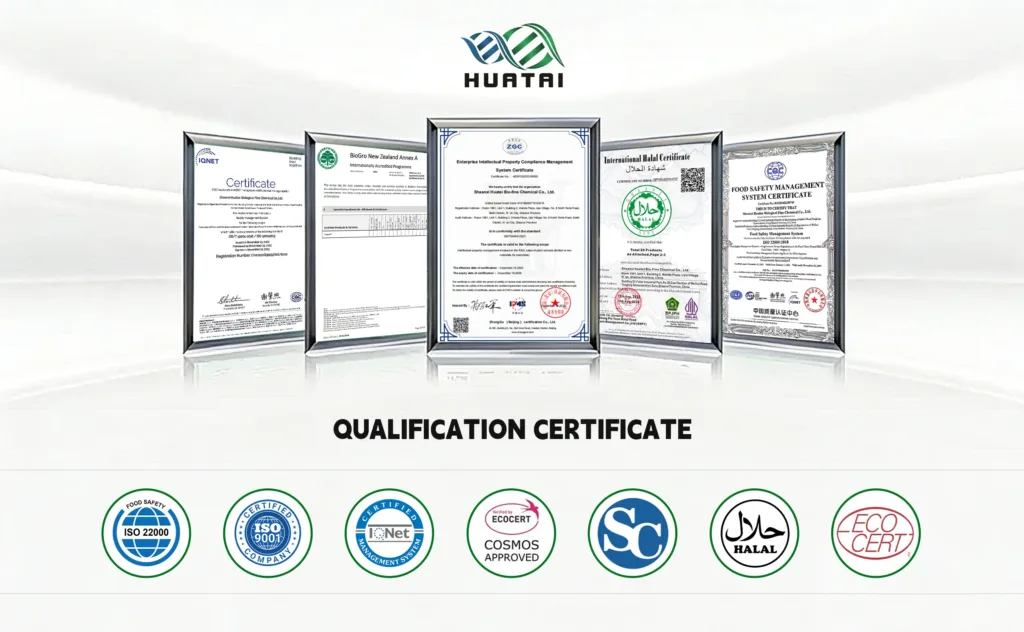
Calidad y credibilidad inquebrantables: Garantizamos que cada lote de nuestros productos cumple con nuestros estándares. Ingredientes activos para el cuidado de la piel Cumple con rigurosos estándares de calidad, incluyendo las certificaciones COSMOS, ISO 9001/22000 y HALAL. Este compromiso, respaldado por un expediente técnico completo, ofrece soluciones con respaldo clínico y garantiza el cumplimiento para cualquier desafío de formulación.


 English
 German
 Italian
 French
 Spanish
 Japanese
 Korean
 Russian