How Both Ingredients Work: Tyrosinase Inhibition Explained
Both glabridin and alpha arbutin reduce melanin production by inhibiting tyrosinase, the enzyme that catalyzes the rate-limiting steps in melanin synthesis. They reach that target through different binding mechanisms.
An isoflavonoid extracted from 감초 (licorice root). It acts primarily as a non-competitive tyrosinase inhibitor, reducing enzyme activity through binding interactions distinct from those of competitive inhibitors. Glabridin also suppresses UVB-induced pigmentation through pathways independent of direct tyrosinase inhibition, including modulation of signaling pathways involved in melanogenesis — a secondary mechanism alpha arbutin does not share.
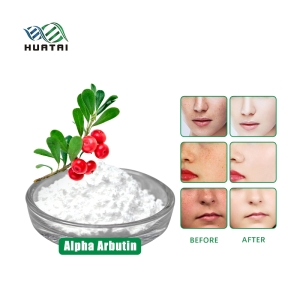
A glycosylated hydroquinone derivative (4-hydroxyphenyl-α-D-glucopyranoside), typically produced via biotechnological or enzymatic synthesis rather than direct plant extraction. It functions as a competitive tyrosinase inhibitor, occupying the enzyme's active site without being processed into melanin precursors. Because of its molecular structure — a glucose unit bound to a hydroquinone moiety via an alpha-glycosidic linkage — it releases free hydroquinone only under specific degradation conditions, which contributes to its more favorable safety profile compared with hydroquinone itself.
Both compounds act at the synthesis stage of melanogenesis. Neither addresses melanosome transfer (the role niacinamide plays) or inflammatory pigmentation pathways (where tranexamic acid is more relevant) — a distinction that matters when building a multi-active formula rather than choosing a single brightening agent.
Efficacy Comparison: Glabridin vs Alpha Arbutin
The most direct efficacy comparison available is in vitro tyrosinase inhibition, measured as IC₅₀ — the concentration required to inhibit 50% of enzyme activity. A lower IC₅₀ indicates greater potency per unit concentration.
| 매개변수 | 글라브리딘 | 알파 아르부틴 |
|---|---|---|
| In vitro IC₅₀ (mushroom tyrosinase assay) | ~0.09 μmol/L | ~2.70 μmol/L |
| Relative potency | ~30× lower IC₅₀ than alpha arbutin in this assay | Reference point |
| Onset | Demonstrated clinical effect from Week 1 (Melanin Index) in 4-week study | Generally reported as slower-onset relative to glabridin at comparable concentrations |
| Human clinical data | 4-week study, 35 subjects: 16.8% Melanin Index reduction at 0.03% active (CMA-certified, Report GZA01-23080632-JC-01) | Widely studied; efficacy well-documented in published literature across multiple concentration ranges |
The IC₅₀ comparison shows glabridin achieving equivalent enzyme inhibition at substantially lower concentrations than alpha arbutin in vitro. This is a meaningful data point for formulation efficiency, but it should be read with two caveats: in vitro IC₅₀ measures isolated enzyme inhibition, not finished product performance on skin, and alpha arbutin has a larger published body of independent clinical research given its longer history of use across more product categories.
For dark spot and hyperpigmentation applications specifically, both actives are well-supported. Glabridin's published data includes the added UVB-suppression pathway, relevant for photo-induced dark spots; alpha arbutin's broader literature base provides more comparative data across skin types and concentrations.
Stability and Formulation Compatibility
This is often the more practically decisive comparison for formulators, because it determines which systems each active can go into without reformulation workarounds.
Alpha arbutin is water-soluble and generally stable within a moderate pH range, making it straightforward to incorporate into aqueous serums, toners, and emulsions without a co-solvent. Its main stability caveat is that at low pH and under long-term stress conditions, alpha arbutin may undergo limited hydrolysis with potential hydroquinone release under extreme conditions — worth monitoring in accelerated stability testing, particularly for formulas targeting natural/organic claims or hydroquinone-restricted markets.
Glabridin's solubility depends on grade. Most grades (40%, 90%, 98%, 99%) are alcohol-soluble and require a polyol carrier (propanediol or butylene glycol) for incorporation, typically pre-dispersed at ≤60°C before the cool-down phase. A dedicated 90% oil-soluble grade, produced via a patented process that restructures glabridin into uniform 50 μm spherical particles, allows direct incorporation into anhydrous and oil-phase systems. A 10% water-soluble grade (HP-β-cyclodextrin inclusion complex) removes the alcohol-phase requirement entirely, dissolving directly into the water phase without elevated temperature — significantly improving formulation flexibility in aqueous systems.
pH stability: Both actives perform well in the pH 5.0–6.5 range. Glabridin is sensitive to alkaline conditions and UV exposure (natural light: ~20% degradation in 8 hours; UV: ~27% in 8 hours), requiring UV-protective packaging. Alpha arbutin is generally more stable across a broader pH window but warrants the hydroquinone-release monitoring noted above at the low end of that range.
Combining the two: Glabridin and alpha arbutin are formulation-compatible. When combined, glabridin (alcohol or oil phase, or water-soluble grade) and alpha arbutin (water phase) integrate into standard O/W emulsion or serum structures under appropriate formulation conditions, provided the overall system pH is held within 5.0–6.5.
Cost and Sourcing Considerations
Alpha arbutin is generally the lower-cost active on a per-kilogram basis, reflecting its more established, larger-scale production via biotechnological synthesis. Glabridin's cost reflects botanical extraction and purification from licorice root, with higher-purity grades (98%, 99%) commanding a premium over lower grades (40%).
The relevant cost comparison for formulators is not raw per-kilogram price but cost per unit of active delivered, since glabridin's lower IC₅₀ allows lower use levels for comparable inhibitory effect. At typical formulation ranges — glabridin 0.08%–0.25% of the 40% grade, alpha arbutin 1%–2% (per common formulation practice) — the effective cost gap narrows considerably compared to a straight per-kilogram comparison.
Sourcing Considerations Specific to Each Active
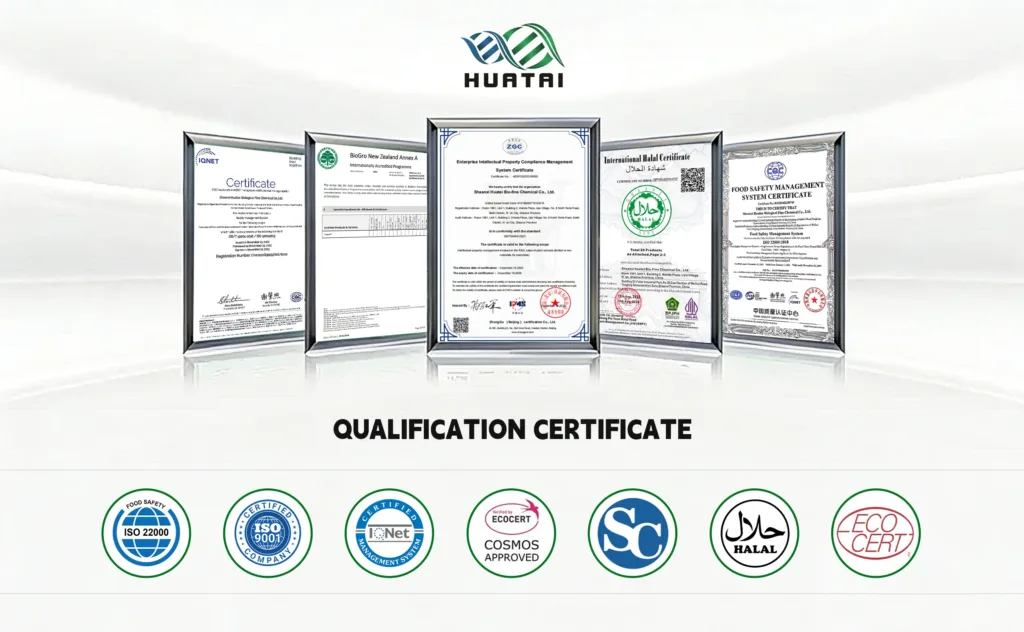
- 글라브리딘: Confirm the supplier's COSMOS 인증서 specifically lists the grade you intend to purchase (40%, 90%, or 98% — not all grades from a given supplier are necessarily covered). Request batch-specific HPLC purity data, not UV-method COAs.
- Alpha arbutin: Verify the production method (synthetic vs. biotechnological/enzymatic) if natural-origin claims are required, since this affects COSMOS eligibility and INCI positioning. Confirm beta-arbutin content is within specification, as it is a related but distinct compound sometimes monitored in quality specifications depending on supplier standards.
Both actives are available in COSMOS-certified grades from established suppliers, making natural-origin sourcing achievable for either choice.
Which One Is Right for Your Formula?
Your formulation system is purely aqueous and you want the simplest possible incorporation without a co-solvent or specialty grade; your target use level and cost structure favor a lower per-kilogram active; or you need the largest available body of published clinical literature to support claims substantiation.
You want lower use levels for comparable or greater in vitro potency; your formula targets photo-induced pigmentation specifically (UVB-suppression pathway); your system is oil-phase, anhydrous, or requires a non-water-soluble grade; or your brand positioning benefits from a distinctly botanical, single-source-traceable active rather than a biotechnologically produced one.
You are building a premium or clinical-positioned brightening serum and want dual-mechanism tyrosinase coverage — glabridin's non-competitive inhibition profile plus alpha arbutin's competitive inhibition — at a combined cost that remains reasonable given glabridin's low use levels.
Beyond these two: Glabridin is sometimes compared against niacinamide, but the comparison is mechanistically incomplete — niacinamide inhibits melanosome transfer at the level of keratinocyte melanosome transfer, not tyrosinase itself, making it complementary to glabridin rather than a substitute. Glabridin vs licochalcone A is a comparison worth noting for brands sourcing other licorice-derived actives: licochalcone A is primarily positioned for anti-inflammatory and anti-acne applications with secondary brightening support, while glabridin is the more potent dedicated tyrosinase inhibitor of the two — they are frequently supplied by the same manufacturers and can be used together in formulas addressing both pigmentation and inflammation. Glabridin vs vitamin C is a different kind of comparison: vitamin C works through a reducing mechanism rather than enzyme inhibition, and its primary formulation challenge is oxidative instability rather than potency — the two actives are generally complementary rather than competing.
Huatai Bio를 선택해야 하는 이유
Shaanxi Huatai Bio-Fine Chemical Co., Ltd.는 공급합니다. COSMOS 인증 글라브리딘 파우더 across the full grade range needed to match any formulation system — alcohol-soluble, oil-soluble, water-soluble, and liquid forms.
- 40%, 90%, 98% 등급에 대해 COSMOS v4 인증(Ecocert Greenlife SAS, N°277614, 2026년 12월 31일까지 유효)
- Intertek 검증 순도: 99.3% HPLC (보고서 SHAH01681145)
- 인간 임상 연구 데이터 사용 가능(4주, 35명, CMA 인증)
- Full grade range: 40%/90%/98%/99% alcohol-soluble, 90% oil-soluble, 10% water-soluble, 1%–5% liquid grades
- Batch COA provided automatically; HPLC chromatogram, heavy metal report, pesticide residue report on request
- Samples and technical documentation within 24 hours
자주 묻는 질문
참고 자료
- Kubo I, Kinst-Hori I. Glabridin으로부터 유래한 티로시나아제 억제제. Bioorganic & Medicinal Chemistry, 1999, 7(7):1373-1379
- Yokota T, 외. 감초 추출물에서 유래한 글라브리딘의 멜라닌 생성 및 염증 억제 효과. Pigment Cell Research, 1998, 11(6):355-361
- Ao M, 외. 다양한 조건 하에서의 글라브리딘 안정성 연구. 천연물 커뮤니케이션, 2010, 5(12):1907-1912
- Hakozaki T, 외. 피부 색소 침착 감소 및 멜라노솜 전달 억제에 대한 나이아신아마이드의 효과. British Journal of Dermatology, 2002, 147(1):20-31
- Guangdong Weipu Testing Technology Co., Ltd. (CMA 인증) — 임상 연구 보고서 GZA01-23080632-JC-01
- Ecocert Greenlife SAS — COSMOS v4 인증서 N°277614-20251216_0226 (Huatai Bio-Fine Chemical)
- Intertek Testing Services Ltd., Shanghai — HPLC 순도 보고서 SHAH01681145



 English
 German
 Italian
 French
 Spanish
 Japanese
 Korean
 Russian